Schmeeckle Reserve Interpreters is an interpretive consulting team based at UW-Stevens Point. We provide interpretive services to nature centers, parks, scenic byways, and other heritage sites nationally and internationally. Our team has a broad range of expertise and experience assisting agencies and organizations to achieve their interpretive goals.
Our connection to Schmeeckle Reserve and UW-Stevens Point makes our team unique. Team members plan and teach interpretation courses in the College of Natural Resources, bringing our experiences into the classroom and helping to train the next generation of interpretive professionals. We also manage an interpretive facility on campus, the Schmeeckle Reserve Visitor Center, and supervise students in the day-day operation of running a natural area.
All proceeds from our interpretive consulting projects directly fund Schmeeckle Reserve and students in the environmental education/interpretation program.
Our team specializes in:
- Interpretive Master Planning: Comprehensive plans to document the visioning process and guide the development of interpretive facilities, trails, site plans, exhibits, outdoor media, publications, wayfinding, digital media, and other interpretive elements.
- Interpretive Media Design: Research, writing, image acquisition, graphic design, and fabrication of unified interpretive signs, exhibits, and publications that effectively share your stories.
- Interpretive Workshops and Training: Custom-tailored workshops and sessions that provide training in all aspects of interpretation. Click here for more info.
Contact Jim Buchholz, director and consulting team lead, at 715-346-4992 or schmeeckle@uwsp.edu to discuss your interpretive project needs.
Interpretive Master Planning
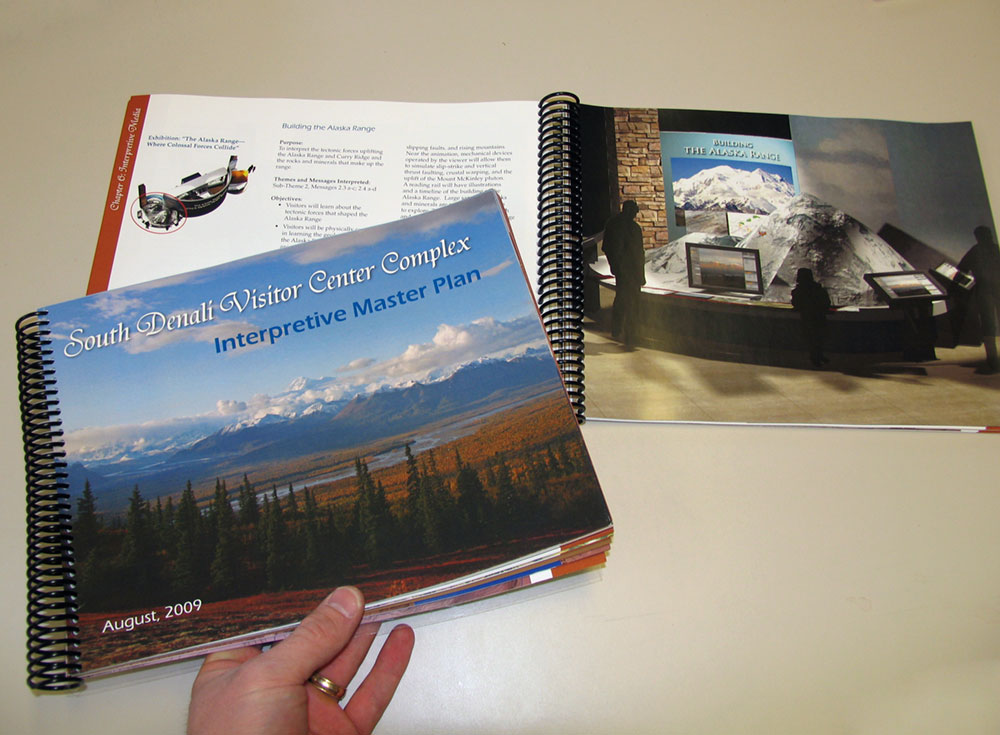
Interpretive master plans are essential tools that guide the development of visitor services at a site or facility. To create a meaningful and useful document, planners must immerse themselves in the stories of the site. Our team spends a significant amount of time onsite, talking with stakeholders, interviewing visitors, and inventorying resources.
Interpretive Master Plans document the entire planning process, from vision to conceptual designs. The final plans we develop vary in content and depth. Most will include:
- Mission and goals analysis (written and unwritten)
- Visitor studies (existing and information we gather during the process)
- Tangible resource inventory with associated intangible meanings
- Theme and message development (the big ideas and the stories to tell through interpretation)
- Conceptual facility development/architectural program (visitor flow, space designation and size, visitor experience, building materials, sustainable features)
- Conceptual site development (trail systems, surfaces, roads, parking, landscaping, wayfinding)
- Interpretive media and program concepts (purpose, measurable objectives, descriptions, illustrations)
The plans are designed to be visually attractive to facilitate stakeholder discussions and encourage fundraising. Clients also receive the original digital files of the plan for future printing and high quality digital photographs taken during the planning process.
View examples of our past Master Planning projects in the Project List section.
Media Design Projects
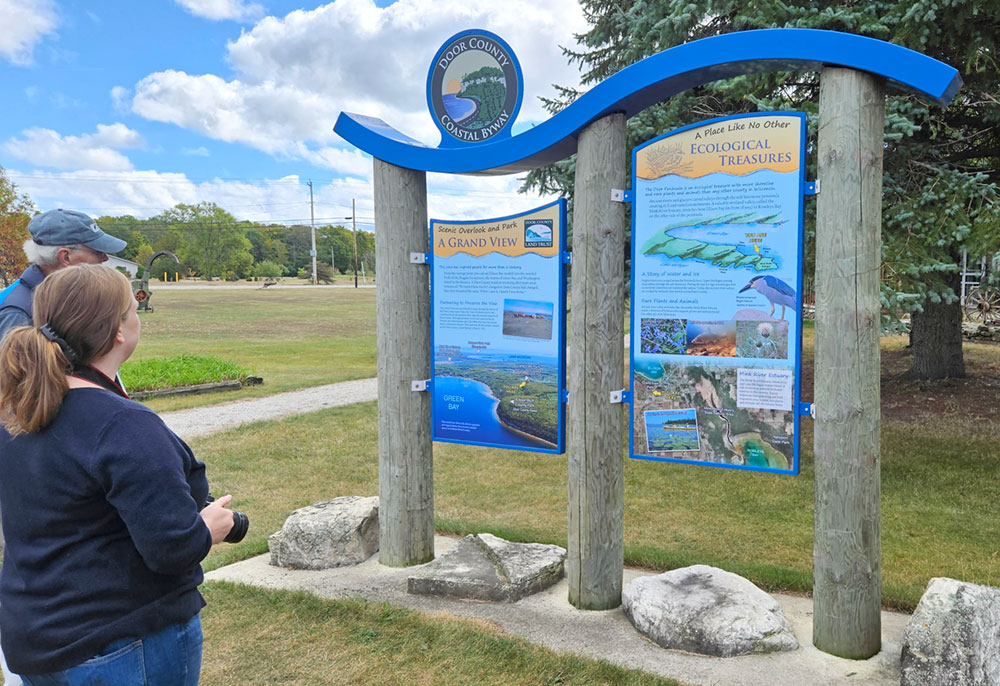
Our team can help move your project from conceptual ideas to reality. We offer full design services for media and publications, and coordinate services with other design and fabrication companies to preserve the original vision of the project.
Schmeeckle Reserve Interpreters offers conceptual media planning, research, inscription writing, graphic acquisition, design and layout, and fabrication services.
Conceptual Media Plans
Conceptual media designs are major components in any interpretive master plan that we develop. For sites that don’t require a full master plan, we can develop a conceptual media plan that fits your mission, audience, resources, and themes. Our team will develop innovative ideas and techniques for sharing your stories, from interactive exhibits and tactile signage, to engaging object theaters and discovery rooms. Documenting your concepts is important before handing off the project to a fabricator.
Media Design/Fabrication Services
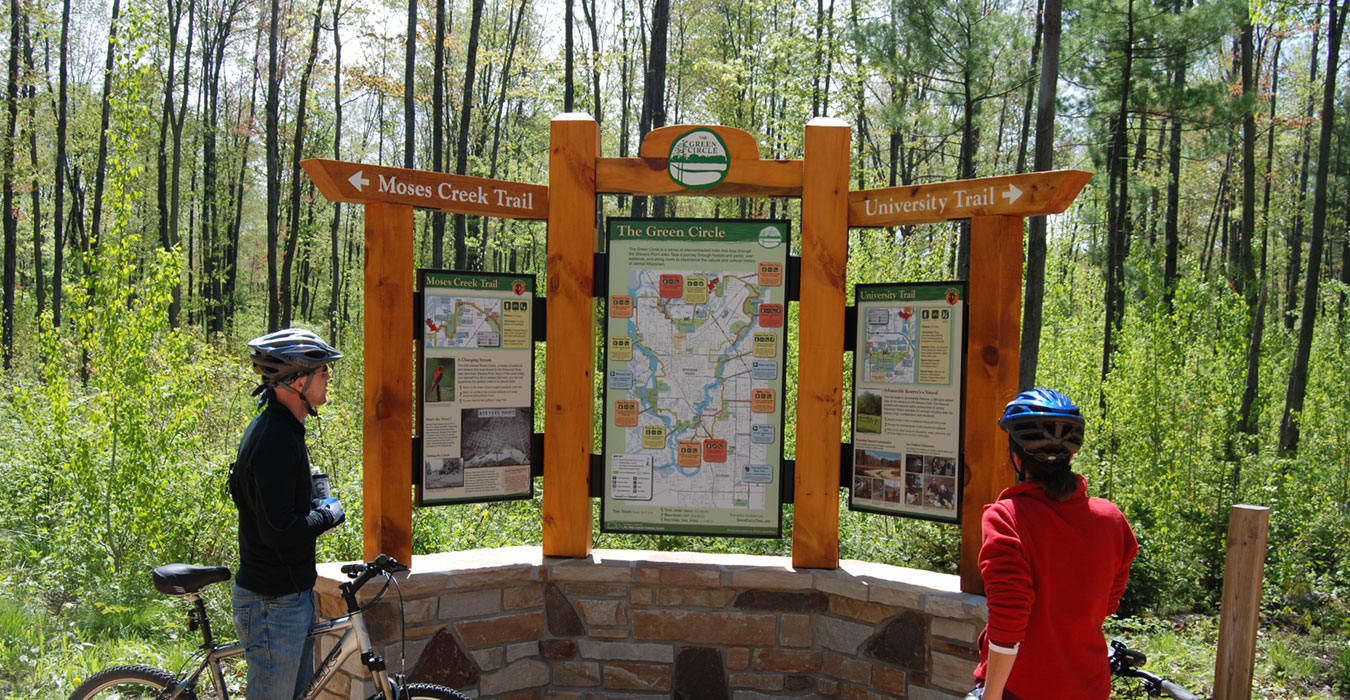
Our team has expertise in researching, writing, and designing interpretive signage, experience hubs, sculptures, brochures, booklets, audio units, and other media. We strive to show the story visually with engaging graphics and minimal text. We also coordinate with several fabrication companies to make the entire process seamless.
Exhibit Research/Inscription Writing/Graphic Acquisition
Although we are unable to offer complex exhibit design, we do provide services to research the stories, write concise and readable inscriptions, and acquire high quality images that will be incorporated into exhibits. We work closely with exhibit fabricators throughout the process to ensure that the final product is true to your vision.
View examples of our work in the Project List and Photo Gallery sections.
Interpretive Workshops & Training
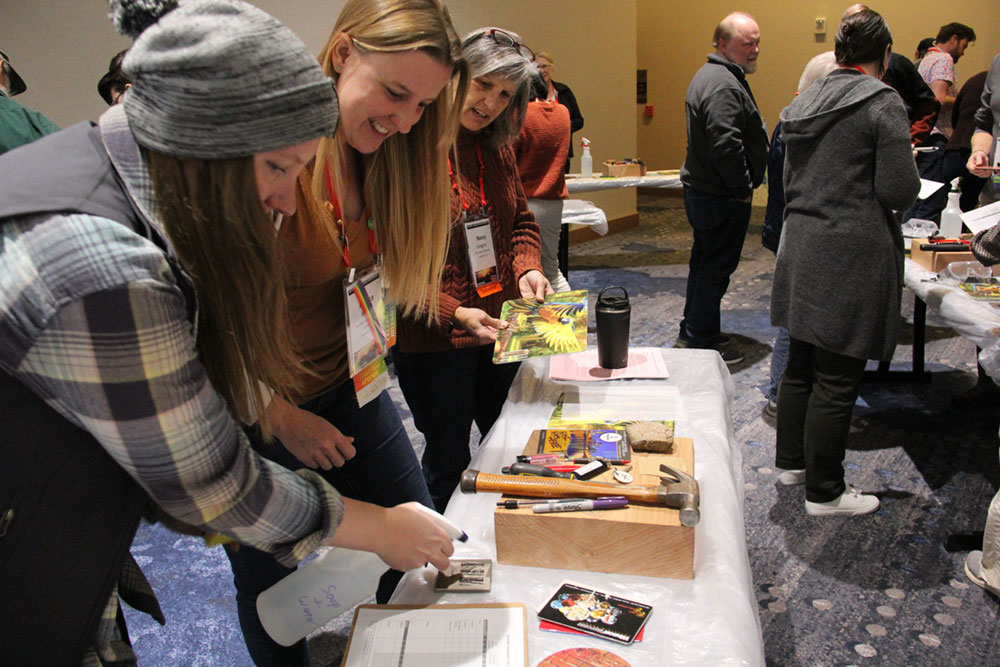
Our team provides interactive workshops, courses, field trips, and other training opportunities to enhance the profession of interpretation. Workshops are designed around the skills and interests of each audience.
Depending on the needs of the group, training sessions can range from an hour to several days. Some topics include: personal interpretation, media planning and design, exhibit planning and design, nature and visitor centers, theme development, byways interpretation, wildlife interpretation, trail planning.
Training sessions are designed to be interactive and hands-on, highlighting practical ideas and encouraging participant discussion.
View examples of our past workshops and training sessions in the Project List section.
Project List
Our team strives to produce the highest quality and most comprehensive interpretive plans and products to meet the needs of our clients. We strongly encourage you to contact any of our past clients to determine if our team can be of benefit to your interpretive projects.
Browse through our past master planning projects, media design projects, and workshop sessions below.
Master Planning Projects
- Springfield Area Addendum: Illinois Historic Route 66: Interpretive Master Plan (December 2022). Updated resources, audiences, themes, and interpretive recommendations for the Springfield region in Illinois in preparation for the Route 66 Centennial. View plan.
- Hugo Sauer Nursery and Research Field Laboratory: Historic Report and Interpretive Trail Signage in Rhinelander, Wisconsin (2019-2023): Research, writing, and photo acquisition for a USDA Forest Service General Technical Report interpreting a historic federal and state nursery. Research, writing, design, and fabrication of a 3-sign interpretive trail kiosk and 8 trailside exhibits. View the report. Click here to view the signs.
- Iowa Byways: Interpretive Master Planning (2015-2018): Large-scale planning project for the Iowa Byways program that included the development of interpretive master plans for 10 byways in the state over the course of four years, along with a statewide summary report that documents unified design and messaging. View summary report.
- Lincoln Highway Heritage Byway: Interpretive Master Plan, Iowa (March 2018): Part of the larger Iowa Byways project; planning of interpretive experiences along a 460-mile stretch of the nation’s first transcontinental highway.
- Glacial Trail Scenic Byway: Interpretive Master Plan, Iowa (March 2018): Part of the larger Iowa Byways project; planning of interpretive experiences along a 36-mile loop through a scenic glacial landscape in northwest Iowa.
- Delaware Crossing Scenic Byway: Interpretive Master Plan, Iowa (January 2018): Part of the larger Iowa Byways project; planning of interpretive experiences along a 36-mile loop in the Maquoketa River valley.
- Historic Hills Scenic Byway: Interpretive Master Plan, Iowa (November 2017): Part of the larger Iowa Byways project; planning of interpretive experiences along a 110-mile route rich in history.
- Iowa Valley Scenic Byway: Interpretive Master Plan, Iowa (August 2017): Part of the larger Iowa Byways project; planning of interpretive experiences along a 77-mile route that celebrates the Amana Colonies and Meskwaki Settlement.
- Grant Wood Scenic Byway: Interpretive Master Plan, Iowa (March 2017): Part of the larger Iowa Byways project; planning of interpretive experiences along a 75-mile route connected to the nationally renowned artist.
- River Bluffs Scenic Byway: Interpretive Master Plan, Iowa (March 2017): Part of the larger Iowa Byways project; planning of interpretive experiences along a 109-mile route through limestone bluffs in northeast Iowa. View plan.
- Driftless Area Scenic Byway: Interpretive Master Plan, Iowa (September 2016): Part of the larger Iowa Byways project; planning of interpretive experiences along a 100-mile route in the rugged “Driftless Area” of northeast Iowa. View plan.
- Western Skies Scenic Byway: Interpretive Master Plan, Iowa (July 2015): Part of the larger Iowa Byways project; planning of interpretive experiences along a 142-mile route through the rural landscape of western Iowa. View plan.
- Loess Hills National Scenic Byway: Interpretive Master Plan, Iowa (July 2015): Part of the larger Iowa Byways project; planning of interpretive experiences along a 405-mile route through the nationally recognized loess hills of western Iowa. View plan.
- Door County Coastal Byway: Interpretive Master Plan and Experience Hubs in Wisconsin (February 2014). Planning of interpretive experiences along a 66-mile scenic byway and designing 12 experience hub kiosks installed in byway communities. Door County Coastal Byway Council.
- The Ridges Sanctuary: Interpretive Master Plan in Baileys Harbor, Wisconsin (January 2013). Planning for a new educational facility and trail system at a Door County nature preserve. The Ridges Sanctuary, Inc. View plan.
- The Teller Wildlife Refuge: Master Conservation Education and Interpretive Plan in Montana (July 2011). Planning of education and public interpretation for a private wildlife refuge in the Bitterroot Valley of Montana. The Teller Wildlife Refuge, Inc. View plan.
- Addendum to the Illinois Historic Route 66: Interpretive Master Plan (February 2010). Plan includes detailed conceptual ideas for five additional northern Illinois communities along the Route 66 National Scenic Byway. Illinois Route 66 Heritage Project.
- South Denali Visitor Center Complex: Interpretive Master Plan in Alaska (August 2009). Planning for visitor center, trail system, and base facility. Alaska Department of Natural Resources.
- Rib Mountain State Park: Conceptual Master Plan for an Education and Interpretive Center in Wausau, Wisconsin (July 2009). Friends of Rib Mountain State Park.
- Illinois Historic Route 66 National Scenic Byway: Interpretive Master Plan (2008). Planned interpretive opportunities along the Route 66 National Scenic Byway, a 400-mile segment from Chicago to St. Louis with 90 communities. Illinois Route 66 Heritage Project. View plan.
- Addendum to the Illinois Lincoln Highway Interpretive Master Plan (2007). Illinois Lincoln Highway Coalition.
- Lost River Cave and Valley: Interpretive Master Plan in Bowling Green, Kentucky (2006). Friends of the Lost River, Inc. View plan.
- Great River Road Visitor Center: Interpretive Master Plan in Prescott, WI (2005). City of Prescott. View plan.
- Mead Wildlife Area Education Center: Interpretive Master Plan in Milladore, WI (2005). Wisconsin Department of Natural Resources.
- Sanibel-Captiva Conservation Foundation: Interpretive Master Plan (2004). Interpretive master plan and building redevelopment for in Sanibel, FL. View plan.
- Illinois Lincoln Highway National Scenic Byway: Interpretive Master Plan (2004). Illinois Lincoln Highway Coalition.
- Planners for Arkansas River Valley Nature Center at Fort Smith (2003), Crowley’s Ridge Nature Center at Jonesboro (2002), and Delta Rivers Nature Center at Pine Bluff, AR (2001) as contracted with Arkansas Game & Fish Commission. Lead development of these regional environmental centers.
- Crater of Diamonds State Park: Interpretive Master Plan (2001). Arkansas State Parks.
Media Design Projects
Visit the Photo Gallery section to view images of the media described below.
- Hugo Sauer Nursery and Research Field Laboratory: Historic Report and Interpretive Trail Signage in Rhinelander, Wisconsin (2019-2023): Research, writing, and photo acquisition for a USDA Forest Service General Technical Report interpreting a historic federal and state nursery. Research, writing, design, and fabrication of a 3-sign interpretive trail kiosk and 8 trailside exhibits. View the report. Click here to view the signs.
- Ruffed Grouse Habitat: Interpretive Trail Signage in Tomahawk, Wisconsin (2021). Research, writing, design, and fabrication of an interpretive wayside exhibit that describes the importance of coppice harvests to Ruffed Grouse, along with constructing 4 totem-style cedar posts that mark different harvest areas in Treehaven.
- Pope Lake State Natural Area: Interpretive Sign in Waupaca, Wisconsin (2020). Research, writing, design, and fabrication of an interpretive sign that introduces visitors to a natural area that is part of Hartman Creek State Park.
- Door County Coastal Byway: Interpretive Master Plan and Experience Hubs in Wisconsin (February 2014). Planning of interpretive experiences along a 66-mile scenic byway and designing 12 experience hub kiosks installed in byway communities. Door County Coastal Byway Council.
- Illinois Route 66 National Scenic Byway: Experience Hubs (May 2012): Designed and coordinated fabrication of 13 interpretive orientation kiosks with lighted community names and audio units along the Illinois Route 66 National Scenic Byway.
- Illinois Route 66 National Scenic Byway: Wayside Exhibits (September 2010). Designed and coordinated fabrication of 28 themed wayside exhibits along the Illinois Route 66 National Scenic Byway. Many included tactile Passport Stations and audio units that featured stories from the road.
- Black Kettle National Grassland: Interpretive trail signage (2007). Interpretive trail signage planning, design, and fabrication. Cheyenne, Oklahoma.
- Central Wisconsin Environmental Station: Interpretive signage (2006). Interpretive trail signage planning, design, and fabrication for in Amherst Junction, WI.
- Hamus Nature Preserve: Interpretive signage and wayfinding (2006). Interpretive panel and wayfinding signage development for preserve in Marshfield, WI.
- Great River Road Visitor Center: Wayside exhibits (2006). Outdoor wayside exhibit design and fabrication for in Prescott, WI.
- Mead Wildlife Area Education Center: Indoor and outdoor exhibits (2006). Outdoor wayside exhibit and indoor history exhibit design and fabrication for in Milladore, WI.
- Illinois Lincoln Highway: Aurora wayside exhibits (2005). Interpretive panel development for the City of Aurora, Illinois along the Illinois Lincoln Highway.
- National Ice Age Trail: Hartman Creek State Park kiosks (2004). Interpretive panel development for two kiosks located in Hartman Creek State Park, WI. Ice Age Park & Trail Foundation.
- Crowley’s Ridge Nature Center: Final exhibit plan: Final interior and exterior exhibit planning, included inscription writing, graphic acquisition, and video scripting for nature center in Jonesboro, AR as contracted with Split Rock Studios, St. Paul, Minnesota. 2004.
- Whitefish Dunes State Park: Final exhibit plan (2002). Final interior exhibit plan as contracted with with Split Rock Studios, St. Paul, Minnesota.
- Schlitz Audubon Nature Center: Conceptual exhibit plan (2002). Milwaukee, Wisconsin.
- Lorance Creek State Heritage Preserve Boardwalk Trail (2001). Arkansas National Heritage Commission/MESA
Workshops and Training Sessions
- “Mission: Possible? Planning and installing changeable interpretive signs” (1.5 hours). Explored different types of inexpensive changeable sign options and provided hands-on opportunities for audience to fabricate their own. National Association for Interpretation Conference, St. Augustine, Florida. December 2024.
- “2023 Wayside Olympics” (1 hour). Provided opportunities for audience to “judge” wayside exhibits based on design and message criteria. National Association for Interpretation Conference, Little Rock, Arkansas. November 2023.
- “Step Over the Line; Vandalize a Sign!” (1.5 hours). Analyzed types and reasons for vandalism. Participants vandalized various sign materials to determine which were most resistant and fixable. National Association for Interpretation, Cleveland, Ohio. December 2022.
- “Interpretive Design for Amphitheaters” (1 hour). Traced the evolution of amphitheaters in parks, showcasing the planning process and illustrating good design principles. National Association for Interpretation Conference, Denver, Colorado. November 2019.
- “Second Star to the Right: Developing Interpretive Plans that Guide the Way” (1 hour). Using Peter Pan as inspiration, participants were invited to enter the “Neverland” of interpretive planning by sharing several case studies, “Tinker Bell tips,” and “Tick-Tock pitfalls.” National Association for Interpretation Conference, Spokane, Washington. November 2017.
- “Intergenerational Programming: How Do Participants Interact?” (1 hour). This graduate presentation provided insight into research that analyzed whether mixed-age participants in a nature-based program would affect their behavior in time spent outside. National Association for Interpretation Conference, Corpus Christie, Texas. November 2016.
- “2016 Wayside Olympics” (1 hour). Provided opportunities for audience to “judge” wayside exhibits based on design and message criteria. National Association for Interpretation Conference, Corpus Christie, Texas. November 2016.
- “The Meanings of Meanings” (1 hour). Meaning-making is central to interpretation. This “round table” presentation offered different perspectives of “meaning-making” by characters from a diversity of disciplines throughout time. National Association for Interpretation Conference, Virginia Beach. November 2015. Watch a video of the session below!
- “Pilgrimage to the Past: Discovering Interpretation’s Guiding Roots” (1 hour). Character interpretation session that traced the evolution of the interpretive profession from the ancient role of guiding. Chosen as one of a few sessions to be offered in a webinar format. National Association for Interpretation Conference, Reno, Nevada. November 2013. Watch a video of the session below!
- “Interpreting Iowa’s Scenic Byways” (1 day). Topics included: Fundamentals of byway interpretation, connecting resources to stories, interpretive planning, and interpretive media options. Explored various mobile technology applications. Ames, Iowa. September 2013.
- “Wayside Olympics for Byways” (1 hour). Focused specifically on developing effective wayside exhibits along scenic byways and trails. National Scenic Byways Conference, Minneapolis, Minnesota. August 2011.
- “2010 Wayside Olympics” (1 hour). Provided opportunities for audience to “judge” wayside exhibits based on design and message criteria. National Association for Interpretation, Las Vegas, Nevada. November 2010.
- “Searching for the Mother Road-Planning Interpretive Experiences on Route 66” (1 hour). Described the interpretive planning process for the Illinois Route 66 National Scenic Byway. National Association for Interpretation, Hartford, Connecticut. November 2009.
- “Interpreting Iowa’s Scenic Byways” (2 days). Topics included: Fundamentals of byway interpretation, byway interpretive planning, byway media options, byway facilities and exhibits, and working with consultants. Included a field experience to Reed/Niland Corner interpretive site. Ames, Iowa. October 2009. Click here to see workshop presentations and documents
- “Creating Better Visitor Centres” (2 days). Topics included: Fundamentals of interpretation, planning for interpretive centres, media for interpretive centres, and designing and developing successful centres. Included a field experience to Great Orme Country Park Visitor Center. Interpret Wales, Llandudno, Wales. October 2008. Click here to see workshop presentations and documents
- “Step Over the Line: Beat a Sign” (1 hour). Analyzed types and reasons for vandalism. Participants vandalized various sign materials to determine which were most resistant and fixable. National Association for Interpretation, Wichita, KS. November 2007.
- “Planning Byway Facilities” (1 hour). National Scenic Byways Conference, Baltimore, MD in May, 2007
- “2006 Wayside Olympics” (1 hour). Provided opportunities for audience to “judge” wayside exhibits based on design and message criteria. National Association for Interpretation, Albuquerque, NM. November 2006.
- “Artifacts, Objects, and Interpretation” (2 hours). National Association for Interpretation, Mobile, AL. November 2005.
- “Interpretive Media Workshop” (4 days). U.S. Forest Service University, Jacksonville, FL. March 2005.
- “Enhancing Interpretive Services” discussion (3 hours). International Wolf Foundation, Minneapolis, MN. December 2004.
- “Power of Objects” presentation (2 hours). National Association for Interpretation at Grand Rapids, MI. November 2004.
- “Interpretive Media Workshop” (3 days). U.S. Forest Service University, Cincinnati, Ohio. March, 2004.
- “Interpretive Technology” presentation (1 hour). National Association for Interpretation at Sparks, NV. November, 2003.
- “Interpretive Centers” workshop (2 days). Included analysis of several visitor centers in Scotland. Scottish Natural Heritage, Battleby Centre, Scotland. September/October, 2003.
- “Interpreting Byways” workshop (16 hours of instruction in 4 sessions). National Scenic Byways Conference, Albuquerque, New Mexico. May, 2003.
- “National Scenic Byways Interpretation” workshop (4 days). Stevens Point, Wisconsin. September, 2002.
- “Historic National Road Theme Development” workshop (2 days). National Scenic Byways, Richmond, Indiana. September, 2002.
- “National Scenic Byways Interpretation” workshop (4 days). Logan, Utah. August, 2002.
- “Great River Road Interpretation and Theme Development” workshop (3 days). National Scenic Byways–Mississippi Corridor Commission, St. Louis, Missouri. May, 2002.
- “Signs, Trails and Wayside Exhibits” workshop (4 days). U.S. Fish and Wildlife Service National Training Center, West Virginia.
Photo Gallery
Click the button below to view photo galleries of media products that were planned and designed by Schmeeckle Reserve Interpreters (external link to Flickr).
Interpretive Media GalleryOr scroll through the pictures below to see some of the Outdoor Interpretive Signs that our team has helped produce..
