
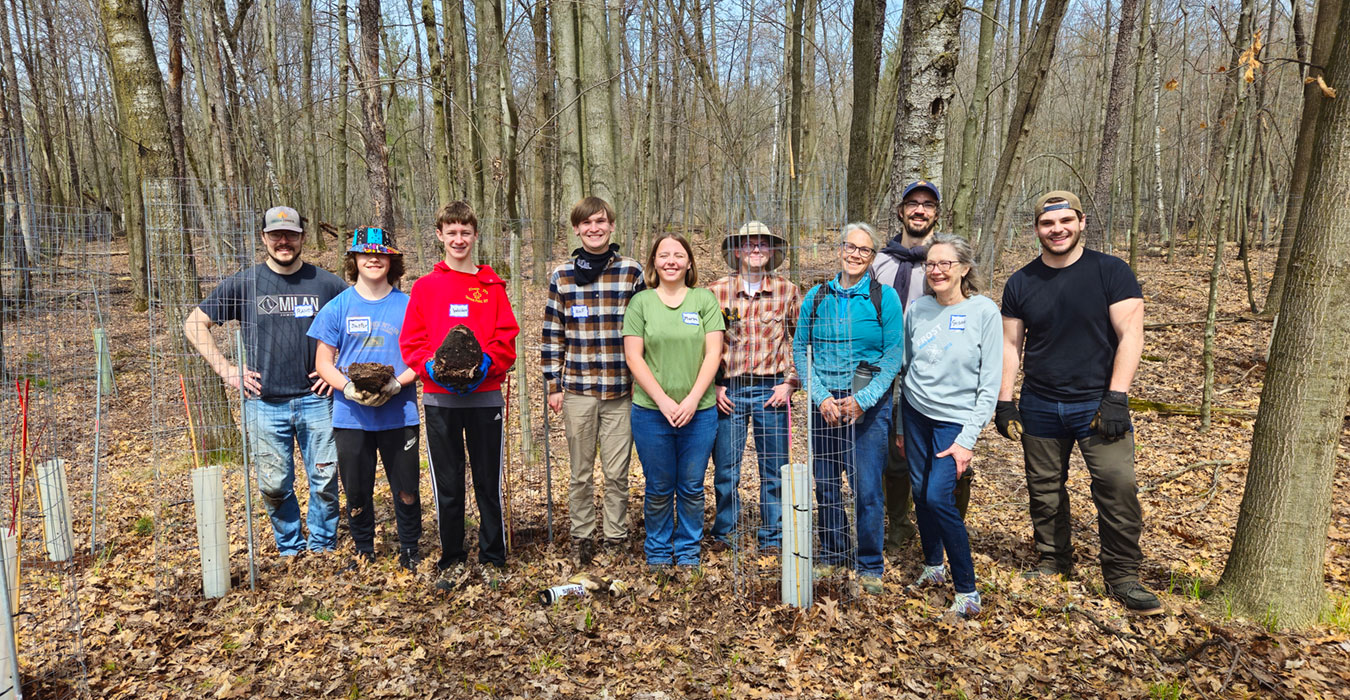
The primary mission of Schmeeckle Reserve is to protect, restore, and manage native ecological communities of central Wisconsin. Numerous active restoration and management sites are located throughout the Reserve. These sites serve as important outdoor learning classrooms for natural resources students and community members. Restoration enhances ecological diversity, improves wildlife habitat, and restores the health of the land.
Restoration and Management Plan
The Schmeeckle Reserve Restoration and Management Plan guides land management efforts on the 280-acre campus natural area. It details management goals and describes large-scale management zones for habitat restoration activities. Specific management objectives are identified for focal units in the next 3-4 years.
The plan was originally created in 2020 by Michael Demchik, Professor of Forestry, and Jim Buchholz, Director of Schmeeckle Reserve. It is revised every 3-4 years based on the objectives that have been accomplished, current research in best management practices, and newly identified issues. The plan is reviewed and approved by the College of Natural Resources Property Management Committee, which is made up of faculty and staff from multiple college disciplines (Fisheries and Water Resources, Forestry, Human Dimensions, Soil and Waste Resources, Wildlife Ecology).
Plan revisions are posted for public comment prior to being approved. If you have any feedback about the plan, feel free to contact us at schmeeckle@uwsp.edu.
Restoration and Management Plan (current)