Physics with Applied Mechanics Emphasis

This is one of the two applied tracks within the physics major aimed at the students who will pursue a career in industry right after graduation. You will take most of the core upper-level physics courses, especially those with a laboratory component. To major in physics with Applied Mechanics Emphasis you are required to participate in an industrial internship. This can take place either at a local business or in London through the Study Abroad Program.

Please consult with the Applied Emphasis Coordinator when planning your major. Some physics courses are offered only in alternate years.

Department of Physics and Astronomy

Why study Physics with Applied Mechanics Emphasis at UW-Stevens Point?

The Department of Physics and Astronomy can help you find satisfying and appropriate employment upon completion of your degree. Graduates have found work as applications engineers, chemists, contractors, combat engineers, researchers, system administrators and teachers. Graduates have also pursued further schooling in aeronautical engineering, applied physics, astronomy, civil and environmental engineering, mathematics, nuclear engineering and security technologies.

Physics majors at UW-Stevens Point can also enjoy study abroad opportunities, including academic coursework at sites worldwide, London internships and short travel courses covering specialized topics.


Scholarships and Awards

The Department of Physics and Astronomy recognizes outstanding students at the annual School of Mathematics, Computing, Physics and Astronomy Awards. In 2026, a total of $55,000 was awarded thanks to our generous donors and endowed scholarships.


Study Abroad

Physics majors at UW-Stevens Point can also enjoy study abroad opportunities, including academic coursework at sites worldwide, London internships and short travel courses covering specialized topics.


REQUIREMENTS:

The physics major with an applied mechanics emphasis consists of a minimum of 61 credits including:  

  1. Math 225, 226, 227, 230.
  2. Chemistry 105 or 117.
  3. Physics 111, 240, 250, 300, 315, 335, 370, 435, 470.
  4. Physics 490 (6 credits).
  5. Economics 110 or Business 320.

More information available on UW-Stevens Point course catalog.

Applied Emphasis Coordinator:
Chris Verzani
Associate Professor

Office: SCI B103
Email: cverzani@uwsp.edu

GET INVOLVED ON CAMPUS

Students interested in engaging with the professional community may get involved in the Society of Physics Students at UWSP. More opportunities can be found on the Stevens Point Involvement Network (SPIN).

Many students in the department are employed in relevant positions during their studies. Research assistants, tutors, graders, planetarium staff members and laboratory assistants are often hired by the department. In addition, a number of scholarships provide financial support to physics majors.

The Department of Physics and Astronomy is a member of the Wisconsin Space Grant Consortium (WSGC). Our students have the opportunity to apply for various types of undergraduate programs and scholarships. Find out if any of these might be right for you.

MEET YOUR FACULTY

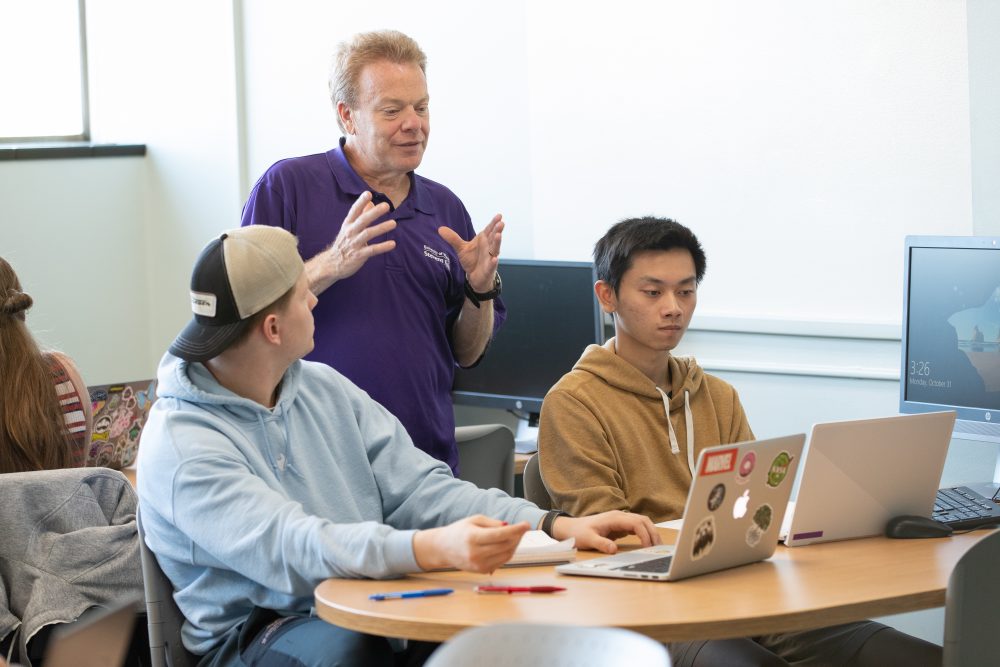
UW-Stevens Point physics classes are small, and students majoring in physics are able to work directly with faculty early in their academic careers. Faculty conduct research in areas such as astrophysics, optoelectronics, materials science, liquid crystals and femtosecond lasers.

Archives: Faculty / Staff Profiles – Faculty / Staff Directory
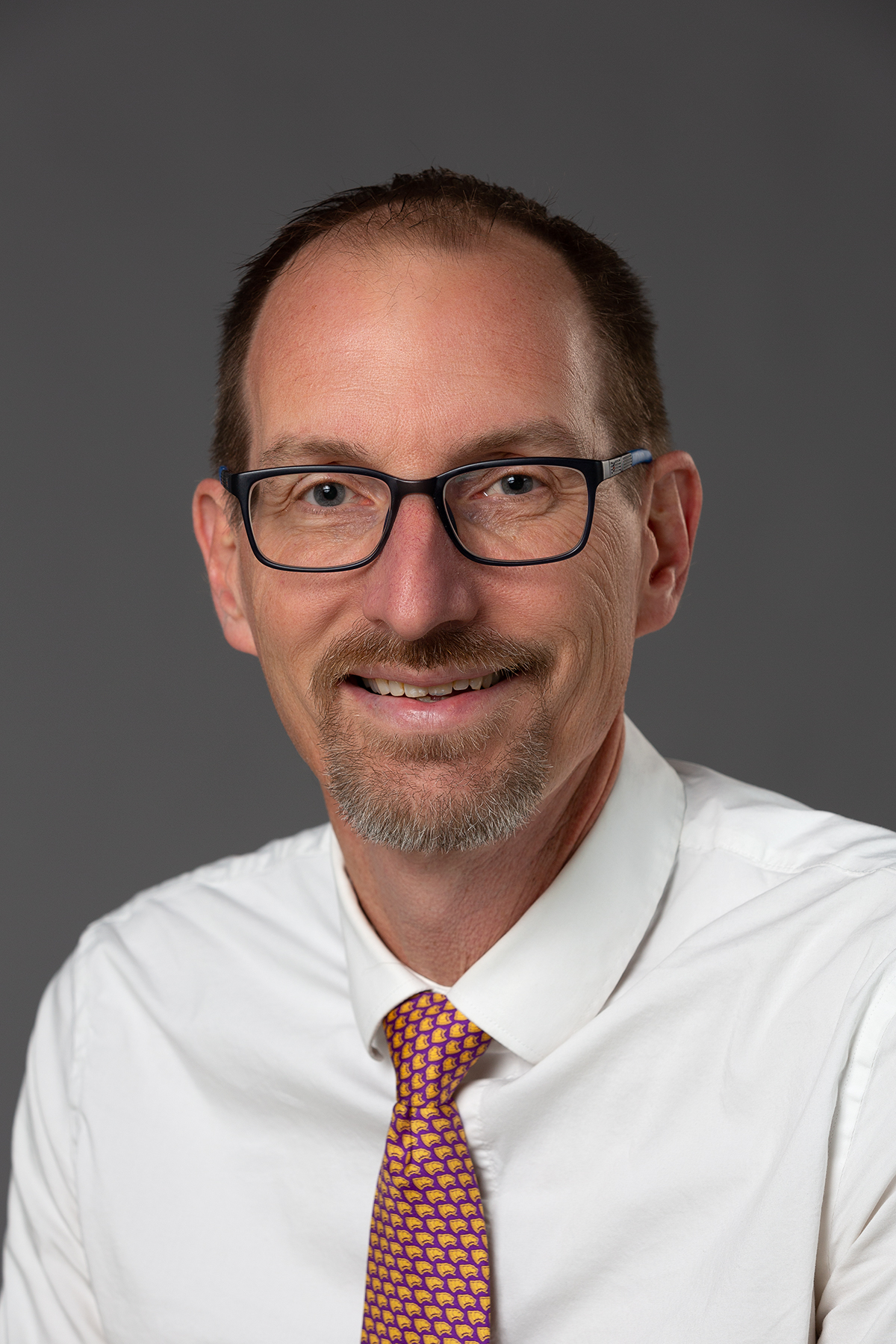
Profile Photo: Brad Hinaus

Brad Hinaus

  • Professor
Profile Photo: Chris Verzani

Chris Verzani

  • Associate Professor
Profile Photo: Mark Holdhusen

Mark Holdhusen

  • Professor
  • Chair, Department of Physics and Astronomy
381-D (UWSP at Wausau) and SCI B109 (Main campus)
Profile Photo: Maryam Farzaneh

Maryam Farzaneh

  • Professor of Physics
  • Physics/Engineering Dual Degree Coordinator

Physics and Engineering Dual

YOUR ENGINEERING CAREER STARTS AT UW-STEVENS POINT WITH THE PHYSICS-ENGINEERING DUAL-DEGREE PROGRAM

The physics-engineering dual-degree program at the University of Wisconsin Stevens Point provides a broad base of skills designed to integrate with a variety of UW System engineering programs.

Students can earn a degree in physics and a second degree in engineering in just five years. This comprehensive program allows you to gain expertise for a career in biomedical, civil, electrical, industrial, materials or mechanical engineering.

Department of Physics and Astronomy

Why study Physics and Engineering at UW-Stevens Point?

You can earn both a Bachelor of Science degree in physics from UW-Stevens Point and a Bachelor of Science degree in engineering from UW-Milwaukee in a total time of five years! Approximately three years (roughly 90-95 credits) of the program are spent at UW-Stevens Point and approximately two years (roughly 60 credits) at UW-Milwaukee. Note: The start of the five-year timeline corresponds with enrollment in MATH 225 (Calculus I) at UW-Stevens Point. There are many variables that affect the time to degree for each individual student.


Scholarships and Awards

The Department of Physics and Astronomy recognizes outstanding students at the annual School of Mathematics, Computing, Physics and Astronomy Awards. In 2026, a total of $55,000 was awarded thanks to our generous donors and endowed scholarships.


UW-Stevens Point Dual-Degree Program Course Requirements

Complete all requirements of UW-Stevens Point’s General Education Program (GEP) for the physics B.S. major. UW-Milwaukee accepts UW-Stevens Point credits to satisfy its own general education requirements for students.

Complete a core set of required courses in physics, mathematics, and chemistry. These include:

  • Math 225, 226, 227, 230, 320.
  • Chemistry 105, 106 (Chemistry 117 may be replaced for the 105/106 sequence.)
  • Physics 240, 250, 300, 315, 470.

Please note that some required core engineering courses (Statics, Dynamics, Engineering Thermodynamics, Mechanics of Materials, etc.) can be completed at UW-Stevens Point at Wausau. You may take these courses either in person or online. Please consult with the dual-degree program coordinator for more details.

Complete two elective upper-level courses in physics, in addition to the core courses. The elective courses may be chosen from the following:

  • Physics 320, 335, 370, 385, 405, 435.

Note: Whether elective courses will satisfy your future engineering requirements is dependent upon the specific elective courses and the specific engineering program to which you are admitted at UW-Milwaukee.

UW-Stevens Point students who meet all course requirements with a GPA of 2.5 or higher will be admitted to an engineering program at UW-Milwaukee.

For more information visit the UW-Stevens Point course catalog. Choose “Academic Programs” and scroll down to “Physics and Engineering, BS Dual-Degree (3 + 2 Track)”

UW-Milwaukee Dual-Degree Program Course Requirements

Complete the remaining core engineering courses required for your engineering degree.

When a minimum of 30 credits of required core engineering courses is completed, students may submit a UW-Milwaukee transcript to UW-Stevens Point for credit transfer. UW-Stevens Point will accept 30 credits of core engineering courses completed at UW-Milwaukee to fulfill the remaining requirements for the physics bachelor’s degree.

 Dual-Degree Program Coordinator

Professor Maryam Farzaneh
Office: SCI-B105 
Email: mfarzane@uwsp.edu

MEET YOUR FACULTY

UW-Stevens Point physics classes are small, and students majoring in physics are able to work directly with faculty early in their academic careers. Faculty conduct research in areas such as astrophysics, optoelectronics, materials science, liquid crystals and femtosecond lasers.

Archives: Faculty / Staff Profiles – Faculty / Staff Directory
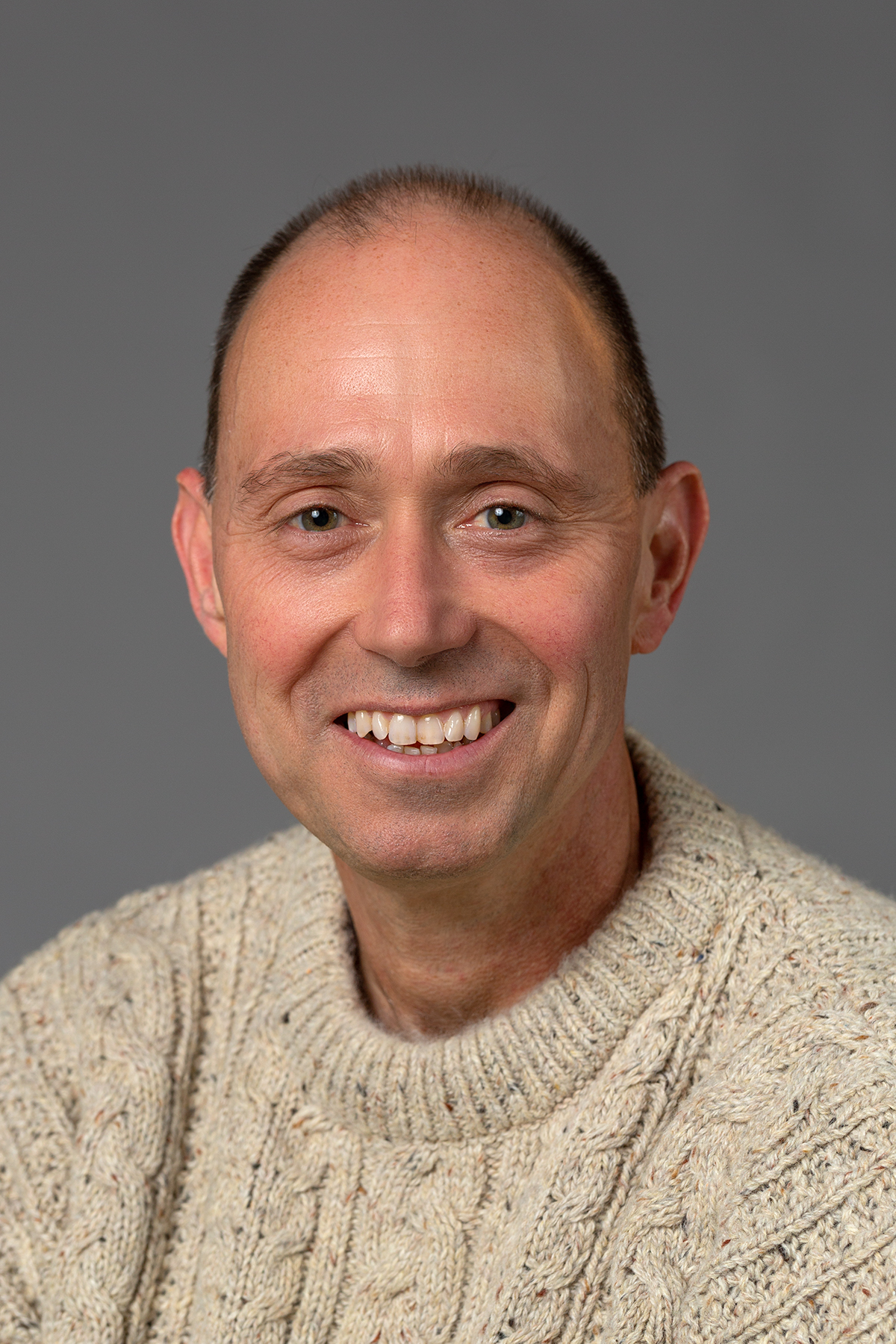
Profile Photo: Kenneth Menningen

Kenneth Menningen

  • Professor
Profile Photo: Mark Holdhusen

Mark Holdhusen

  • Professor
  • Chair, Department of Physics and Astronomy
381-D (UWSP at Wausau) and SCI B109 (Main campus)
Profile Photo: Maryam Farzaneh

Maryam Farzaneh

  • Professor of Physics
  • Physics/Engineering Dual Degree Coordinator
Pre-Engineering Associate of Science

After Fall 2026, we are no longer enrolling in the program.

ACHIEVE A BROAD BASE OF KNOWLEDGE IN ENGINEERING, MATH, AND SCIENCE

The program is designed to provide transfer pathways to a variety of University of Wisconsin System baccalaureate programs and consists of 61-67 credits. The total includes 45 that satisfy general requirements, 15-20 required to provide math and basic science courses relevant to engineering, and 3-4 engineering elective credits. Pre-engineering associate degree courses are delivered primarily face-to-face, with some courses now offered 100% distance delivery.

TRANSFER TO UW SYSTEM ENGINEERING SCHOOLS

The UW-Stevens Point AS in Pre-Engineering allows for smooth transfer into engineering programs across the University of Wisconsin System, including these ABET-accredited engineering programs:

UW-Madison, UW-Platteville, UW-Milwaukee

  • B.S. in Mechanical Engineering
  • B.S. in Civil Engineering
  • B.S. in Electrical Engineering

UW-Stout

  • B.S. in Manufacturing Engineering
  • B.S. in Mechanical Engineering

Other Transfer Possibilities

Milwaukee School of Engineering, Michigan Tech, University of Minnesota-Duluth, University of Minnesota-Twin Cities, and others. Your faculty adviser can assist you in evaluating other programs.

Completing the AS satisfies general education requirements at all UW System schools.

WHAT TO EXPECT

The pre-engineering curriculum gives you a solid foundation in math, chemistry, and physics to prepare you for acceptance into an engineering school. The Pre-Engineering Associate Degree also includes courses that will fully satisfy your general education requirements. You might take a few introductory engineering courses at UWSP, but the primary goal of the pre-engineering curriculum is to prepare you for the engineering courses you will take after transferring to an engineering school.

GET INVOLVED ON CAMPUS

Students interested in engaging with the professional community may get involved in the Society of Physics Students at UWSP. More opportunities can be found on the Stevens Point Involvement Network (SPIN).

Mathematics

SOLVE PROBLEMS AND EXPAND YOUR HORIZONS WITH A DEGREE IN MATHEMATICS FROM UW-STEVENS POINT

A Bachelor of Science degree in mathematical sciences prepares students for jobs in statistics, logistics, actuarial science, mathematical modeling and education. Our students enjoy upper level mathematics courses with 20 or fewer students to allow for individualized support. The mathematics program at UW-Stevens Point is large enough to offer a full range of courses, yet small enough to give you a chance to work directly with professors. We are also noted for our work with technology.

Department of Mathematical Sciences

Why study Mathematics at UW-Stevens Point?

A Bachelor of Science degree in mathematical sciences prepares students for jobs in statistics, logistics, actuarial science, mathematical modeling and education. UW-Stevens Point mathematics graduates enjoy careers in varied industries including insurance, banking, financial services, government, education, software publishing, consulting, e-commerce, health care and law.

 
Kameron Anderson ’23

Graduates to Know

Mathematics Education

Interested in where UW-Stevens Point mathematics graduates end up? Here are some examples from recent graduates of the department.


Scholarships and Awards

High-achieving students are eligible for many significant awards and scholarships thanks to generous support from our alumni, friends, and corporate partners. We have scholarship opportunities for fall and spring semester, with selections determined by the Department of Mathematical Sciences.


Student Opportunities

Use your interest in math to help on campus. Students serve as tutors for over 100 courses each semester in the Tutoring-Learning Center. Our program hires outstanding students recommended by faculty in consultation with the STEM Tutoring Coordinator. Tutors help students understand course material, review for tests, and develop study skills. They bring experience, expertise, and enthusiasm to group discussions and one-on-one tutorials.


WHAT TO EXPECT

After taking three semesters of calculus and one semester of linear algebra, students complete the mathematics degree program. This option allows you the flexibility either to specialize (in applied mathematics for example) or to acquire a broad background in mathematics by selecting from various areas of mathematics such as linear algebra, abstract algebra, analysis, applied mathematics, history of mathematics, number theory, topology, and probability & statistics.

Mathematics is used to solve problems in medicine, economics, management, geography, chemistry, engineering, physics and computer science. On the other hand, mathematics can also be viewed as an artistic expression of intellect. Mathematics is limited only by one’s imagination, logic and creativity. Mathematics has something for everyone!

GET INVOLVED ON CAMPUS

Math Club promotes an appreciation for mathematics and emphasizes its breadth and applications. The club provides opportunities to interact with mathematics and mathematicians, both professional and amateur, through conference trips, guest speakers, competitions and social events.

Work in a unique student-run center that adapts math equations to optimize schedules to serve collegiate teams. The UWSP Center for Athletic Scheduling is a self-supporting, non-profit organization collaborating to meet the needs of intercollegiate athletic conferences across the country. The only of its kind employing undergraduates!

More opportunities can be found on the Stevens Point Involvement Network (SPIN).

The National Science Foundation funds many research opportunities for undergraduates through its Research Experiences for Undergraduates Sites program. An REU Site consists of a group of 10 or so undergraduates who work in the research programs of the host institution. Each student is associated with a specific research project, where he/she works closely with the faculty and other researchers.

Graduate School Opportunities

Graduate school provides an excellent opportunity to learn and do research in any number of exciting areas of mathematics. Also, an advanced degree in mathematics can potentially open up career paths both in industry and academia (i.e. research careers and university careers with teaching and research) that might not otherwise be available to you.


meet your faculty

The Department of Mathematical Sciences has about 20 faculty members. They have interests in topology, geometry, actuarial mathematics, probability and statistics, and operations research. The department includes three Mathematics Education professors who manage the teacher education programs and perform scholarship in the mathematics education field.

View All Faculty

Profile Photo: Cindy McCabe

Cindy McCabe

  • Assistant Dean, School of Mathematics, Computing, Physics…
  • Professor
Profile Photo: Edwin Herman

Edwin Herman

  • Professor
Profile Photo: Kevin Schoenecker

Kevin Schoenecker

  • Associate Professor
Profile Photo: Mick Veum

Mick Veum

  • Professor

Mathematics: Actuarial Option

BEGIN YOUR REWARDING WORK MANAGING RISK; EARN A DEGREE IN ACTUARIAL MATH

The mathematics actuarial program features a strong concentration of mathematics courses, including linear algebra and probability and statistics, along with other courses in applied mathematics, business and economics, and preparation courses for Society of Actuaries (SOA) examinations.

Students graduate with a solid background in math, finance, accounting, and statistics, giving them the experience to succeed as a business professional. The mathematics program at UW-Stevens Point is large enough to offer a full range of courses, yet small enough to give you a chance to work directly with professors.

Department of Mathematical Sciences

Why study Actuarial Mathematics at UW-Stevens Point?

You will work with faculty experienced in actuarial mathematics, probability and statistics, mathematics education and operations research. Our sought-after graduates benefit from small class sizes. They benefit from one-on-one support from faculty-mentors in the Department of Mathematics.


Scholarships and Awards

High-achieving students are eligible for many significant awards and scholarships thanks to generous support from our alumni, friends, and corporate partners. We have scholarship opportunities for fall and spring semester, with selections determined by the Department of Mathematical Sciences.


Student Opportunities

Use your interest in math to help on campus. Students serve as tutors for over 100 courses each semester in the Tutoring-Learning Center. Our program hires outstanding students recommended by faculty in consultation with the STEM Tutoring Coordinator. Tutors help students understand course material, review for tests, and develop study skills. They bring experience, expertise, and enthusiasm to group discussions and one-on-one tutorials.


WHAT TO EXPECT

A Bachelor of Science degree in mathematical sciences prepares students for jobs in actuarial science, statistics, logistics, mathematical modeling and education. UW-Stevens Point mathematics graduates enjoy careers in varied industries including insurance, banking, financial services, government, education, software publishing, consulting, e-commerce, health care and law.

There is excellent job security and job placement for a career in actuarial math. According to the U.S. Bureau of Labor Statistics, employment of actuaries from 2024-2034 will grow 22 percent, much faster than average occupation growth in the period.

While the Mathematics major with Actuarial Emphasis is specifically designed to fulfill actuarial society requirements, the content courses also provide preparation for careers in Business and Finance with a stronger quantitative background than a Business major. A double major with Data Analytics provides an excellent background in Quantitative Business Analysis, for example. Other options that students may consider are a Mathematics major with a Business or Economics minor; a Business or Economics major with a Mathematics minor, or a Mathematics/Economics double major. With proper course selection, any of these combinations may also cover the same material.

GET INVOLVED ON CAMPUS

Math Club promotes an appreciation for mathematics and emphasizes its breadth and applications. The club provides opportunities to interact with mathematics and mathematicians, both professional and amateur, through conference trips, guest speakers, competitions and social events.

The Center for Athletic Scheduling is a self-supporting, non-profit, student-run organization whose mission is to provide athletic schedules to intercollegiate athletic conferences across the country.

More opportunities can be found on the Stevens Point Involvement Network (SPIN).

The National Science Foundation funds many research opportunities for undergraduates through its Research Experiences for Undergraduates Sites program. An REU Site consists of a group of 10 or so undergraduates who work in the research programs of the host institution. Each student is associated with a specific research project, where he/she works closely with the faculty and other researchers. The American Mathematical Society provides other sponsored and grant-funded student opportunities.

MEet your faculty

The Department of Mathematical Sciences has about 20 faculty members. They have interests in topology, geometry, actuarial mathematics, probability and statistics, and operations research.

View All Faculty

Profile Photo: Cindy McCabe

Cindy McCabe

  • Assistant Dean, School of Mathematics, Computing, Physics…
  • Professor
Profile Photo: Edwin Herman

Edwin Herman

  • Professor
Profile Photo: Kevin Schoenecker

Kevin Schoenecker

  • Associate Professor
Profile Photo: Mick Veum

Mick Veum

  • Professor

Computer Information Systems

PURSUE A BACHELOR’S DEGREE IN A CUTTING-EDGE TECHNOLOGY PROGRAM AT UW-STEVENS POINT

The Department of Computing and New Media Technologies provides unique opportunities through four options in the Computer Information Systems (CIS) major. Earn your B.S. or B.A. in Networking, your B.S. or B.A. in Application Development and Support, a Cybersecurity B.S. or the Security Studies B.A.

The CIS curriculum introduces students to concepts in programming, algorithms, databases, computer networking, web applications and systems analysis. Students learn to incorporate these into today’s networked world by designing and implementing production level software systems. Students develop valuable theoretical knowledge, technical skills, and practical experiences as part of their coursework using state of the art tools and technologies in the field.

TRACKS OF STUDY:
Range from minimum 55- 61 credits

Department of Computing and New Media Technologies

WHY STUDY Computer Information Systems AT UW-STEVENS POINT?

Our curriculum provides a wide range of opportunities that can meet a variety of interests in the area of computer information systems. Our department has long-standing connections with companies and organizations in which students enjoy numerous internship and employment opportunities. Computing and New Media Technologies graduates rank among the top on campus in gaining employment in applicable fields or continuing studies in a related field.


Scholarships and Awards

The Department of Computing and New Media Technologies administers several awards to recognize outstanding student performance. Awards are presented annually in the spring semester.


Gain Real World Experience

This past year, students spent 6,000 hours working on software and web development with local organizations through their capstone experiences.  We strive to connect students with opportunities to put their theoretical knowledge into practical application. 

Local employers in the computer information systems and web development programs include Sentry Insurance, Skyward, WildCard Corp, Marshfield Clinic Information Systems, Berkshire Hathaway Travel Protection, NorthWinds Technology Solutions, and others. Computing majors are in demand — most students have jobs lined up before graduation.


WHAT TO EXPECT

Our students are widely successful in internship placements with area and out-of-state employers. A growing number of companies hire students during the summer and school year to give students more experience and attract students to permanent jobs after graduation. More than 85% of students are hired upon completing CIS internships. Beyond central Wisconsin, CIS alumni have found success in Fortune 500 companies such as Microsoft, Amazon and Visa—and a variety of startups across the country.

The computer information systems program at UW-Stevens Point provides a rich academic training and practical experience in computing. We keep our students up to date with the most recent advances and trends by offering a rich set of electives that cover topics including mobile application development, parallel programming, game development, and front-end frameworks, just to name a few recent examples. As a CIS student, you will have access to state-of-the-art classrooms and labs, as well as software and services such as Azure Dev Tools for Teaching and Amazon AWS.

In our CIS program, students will get to know the faculty and academic staff well, thanks to courses that are in most cases capped at 24 seats. Students get the chance to work with faculty on undergraduate research and independent study on topics including game design machine learning, information security, and more. You will be exposed to foundational topics in computing from your first semester

GET INVOLVED ON CAMPUS

Students are encouraged to talk to their faculty adviser about jobs available in our Skyward Internship Center, in the Science Building, and the Sentry Insurance Co-op program. We continue to promote and support employer-sponsored student internship programs in CNMT with various local businesses and non-profit organizations.

Join a group of like-minded students in the field. Student organization opportunities can be found on the Stevens Point Involvement Network (SPIN).

MEET OUR FACULTY

In the Computing and New Media Technologies, students will find a department fueled by knowledgeable and compassionate faculty and staff, dedicated to teaching, research, and community outreach.

View All Faculty

Profile Photo: Hardeep Kaur Dhalla

Hardeep Kaur Dhalla

  • Associate Professor
Profile Photo: Tim Krause

Tim Krause

  • Professor
  • Chair, Department of Computing and New Media Technologies
  • [ More… ]
Profile Photo: Tomi Heimonen

Tomi Heimonen

  • Associate Professor
  • Academic Director, M.S. Cybersecurity online degree program
Profile Photo: Weimin He

Weimin He

  • Professor

Web Development

LEAD THE TECHNOLOGICAL REVOLUTION WITH A DEGREE IN WEB DEVELOPMENT

In today’s connected world, digital and web-based experiences are the backbone of successful products and services. The Web Development program at UW-Stevens Point emphasizes training students in the design, development, and evaluation of interactive technologies.

Job prospects for Web Development (WD) graduates are excellent in areas such as user experience (UX) design and research, user interface (UI) design, interaction design, e-commerce, mobile design and development, and website design, development, and administration. Computing and New Media Technologies graduates majoring and minoring in Web Development rank among the top on campus in gaining employment in applicable fields or continuing studies in a related field.

$
80,000
Median Salary
—bls.gov
23
%
Growth through 2031
—bls.gov
85
%
Hired from Internship

The employment growth rate for web developers and digital designers is projected to increase 16% through 2032. The median annual salary for 2023 was over $98,500, according to the U.S. Bureau of Labor Statistics.

Department of Computing and New Media Technologies

Why study Web Development at UW-Stevens Point?

Learn different aspects of human-technology interaction, from how humans perceive and think to designing interactions and user interfaces that fit human needs and goals. The Web Development curriculum provides a wide range of opportunities in user experience and UI design, web design and development, and usability evaluation, including elective courses in game design, online marketing and e-commerce, and behavioral design. Nationally, our graduates work for Microsoft, UserTesting, Expedia, CGI, and others. They also have attended graduate programs at places like Iowa State University, University of Michigan, University of Washington, and Georgia Institute of Technology.


Scholarships and Awards

The Department of Computing and New Media Technologies administers several awards to recognize outstanding student performance. Awards are presented annually in the spring semester.


Outside the Classroom

Web Development students are in demand and have several avenues for paid internships and part-time employment locally to build their skills in real-world settings. Students will also gain valuable networking opportunities through guest lectures from alumni and the Computing and New Media Technologies capstone experience. Ongoing internship opportunities are available with local employers such as Sentry Insurance, Skyward, and WildCard Corp.


WHAT TO EXPECT

The Web Development program at UW-Stevens Point takes a multidisciplinary approach to preparing graduates for roles in which they collaboratively study, design and develop interactive products and services through a user-centered design process. Through user research, interaction design and prototyping, programming, and evaluation, web development graduates have a direct impact on the usability and user experience of new software programs, websites and devices. As a Web Development student, you will have access to state-of-the-art classrooms and labs, as well as design software and services such as Adobe CC suite, Axure RP, and Balsamiq Mockups.

In our Web Development program, you will be exposed to foundational topics in computing from your first semester. You will get to know the faculty and academic staff well, thanks to courses that are in most cases capped to 24 students and will have the opportunity to work with them on undergraduate research and independent study on topics including game design, front-end web development, web design, and more.

GET INVOLVED ON CAMPUS

Students are encouraged to talk to their faculty adviser about jobs available in our Skyward Internship Center in the Science Building and the Sentry Insurance Co-op program. We continue to promote and support employer-sponsored student internship programs in CNMT with various local businesses and non-profit organizations.

Join a group of like-minded students in the field. More student group opportunities can be found on the Stevens Point Involvement Network (SPIN).

NOW HIRING!

A crucial question in choosing a major is, “Can I find a job when I graduate?” Our dedicated faculty and staff play a central role in helping graduates find satisfying and appropriate employment upon completion of Computer Information Systems or Web Development degrees.

We have graduates employed with:

  • UserTesting.com
  • Quantum Metric
  • Marshfield Clinic Information Systems
  • Sentry Insurance
  • Skyward
  • Element Creative

Graduate Programs

Achieve your goals with accredited, 100% online programs. UWSP Online Master of Science online degrees can help you build upon your technological training with the support and learning flexibility you need for that next step in your career path. Online degrees are offered in partnership with UW Extended Campus.

Meet Your Faculty

Faculty in the Department of Computing and New Media Technologies have extensive experience and are committed to providing individual attention in small classes.

Profile Photo: Susan Weinschenk

Susan Weinschenk

  • Senior Lecturer
Profile Photo: Tim Krause

Tim Krause

  • Professor
  • Chair, Department of Computing and New Media Technologies
  • [ More… ]
Profile Photo: Tomi Heimonen

Tomi Heimonen

  • Associate Professor
  • Academic Director, M.S. Cybersecurity online degree program

Chemistry Minor

The UW-Stevens Point chemistry minor is designed to give students a solid background in chemistry to supplement a major in other areas. The objective of a minor in chemistry is to provide you with knowledge of introductory and intermediate chemical principles and to have you acquire sufficient technical skills to perform capably in a modern chemical laboratory.

The minor consists of 26 credits (21 credits if taking Chem 117).

You may take one of the following course sequences:

  • Chem 105 and 106 or Chem 117, 248, 325, 326, and a minimum of 4 credits selected from Chem 329, 335, 365, 371, 373, 387, 395 or the combination of Water/Geology 487 and Water 492.
  • Chem 105 and 106 or Chem 117, 220, 248, 260, and the combination of Water/Geology 487 and Water 492.

It is highly recommended that students select the courses required to fulfill the minor in consultation with the faculty of the Department of Chemistry and Biochemistry in order to best complement the student’s major and career goals.

For more information visit the UW-Stevens Point course catalog.

Chemistry (ACS Certified)

STUDENTS PURSING A CHEMISTRY DEGREE WILL FIND A CHALLENGING, MODERN COURSE OF STUDY

The University of Wisconsin-Stevens Point Department of Chemistry and Biochemistry provides a supportive learning environment. Chemistry appeals to us because it touches on each branch of the physical sciences including biology, earth science, and environmental science.

Students may earn the American Chemical Society-certified chemistry degree. The certification indicates that the student has completed rigorous course work that provides them with the skills needed for a successful career in science. About 35 percent of UW-Stevens Point chemistry and biochemistry graduates go on to graduate or professional schools.

Department of Chemistry and Biochemistry

WHY STUDY CHEMISTRY AT UW-STEVENS POINT?

The Department of Chemistry and Biochemistry offers a challenging and modern course of study in a supportive learning environment. The department plays a central role in helping graduates find satisfying, appropriate employment through personal referrals and shared openings. Personal letters of recommendation are also available from faculty familiar with the student’s performance record. UWSP chemistry students take classes and conduct research in the university’s Haeni Chemistry Biology Building, a state-of-the-art, $75 million facility.


Guidance Just for You

We are committed to helping you achieve both your personal and professional goals. Students will work with their adviser to plan out their course of study, and discuss career options, and on- and off-campus opportunities including research internships and scholarships. If you love science, our university will feel like home to you!


Scholarships and Awards

The Department of Chemistry and Biochemistry administers several awards to recognize outstanding student performance in the chemistry curriculum. Awards are presented annually in the spring semester.


WHAT TO EXPECT

The $75 million Haeni Chemistry Biology Building is home for all chemistry majors. The department houses approximately $2 million of state-of-the-art instrumentation, giving students access to equipment used in diagnostic labs, hospitals, graduate programs, and environmental analysis labs throughout the country.

UWSP graduates in chemistry and biochemistry are extremely competitive in today’s job market. Successful job placement is usually attained within six months of graduation.

Chemistry pairs well with a variety of other UW-Stevens Point programs, including biology, mathematics, physics, paper science, chemical engineering, and psychology.

GET INVOLVED ON CAMPUS

The department supports the local chapter of the American Chemical Society-Student Affiliate. Also known as Chemistry Club, ACS-SA is a student-run organization that promotes interest in chemistry and science in general to campus and the local community.

The Department of Chemistry and Biochemistry has a variety of interesting research projects for students to choose from. Projects are available in the areas of nanotechnology, polymer chemistry, organic and inorganic synthesis, analytical chemistry, computational chemistry, environmental chemistry, biochemistry, microbiology, and molecular biology. Many chemistry majors present their research at the on-campus College of Letters and Sciences Undergraduate Research Symposium, at off-campus scientific conferences, and as co-authors on refereed journal articles.

MEET OUR FACULTY

Our chemistry courses, including laboratories, are taught by 15 Ph.D.-trained chemists who excel as instructors and mentors. Our faculty’s expertise encompasses every sub-discipline of chemistry. Meet your professors!

View All Faculty

Profile Photo: Joseph Mondloch

Joseph Mondloch

  • Associate Professor
Profile Photo: Kathryn McGarry

Kathryn McGarry

  • Associate Professor
Profile Photo: Nate Bowling

Nate Bowling

  • Professor
Profile Photo: Shannon Riha

Shannon Riha

  • Associate Professor
CBB 448

Aquaculture/Fish Culture

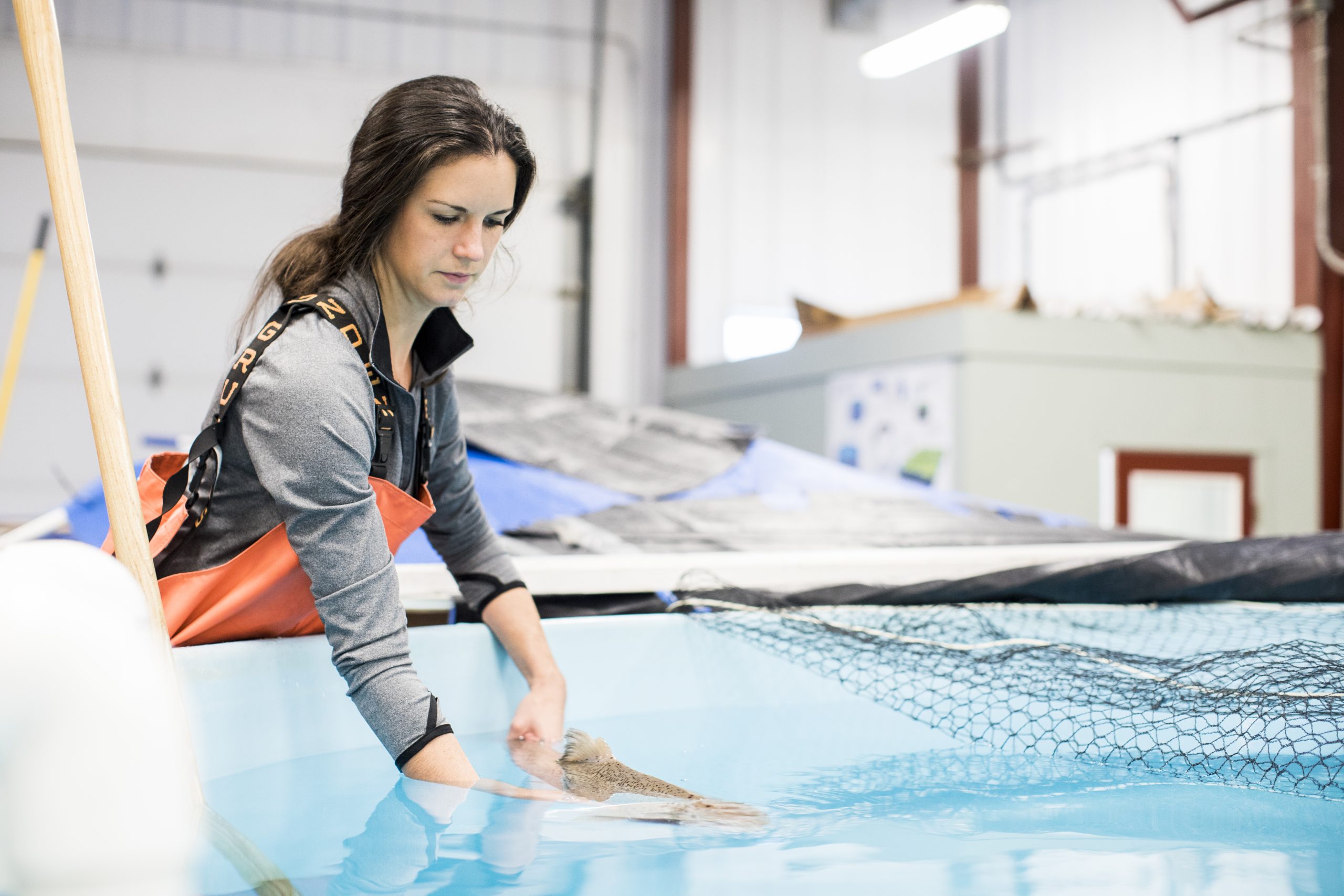
UWSP is leading the nation in aquaculture and aquaponic education opportunities through Wisconsin’s first aquaculture/Fish Culture Minor and hands-on internships at the state-of-the-art UWSP Northern Aquaculture Demonstration Facility. 

Aquaculture is the discipline that studies the culture of finfish, methods of production, environmental and ecological manipulation and assessment, selective breeding, nutrition, diseases, processing, marketing and operating of culture facilities. The aquaculture minor has been designed so that students interested in commercial fish farming, aquarium trade, or state, federal, and tribal hatchery programs can select from a cluster of elective courses to specialize the minor for their interests.

LEARNING SUSTAINABLE AQUACULTURE RESEARCH AND DEVELOPMENT

The UWSP Northern Aquaculture Demonstration Facility has a strong presence in student aquaculture education and job placement including internship opportunities and technician positions for recent graduates. The facility is national leader in aquaculture training and skill development, leading to nearly 100% job placement for aquaculture technicians and interns.

Aquaculture continues to be the fastest segment of food production systems globally. Students receive a unique and important skillset through the university as well as internships and technician positions at the state-of-the-art UWSP Northern Aquaculture Demonstration Facility. This unique training program leads to a rewarding career in aquaculture, aquaponics, fisheries or similar fields.

For more information visit the UW-Stevens Point course catalog.