

ADVANCE YOUR MUSIC EDUCATION CAREER
UWSP’s music education courses are designed to facilitate the further development of knowledge, skills, and abilities of already successful music educators. The Music Education program at UWSP has a proud tradition beginning in 1959 when it became the first program in the Wisconsin State College System to offer the Bachelor of Music Education degree. As the arts programs grew at UWSP, the Noel Fine Arts Center was built in the early 1970’s with new facilities constructed in the early 2000’s. Today, the College of Fine Arts and Communication enrolls more than 230 majors, including subjects in art, theatre, music, and dance. It ranks best in state, and overall in the top 7% nationally.
- Earn your degree in as little as 2 years.
- Attend full or part-time.
- Small class sizes with different opportunities for interaction.
- Interact with friendly educators on our faculty – all with classroom experience.
- Pursue your degree over the summers only. (Summers only may not be available for all certificate tracks.)
- Join your peers in an interactive virtual community of current music educators throughout your graduate school experience.
- Culminate your study with a thesis of independent research on a topic of interest to you, which will be published in an open-source format through the UW library system.
CLASSROOM PEDAGOGY TRACK
The 100% online Classroom Pedagogy Track program is designed for those with a degree in music education who are currently certified music teachers. This track offers course options in general, choral, and instrumental music. This 30-credit MME program is ideal for the working music teacher and will help you further your professional development and prepare you to be a leader in our field. In this program, you will improve your competency in music philosophy, methodology, literature, research, and applied musical experiences while applying the most recent trends and innovations in music education.
Please note that this program does not lead to teacher certification.
If you have not taken all the required classes for Music Education during your undergraduate degree program, you may need to take some in-person classes. A program of study requiring the appropriate additional in-person undergraduate classes can be developed for someone who does not have the requisite degree or certification by consultation with the music department graduate adviser. International students who are music teachers outside of the United States might not require state certification.
STUDIO PEDAGOGY TRACK
The Studio Pedagogy Track is a hybrid program for studio teachers who hold an undergraduate degree in music. This is a customizable 30-credit MME program that is ideal for the performer who intends to teach private lessons, as it will help you further your professional development while also helping you hone your performance and publication skills in the field of music pedagogy. This track allows you to pursue graduate-level certificates in conducting, music theory, and music history.
Admission Requirements
To be considered for admission:
- Complete university application forms for admission, which can be found here.
- Complete the music department application forms.
- Submit an official transcript of all undergraduate or graduate work you have done at other institutions.
- Meet these requirements for certain tracks:
a. Classroom Pedagogy Track: an undergraduate degree in music education.
b. Studio Pedagogy Track:- Undergraduate degree in applied music or music education (teacher certification optional).
- Approval of faculty in your major area of performance.
OR - Admission by faculty evaluation based on performance area, music courses taken toward a related undergraduate degree, and significant involvement in studio teaching and performance. You may be required to take additional courses.
- Schedule an interview with the Director of Music Education.
For any questions about admission to the program, please contact the Director of Music Education at beaguila@uwsp.edu or the Graduate Program Manager at dbreisac@uwsp.edu.
Although it is not a requirement, it is in your best interest to send materials at least two months before you wish to register for classes. All international students and those with international transcripts should contact the Director of Music Education, Dr. Beatriz Aguilar, at beaguila@uwsp.edu to inquire about additional documentation that may be required. You will be contacted for an intake interview after all items are received.
4 + 1 Pathway Admission Requirements for Current Undergraduate Students
Graduate policy permits undergraduate students to enroll in graduate courses under certain conditions. If you are an undergraduate student, you may be permitted to enroll concurrently in undergraduate and graduate courses provided you:
- Obtain the written approval of your undergraduate adviser. Fill out this form.
- Have met the prerequisites for the graduate course.
- Obtain the written approval of the chair of the department in which the graduate course is offered.
- Understand that, unless enrollment is part of a specified undergraduate and graduate program, there is no guarantee that the graduate course will count toward a master’s degree.
- Understand that you will be assessed graduate fees for graduate courses.
- Do not exceed a combined undergraduate and graduate credit load of 16 credits.
- Understand that 700-level applied lessons can be taken only when students have completed their undergraduate level lesson requirements.
Special/Non-Degree Graduate Students
If you wish to take graduate courses but do not want to pursue a master’s degree at UWSP, you may register as a graduate special. You must hold a bachelor’s degree from an accredited institution to attend as a graduate special. You do not need to complete a formal application. You will be granted graduate special status when you register for classes. As a graduate special student, you may enroll in graduate-level courses and receive graduate credit for teacher certification requirements or personal enrichment. A maximum of nine credits can apply toward a master’s degree if they are approved by your advisor and fit within the seven years required for completion of the degree. If you decide to pursue a master’s degree, it is in your best interest to change your status to graduate regular as soon as possible.
Advising
After you apply for admission to the MME, you will receive a letter from the Graduate School indicating whether you have been admitted, as well as any conditions of admission that must be satisfied. You should then contact the music department graduate advisor, Dr. Beatriz Aguilar, at beaguila@uwsp.edu. The graduate advisor will meet with you for the next stage of planning, your advising appointment. During your appointment, your advisor will review your program requirements, provide you with your Program Handbook, discuss your interests and goals, and complete your Program of Study. Your Program of Study is your “plan of action,” listing courses you will take to complete your master’s degree. During your graduate program, you should meet with your advisor regularly to complete your program and plan for your research project and thesis. Not every class is offered each term. Your advisor will know what courses will be offered in the near future and can help you plan.
Grades and GPA
MME students must earn a grade of B or higher in each of their professional music education core courses. Students must maintain an overall grade point average (GPA) of 3.0 or more in their graduate-level classes (500-level or higher) to stay in good academic standing. Graduate students must earn a grade of B- or higher in undergraduate-level classes taken to satisfy undergraduate content area deficiencies. Students are placed on academic probation at the end of any semester in which their cumulative graduate GPA is below 3.0. A probationary student must obtain a semester GPA of at least 3.0 in the first semester of probation; failure to do so will result in academic dismissal. If a probationary student can raise their semester GPA to a 3.0 or higher during the first semester of probation, but their overall GPA is still below a 3.0, the student will be given one additional semester to raise their cumulative GPA to a 3.0 or higher; failure to do so will lead to dismissal. For the process of requesting reinstatement after dismissal, see the music department graduate advisor.
Academic Load
Full-time and part-time registration guidelines can be found here. The standard full-time load is nine to twelve credits during the Fall and Spring semesters, no more than six credits in the Summer (six credits in any four-week period), and three credits in Winterim. International students enrolled in fewer than these numbers of credit hours should contact the Office of International Students and Scholars. Students may take courses full-time or part-time. Financial Aid is available.
Transfer Credit and Residency Requirements
Transfer credit must apply to the UWSP degree program, have a grade of B or higher (grades of “pass,” “satisfactory,” or “credit” cannot be transferred unless noted on the transcript key as equivalent to a B or higher grade), not be out-of-date per the degree time limitation (see below), be recommended by the music department graduate advisor and approved by the registrar, and be documented as graduate credit on an official graduate transcript from an accredited institution. Regardless of transfer credit, at least 20 graduate hours beginning the semester of acceptance and enrollment into the program must be earned at UWSP to satisfy the residency requirement. Minimum degree hours must still be met for graduation.
Time to Degree
UWSP graduate students must complete master’s degree requirements within seven years of first enrollment in the master’s degree program. Regardless of time limitations listed, no student will be allowed to graduate using any coursework older than 10 years from any institution.
Master Thesis
Graduate students in the Classroom Pedagogy Track are required to write and defend a thesis. Students in the Studio Pedagogy Track are required to give a Performance Capstone Recital which features a performance and lecture that may be related to their thesis topic. Students in this track should work with their applied faculty and the Director of Music Education to come up with a suitable thesis topic. This is the capstone project, and the degree will be conferred after successful defenses.
Thesis Advising Committee
- Generally, the student will select a thesis adviser appropriate to the topic of the thesis. The main adviser must be approved by the Director of the MME.
- In consultation with the thesis adviser, the student will select two other members of the department to serve as supplemental advisers for the thesis and as members of the oral defense committee. In collaboration with the main thesis adviser, it might be decided to include someone outside the department with expertise in the topic of the thesis.
Applying for Graduation
You must apply for graduation within the first two weeks of the semester in which you will complete all classes required for the degree. You apply for graduation at the Records and Registration Office.
Program Learning Outcomes
Upon completion of the Master of Music Education degree, you will demonstrate the following competencies:
- Pedagogical skills
You will employ critical, thoughtful pedagogy in the planning, delivery, and assessment of music teaching and learning. You will create engaging and diverse learning experiences for your own students while setting appropriately rigorous standards for achievement in your music classrooms. The practical teaching skills that you develop in this program will enhance the quality of music teaching in Wisconsin and beyond. - Pedagogical knowledge
You will demonstrate knowledge of music pedagogy through teaching, writing, speaking, creating, and performing music. You will apply strategic research techniques to address current and future challenges in the field of music education, and you will be informed about the current best practices in music pedagogy. You will develop new methods of effective teaching that align with the most recent research and knowledge in the field. - Musicianship
You will demonstrate mature musicianship skills on your primary instrument and in the classes that you teach. You will apply rigorous analytical techniques to written music, demonstrate advanced aural musicianship, and model the same professional performance standards to which you hold your own students. - Disposition
You will demonstrate an ongoing commitment to your own learning and professionalism as leaders in the field of music education. You will have the desire and resources to identify and undertake opportunities for professional growth. You will actively pursue strategies to address challenges in the field of music education to advance the discipline.
Course Requirements
To earn your degree, earn at least 30 graduate credits of which 10 must be in music education courses.
Choose one track:
Classroom Pedagogy Option
Required: 30 Credits
Complete ALL of the following Courses:
- MUED 602 – Research in Music Education Credits: 3
- MUED 701 – Philosophy of Music Education I: Historical Perspectives Credits: 3
- MUED 702 – Philosophy of Music Education II: Sociological and Psychological Perspectives Credits: 3
- MUED 787 – Seminar in Music Education Credits: 3
- MUED 795 – Conducting for the Ensemble and Classroom Teacher Credits: 1-3
- MUED 799 – Thesis Credits: 1-3
AND - Music Theory Elective at the 500-level or greater 3 Credits
- Music History Elective at the 500-level or greater 3 Credits
- Elective at the 500-level or greater 3 Credits
- Elective at the 500-level or greater 3 Credits
Notes: - MUED 787 should be taken twice with different topics for a total of 6 Credits
- MUED 799 should be taken for 3 Credits (Additional credits of MUED 799 may be required to fulfill defense, but any additional credits taken will not count towards the overall credits or electives in the program)
Studio Pedagogy Option
Required: 16 Credits
Complete ALL of the following Courses:
- MUED 602 – Research in Music Education Credits: 3
- MUED 780 – Performance Capstone Recital Credits: 1
- MUED 799 – Thesis Credits: 1-3
AND - Music Theory Elective at the 500-level or greater 3 Credits
- Music History Elective at the 500-level or greater 3 Credits
- Elective at the 500-level or greater 3 Credits
- Elective at the 500-level or greater 3 Credits
Music Education Core Option at the 700-level
6 Credits
Earn at least 6 Credits from the following:
- MUED 701 – Philosophy of Music Education I: Historical Perspectives Credits: 3
- MUED 702 – Philosophy of Music Education II: Sociological and Psychological Perspectives Credits: 3
- MUED 787 – Seminar in Music Education Credits: 3
- MUED 791 – Piano Pedagogy Credits: 3
- MUED 792 – Voice Pedagogy Credits: 3
- MUED 793 – Woodwind Pedagogy Credits: 3
- MUED 794 – Brass Pedagogy Credits: 3
- MUED 795 – Percussion Pedagogy Credits: 3
- MUED 796 – String Pedagogy Credits: 3
- MUS 760-779 – Applied Artist Lessons at the Graduate Level Credits: 8 Must be on the same instrument.
Academic Requirements for 4 + 1 Pathway Students
Classroom Pedagogy Option
A maximum of 15 credits of graduate coursework can be applied toward the 120 total credits required for a baccalaureate degree and toward the 40 required credits at the 300/400 level.
Suggested Core Courses (9 credits):
- MUED 388/588 – Integrative Music Education (Counts as MME Elective at the 500-level requirement) Credits: 3
- MUED 402/602 – Research in Music Education (Can count as one of the undergraduate electives, but must be taken at the graduate level) Credits: 3
- MUS 315/615 – Orchestration Credits: 3
- MUS 394 or 395/794 or 795 – Conducting Credits: 3
Additional MME required courses for 4+1 Pathway students
- MUED 701 – Philosophy of Music Education I: Historical Perspectives Credits: 3
- MUED 702 – Philosophy of Music Education II: Sociological and Psychological Perspectives Credits: 3
- MUED 787 – Seminar in Music Education Credits: 3 (Two seminars required, on different topics, for a total of 6 credits)
- MUED 799 – Thesis Credits Credits: 1-3 (Enroll for 3 credits the initial semester; enroll for 1, 2, or 3 credits, at the discretion of the Director of Music Education, and depending on how much faulty time will be required, until defense)
Required Elective Courses (12 credits):
- Music Theory Elective – At the 500-level or greater Credits: 3
- Music History Elective – At the 500-level or greater Credits: 3
- Elective – At the 500-level or greater Credits: 3
- Elective – At the 500-level or greater Credits: 3
MME Graduate Certificates
Open to students majoring in a graduate music education degree. Consists of 12 credits.
Conducting Graduate Certificate Requirements
Conducting, 6 Credits:
- MUS 795 – Conducting for the Ensemble and Classroom Teacher 3 Credits
Conducting Symposium, 3 Credits:
- MUS 617 – Conducting Symposium Credits: 3
Literature & Practice, 3 Credits:
Take one of the following courses in your primary area of interest:
- MUS 623 – Choral Literature Credits: 3
- MUS 624 – Wind Band History and Literature Credits: 3
- MUS 627 – Symphonic Music Credits: 3
Note:
Students who wish to apply for this certificate must first submit a 10-15 minute video sample of their conducting, including rehearsal and performance selections to the department.
Music Theory Graduate Certificate Requirements
Consists of a minimum of 10 Credits
Required, 5 Credits
Earn at least 5 credits from the following:
- MUED 651 – Pedagogy of Rhythm Credits: 3
- MUS 515 – Orchestration Credits: 2 or 3
- MUS 610 – Form and Analysis I Credits: 3
- MUS 613 – Schenkerian Analysis Credits: 3
- MUS 615 – Contemporary Music Theory for Music Teachers Credits: 3
- MUS 640 – Pedagogy of Music Theory Credits: 3
- MUS 655 – Analysis, Interpretation, and Performance Credits: 3
Music History Graduate Certificate Requirements
Consists of a minimum of 12 Credits
Required, 6 Credits
Complete ALL of the following courses:
- MUS 710 – History of Music Theory Credits: 3
- MUED 701 – Philosophy of Music Education I: Historical Perspectives Credits: 3 -or-
- MUED 702 – Philosophy of Music Education II: Sociological and Psychological Perspectives Credits: 3
Electives, 6 Credits
Earn at least 6 Credits from the following:
- MUS 505 – Jazz History for Musicians Credits: 3
- MUS 508 – Survey of Film Music Credits: 3
- MUS 523 – Opera History Credits: 3
- MUS 623 – Choral Literature Credits: 3
- MUS 624 – Wind Band History and Literature Credits: 3
- MUS 627 – Symphonic Music Credits: 3
Meet Your Faculty and Staff
Our faculty work professionally as performers, directors, and composers who through their experience and dedication help ensure our students are successful.
Click to view the entire Department of Music faculty
Beatriz Aguilar
- Assistant Professor – Music
- Director of Music Education
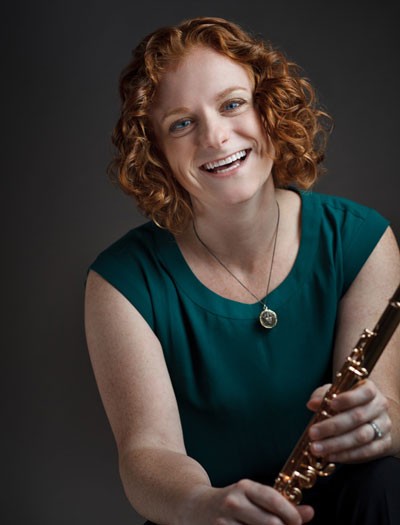
Danielle Breisach
- Lecturer – Flute
- Graduate Program Manager
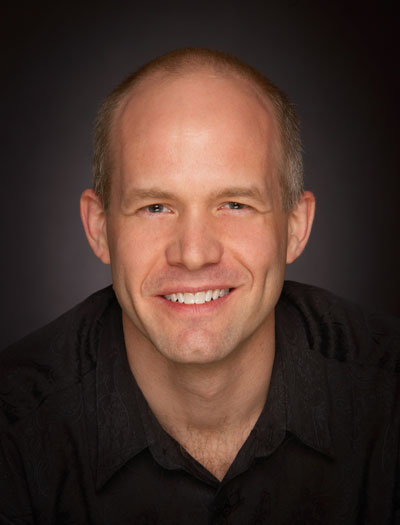
Mathew Buchman
- Department Chair – Music
- Professor – Jazz Studies
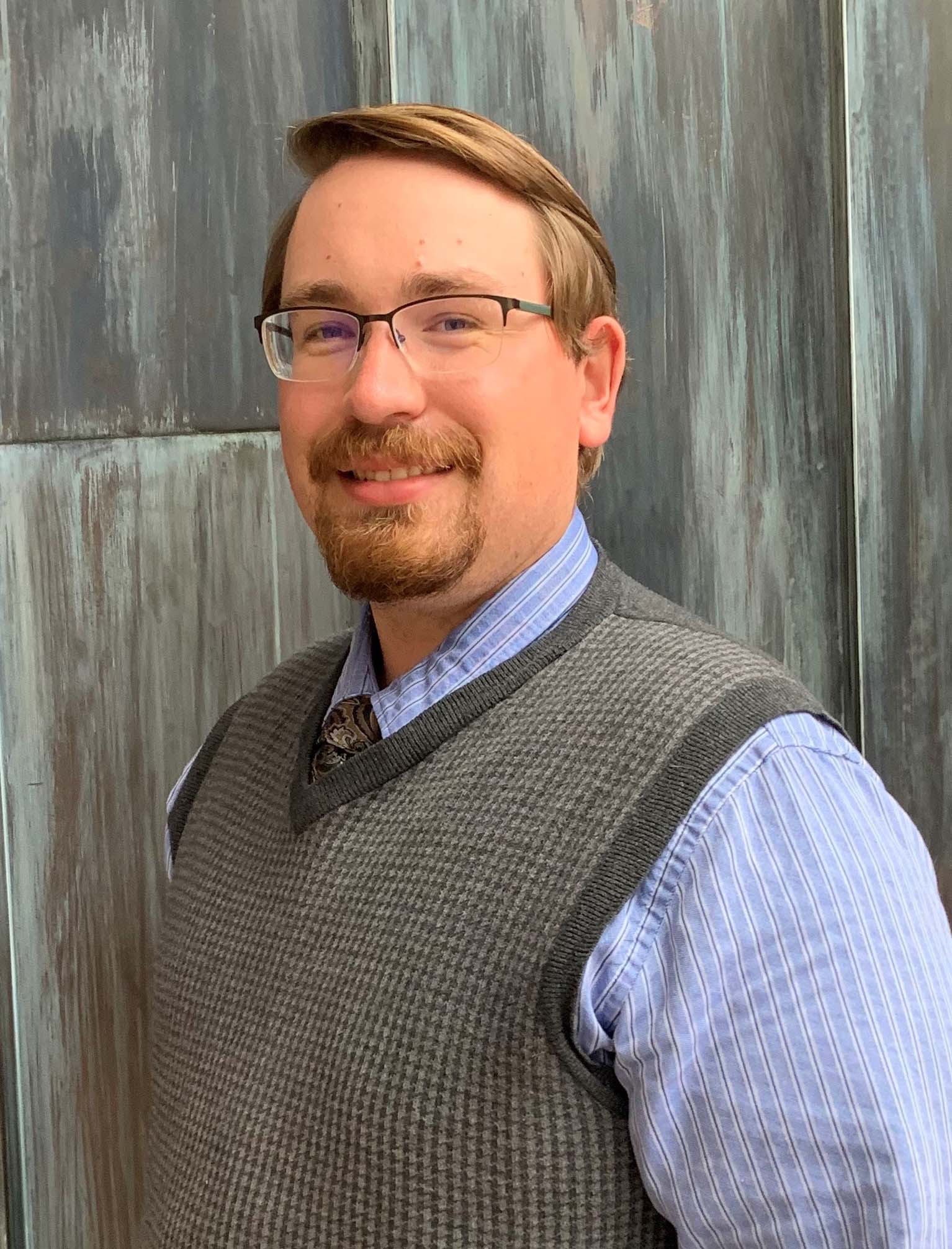
Andrew Slembarski
- Administrative Specialist – Music
upcoming cofac events
The College of Fine Arts and Communication offers more than 500 events open to the public each academic year! These include dance, music, and theater performances, master classes, guest artists, gallery exhibitions, SPTV broadcasts, WWSP radio programs, media and video productions among many other student-created pieces.
While the academic year has concluded, we have an exciting summer ahead! Watch our website for the 2026-27 theatre and dance season announcement, free public concerts during the American Suzuki Institute this July, Carlsten Gallery exhibits and more!
National Association of Schools of Music

Founded in 1924, the National Association of Schools of Music (NASM) is an organization of schools, conservatories, colleges, and universities with approximately 637 accredited institutional members. It establishes national standards for undergraduate and graduate degrees and other credentials for music and music-related disciplines and provides assistance to institutions and individuals engaged in artistic, scholarly, educational, and other music-related endeavors.
The College of Fine Arts and Communication at UW-Stevens Point is accredited by the National Association of Schools of Music.