Turn Knowledge into Real World Impact
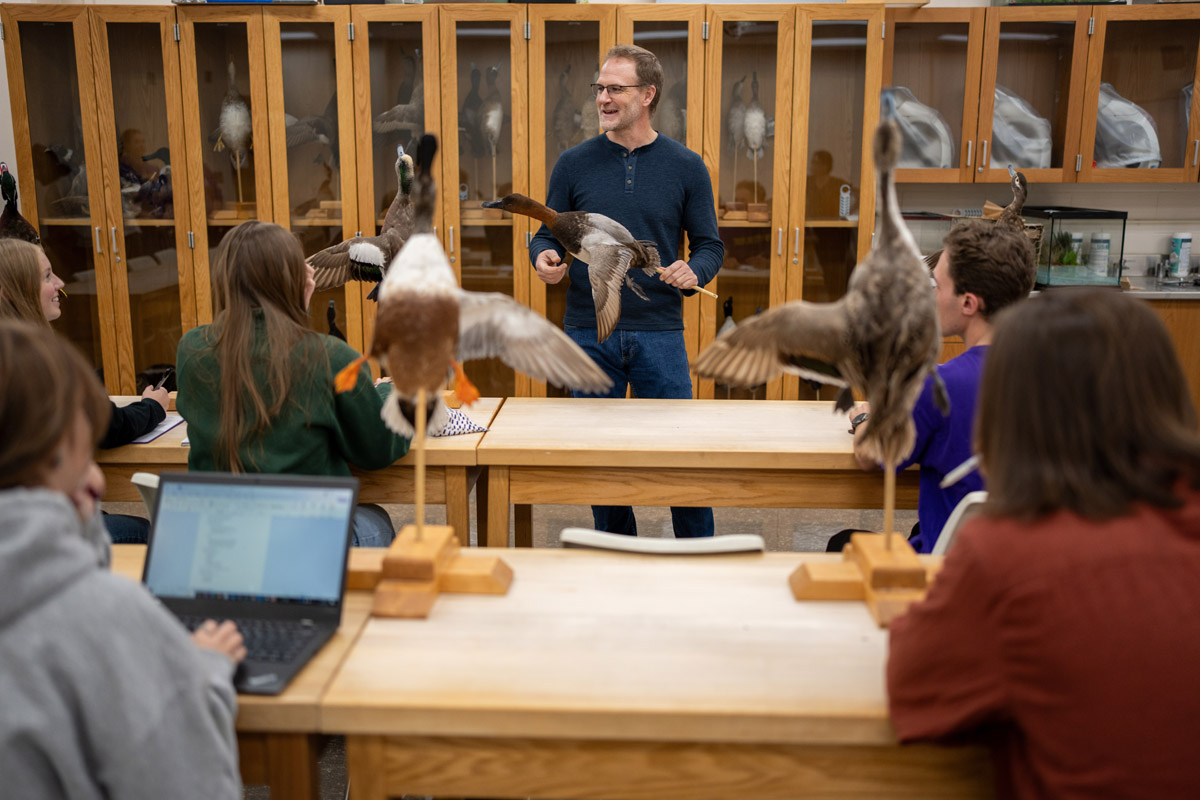
At the University of Wisconsin–Stevens Point College of Natural Resources, you learn by doing, building real skills through hands-on experiences, outdoor learning, and supportive guidance from caring instructors, and turning knowledge into real-world impact as you discover how to understand and care for the natural world around you.
Education Rooted in the Real World
At the University of Wisconsin–Stevens Point College of Natural Resources, education is rooted in the real world, learning happens in the field, in the lab, and in the communities you will one day serve. With diverse programs across the natural resources spectrum, you will find opportunities to explore your interests and turn your passion into a meaningful future. Our community includes more than 1,500 undergraduate students, 123 faculty and staff, and a global network of over 13,000 alumni leading in wildlife, forestry, fisheries, water resources, environmental science, paper science and chemical engineering, and related fields. Through internships, research, scholarships, and active student organizations, students gain hands-on experience and build the skills, connections, and confidence to become leaders who make a difference.
UW-Stevens Point
Why Choose the College of Natural Resources?
At the University of Wisconsin–Stevens Point College of Natural Resources, your ambitions and curiosity become the foundation for a rewarding future. Our diverse programs empower you to dive into your interests, whether in science, stewardship, problem-solving, environmental education, or making a positive impact on your community. All the support and resources you need are here in the CNR.
These opportunities help you discover what inspires you, uncover new interests, and develop the skills and confidence to pursue a career you truly love.
College of Natural Resources
Featured Videos
Discover more about our diverse majors by watching our informative videos. Dive deeper into each field and see what the University of Wisconsin-Stevens Point College of Natural Resources has to offer!
Hired Before Graduation
Many students in the College of Natural Resources are hired before graduation. Explore the exciting career paths your degree can open up.
Discover Your Path in the College oF Natural Resources
The College of Natural Resources offers a well-rounded education across six distinct academic disciplines, making it ideal for prospective students passionate about the environment. Dive into Fisheries and Water Resources, Forestry, Environment and Society, Paper Science and Chemical Engineering, Soil and Waste Resources, and Wildlife Ecology to gain the knowledge and skills needed for a successful career. Explore the links below to find the perfect fit for you. Explore our full range of academic offerings, including available minors, in our program directory.
Explore Your Future in Natural Resources and Engineering
Undergraduate Programs
Our undergraduate programs provide opportunities to explore research, fieldwork, and experiential learning while developing practical skills and real-world experience for careers in environmental and natural resource professions, as well as paper science and chemical engineering. Explore the links to learn more about each program area.
Advance Your Impact Through Graduate Education
Graduate Programs
Expand your knowledge and leadership skills through graduate programs focused on research, applied learning, and professional development in natural resources and environmental fields. Explore the links to learn more about each graduate degree option.
Build Specialized Skills and Professional Experience
Certificates
Designed for undergraduate students, professionals, and lifelong learners, certificate programs provide focused training and specialized knowledge in high-demand areas across natural resources and environmental sciences. Explore the links to find a certificate that supports your academic or career goals. An asterisk (*) denotes a graduate-level certificate option.
Where Nature Meets Education and Exploration
The College of Natural Resources greatly benefits from its three field stations: Treehaven, Schmeeckle Reserve, and the Central Wisconsin Environmental Station (CWES). These field stations enrich students’ educational experiences, preparing them for careers in environmental conservation and resource management.
Central Wisconsin Environmental Station
Located on Sunset Lake, 17 miles east of Stevens Point, the Central Wisconsin Environmental Station (CWES) is a hub for teaching and learning. CWES fosters connections between human and natural communities through hands-on experience, education, and research.
Schmeeckle Reserve
A 280-acre natural space essential to our programs and community, featuring hiking trails, a serene lake, and diverse wildlife habitats. Schmeeckle is a destination for relaxation, research, and outdoor education.
Treehaven
Home to our immersive 6-week summer field experience, Treehaven is nestled in Wisconsin’s Northwoods. It offers youth programs and adult workshops in topics such as snowshoe construction and wolf ecology, making it an ideal setting for outdoor learning and research.
Empowering Communities through Outreach and Extension
At the College of Natural Resources at the University of Wisconsin–Stevens Point, our extension and outreach programs embody the Wisconsin Idea by serving communities across the state. We provide hands-on learning, professional development, and research opportunities in environmental education, sustainable land use, wildlife conservation, fishery research, forestry practices, and outdoor skills. These programs are designed to extend the benefits of our university’s expertise to improve the lives and environments of Wisconsin residents.
Programs identified with an asterisk (*) are partially supported through a partnership with the University of Wisconsin–Madison Division of Extension, combining statewide Extension resources with UW–Stevens Point expertise to enhance outreach, applied research, and community engagement across Wisconsin.
Becoming an Outdoors-Woman
Becoming an Outdoors-Woman (BOW) is a non-profit, educational program offering hands-on workshops to adult women. We encourage a supportive environment conducive to learning, making friends, and having fun. No experience is necessary, and BOW is for women of all ages and fitness levels.
Center for Land Use Education*
The Center for Land Use Education, also known as CLUE, creates learning opportunities for communities to help them make sound land-use decisions that result in a sustainable Wisconsin.
Center for Watershed Science and Education*
The Center for Watershed Science and Education supports watershed stewardship; Assists citizens with lake, river, and drinking water quality problems; promotes management strategies for water resource protection; provides water quality assessment and support and prepares students for careers as water resource professionals.
Extension Lakes*
Extension Lakes is a team of education professionals dedicated to preserving Wisconsin’s lakes legacy through education, communication, and collaboration. They work with thousands of people interested in lakes, including waterfront property owners and over 750 lake organizations in Wisconsin, and coordinate a number of programs and projects to assist those concerned with the future of our lakes.
Wisconsin Center for Environmental Education
The Wisconsin Center for Environmental Education (WCEE) strives to improve the environmental, social, and economic vitality of our communities. Its statewide K-12 energy and forestry education programs provide professional development, hands-on classroom resources, and ready-to-use lessons.
Wisconsin Center for Wildlife*
The Wisconsin Center for Wildlife (WCW) engages students, landowners, professionals, and others in sustainable wildlife management through research, education, and outreach.
Wisconsin Cooperative Fishery Research Unit
The Wisconsin Cooperative Fishery Research Unit provides fisheries and aquatic science research and M.S. graduate education through a unique collaboration of the U.S. Geological Survey, the Wisconsin Department of Natural Resources, and the University of Wisconsin-Stevens Point
Wisconsin Forestry Center*
The Wisconsin Forestry Center is dedicated to serving the needs of Wisconsin’s forestry community through partner-driven professional development, workforce recruitment and development, applied research, and community outreach initiatives.
Wisconsin Institute for Sustainable Technology
The Wisconsin Institute for Sustainable Technology (WIST) harnesses the University of Wisconsin-Stevens Point’s knowledge to develop and advance the efforts of the business community and state and national partners. From research and development of practical solutions in industry and agriculture to advocacy for Wisconsin’s resources, WIST is a unique leader within the UW-System.
Alumni and Giving
The UW-Stevens Point College of Natural Resources students are empowered to become leaders in environmental stewardship, paper science and chemical engineering, sustainability, and resource management. Guided by integrity, innovation, collaboration, and commitment to the natural world, our graduates are prepared to tackle critical challenges and create lasting impacts locally and globally. Join us in shaping the future by supporting the next generation of conservation professionals.
Give to the CNR
Support the College of Natural Resources at UW-Stevens Point and help students pursue their passions. Your gift will make a lasting impact on their education and the future of conservation and innovation.
Alumni Maps
Explore the diverse and impactful careers held by graduates from the UW-Stevens Point College of Natural Resources (CNR). Whether you are a recent graduate or a seasoned alum, your story can inspire and guide today’s students.
All CNR Programs
Explore the diverse programs offered through the College of Natural Resources at the University of Wisconsin–Stevens Point and discover opportunities that match your interests, goals, and passion for the environment, sustainability, and applied sciences. With hands-on learning, research, and real-world experiences, you can find the path that fits you best while building skills for the future.