Physics

SMALL CLASSES, BIG ACHIEVEMENTS AWAIT YOU IN THE pHYSICS PROGRAM

Do you want a deeper understanding of how the physical universe works? If you’re curious about the world around you and you enjoy learning how physics explains everyday phenomena, the Department of Physics and Astronomy at UW-Stevens Point is the place for you!

Upper level students have co-authored published articles in scientific journals; others have presented talks describing their research at national conferences and regional meetings. Approximately half of our graduates accept fellowships or assistantships for advanced study at institutions across the country. Physics majors at UWSP can also enjoy study abroad opportunities, including academic coursework at sites worldwide, and short travel courses covering specialized topics.

Department of Physics and Astronomy

Why study Physics at UW-Stevens Point?

The Department of Physics and Astronomy can help you find rewarding employment upon completion of your degree. Graduates have found work as applications engineers, chemists, contractors, combat engineers, researchers, system administrators and teachers. Graduates have also pursued further schooling in aeronautical engineering, applied physics, astronomy, civil and environmental engineering, mathematics, nuclear engineering and security technologies. Current research activities involving students majoring in physics include astrophysics, optoelectronics, materials science, liquid crystals, and femtosecond lasers.

Physics and Astronomy Facilities

Grow your passion for astronomy and physics when you study at UWSP.  Hands-on learning opportunities include:

Through faculty research collaboration, the department has access to the world’s largest fully steerable radio telescope, the 100-meter Green Bank Telescope in West Virginia.


Dual Degree Physics and Engineering 3 + 2

Earn two degrees in five years, a bachelor of science degree in physics from UW-Stevens Point and a bachelor of science degree in engineering (biomedical, civil, electrical, industrial, materials or mechanical engineering) from UW-Milwaukee. The program includes three years and 90-95 credits at UW-Stevens Point and two years and 60 credits at UW-Milwaukee.

The dual-degree program helps students interested in an engineering career to get an enhanced background in physics. It will help you to distinguish yourself when you start your career, as well as when you must adapt to fast-paced industries in the long term.


Scholarships and Awards

The Department of Physics and Astronomy recognizes outstanding students at the annual School of Mathematics, Computing, Physics and Astronomy Awards. In 2026, a total of $55,000 was awarded thanks to our generous donors and endowed scholarships. Faculty will select the recipients based on academic achievement and scholastic merit.


WHAT TO EXPECT

Students work closely with professors in challenging coursework to earn a Bachelor of Science or Bachelor of Arts degree in physics. With either degree, a student may attain certification to teach at the secondary level.

Our department also offers two tracks within the physics major for students who plan to pursue a career in industry right after graduation: Physics Major with Applied Emphasis in Mechanics and Physics Major and the Physics Major with Applied Emphasis in Electronics.  Applied Emphasis majors are required to participate in an industrial internship either locally or in London through the Study Abroad Program.

Students may also lay the foundation for a career in biomedical, civil, industrial, materials or mechanical engineering as part of a physics/engineering dual-degree (3+2) program offered through a partnership with UW-Milwaukee. You can earn two degrees in five years through this dual-degree collaboration!

Academic minors may be obtained in physics, astronomy and natural science. Courses in astronomy are offered at the introductory and advanced levels. Pre-professional fields of study, such as engineering and medicine, also require certain courses in physics.

GET INVOLVED ON CAMPUS

Students interested in engaging with the professional community may get involved in the Society of Physics Students at UWSP. More opportunities can be found on the Stevens Point Involvement Network (SPIN).

Many students in the department are employed in relevant positions during their studies. Research assistants, tutors, graders, planetarium staff members and laboratory assistants are often hired by the department. In addition, a number of scholarships provide financial support to physics majors.

MORE STUDENT OPPORTUNITIES

Physics majors at UW-Stevens Point have been quite successful in national competition for summer research internships. In recent years, junior and senior level students have participated in programs at institutions such as Argonne and Brookhaven National Laboratories, Marshfield Clinic, Lucent Technologies, and at universities such as Cornell, MIT, Michigan State, and UW-Eau Claire. In addition, UWSP students enjoy access to a wide variety of study abroad opportunities. You could learn physics overseas!


MEET YOUR FACULTY

UW-Stevens Point physics classes are small, and students majoring in physics are able to work directly with faculty early in their academic careers. Faculty conduct research in areas such as astrophysics, optoelectronics, materials science, liquid crystals and femtosecond lasers.

Archives: Faculty / Staff Profiles – Faculty / Staff Directory

Profile Photo: Brad Hinaus

Brad Hinaus

  • Professor
Profile Photo: Chris Verzani

Chris Verzani

  • Associate Professor
Profile Photo: Mark Holdhusen

Mark Holdhusen

  • Professor
  • Chair, Department of Physics and Astronomy
381-D (UWSP at Wausau) and SCI B109 (Main campus)
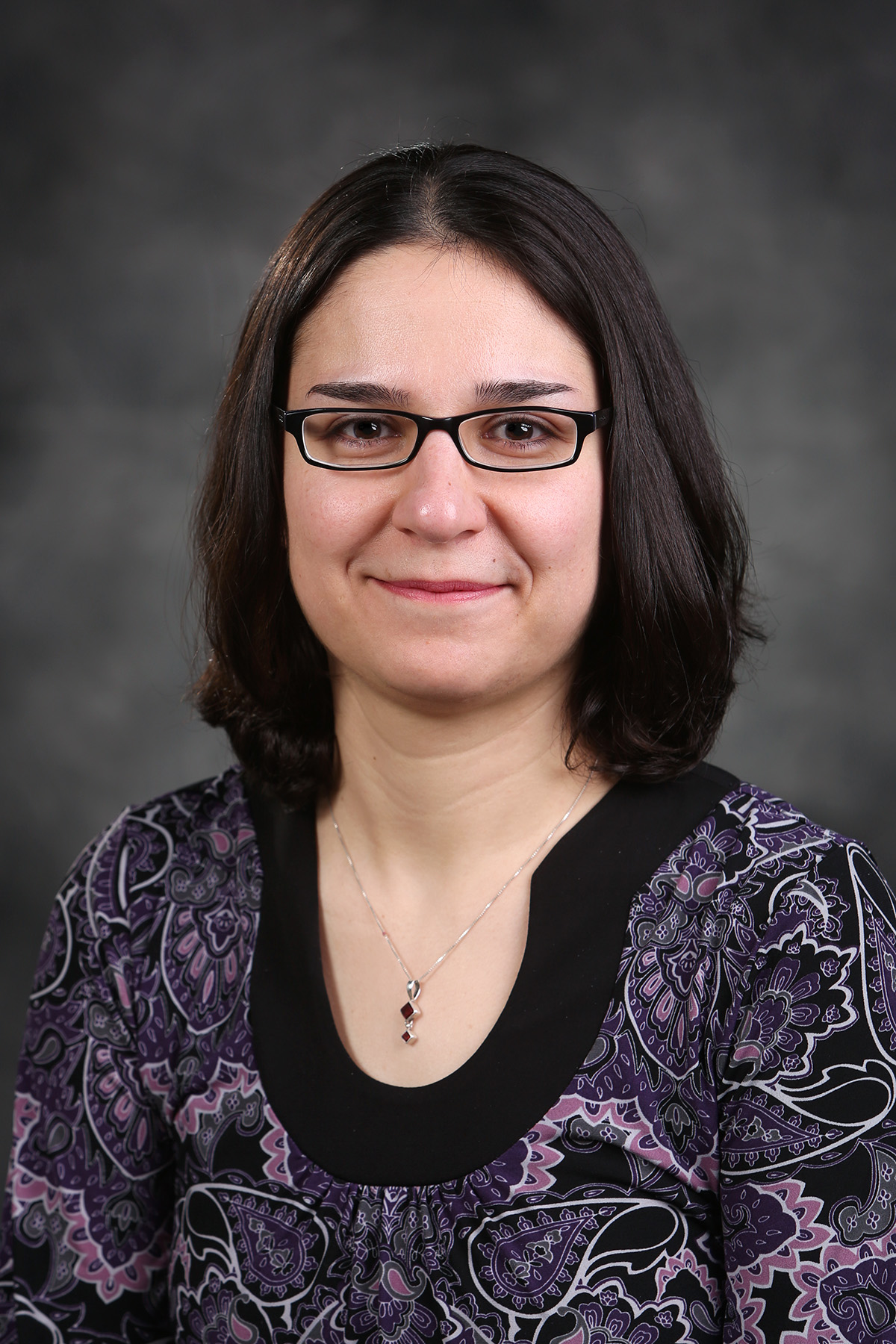
Profile Photo: Maryam Farzaneh

Maryam Farzaneh

  • Professor of Physics
  • Physics/Engineering Dual Degree Coordinator

Web Development

The Web Development minor provides students with a foundation in web design and development, including the theory and practice of human-centered design and evaluation with a focus on usability and user experience, and fundamentals of working with modern web technologies.

As a Web Development student, you will have access to state-of-the-art classrooms and labs, as well as design software and services such as Adobe CC suite, Axure RP, and Balsamiq Mockups.

This minor pairs well with disciplines that benefit from user-centric design and evaluation skills, and it is recommended for students majoring in Computer Information Systems who wish to deepen their understanding of developing interactive applications.

The Web Development minor consists of at least 29 credits:

Requirements: WD 100, 201, 310; CNMT 101, 110, 210.  
Electives: Take three credits of WD courses numbered 300 and above.

For more information visit the UW-Stevens Point course catalog.

Meet Your Faculty

Faculty in the Department of Computing and New Media Technologies have extensive experience and are committed to providing individual attention in small classes.

View All Faculty

Profile Photo: Chad Johnson

Chad Johnson

  • Assistant Professor
  • Coordinator, Digital Forensics and Recovery Analysis Lab
Profile Photo: Tim Krause

Tim Krause

  • Professor
  • Chair, Department of Computing and New Media Technologies
  • [ More… ]
Profile Photo: Tomi Heimonen

Tomi Heimonen

  • Associate Professor
  • Academic Director, M.S. Cybersecurity online degree program

Computer Information Systems

The Computer Information Systems minor provides students with a foundation in computing through coursework in programming, database design and development, web design and development, and networking. This minor pairs well with disciplines that benefit from computational skills, and it is recommended for students majoring in Web Development who wish to specialize in software development.

The CIS minor consists of at least 31 credits:

Requirements: CIS 120, CIS 225 or CNMT 210, CIS 210 and 220, CNMT 101, 110, and 310, and MATH 209.

For more information visit the UW-Stevens Point course catalog.

Artificial Intelligence

MASTER AI AND THRIVE IN TECH SOLUTIONS WITH YOUR ARTIFICIAL INTELLIGENCE DEGREE

The artificial intelligence program at the University of Wisconsin-Stevens Point integrates machine learning, natural language processing, programming for AI, deep learning, and big data into coursework that prepares you to lead in innovative roles. Employers are actively seeking qualified people who have a deep understanding of AI development and can harness its potential for societal good.

Your skills in AI analysis and design can shape your chances to lead in this challenging and exciting area of technology! You will get to know the faculty and academic staff well, thanks to courses that are in most cases capped at 24 students. We offer foundational topics in computing starting from your first semester.

Department of Computing and New Media Technologies

Why Study Artificial Intelligence at UW-Stevens Point?

Students in the UWSP Artificial Intelligence program are uniquely prepared to innovate with skills in programming and software development, natural language processing and project management that set the program apart. Our major curriculum immerses students in both computational and human sciences with programs not offered by other universities in ethics and emerging trends. You will study human-centered AI implications such as privacy, security, equity and bias. Not just a focus but a comprehensive bachelor’s program, the Artificial Intelligence degree aligns with projected employment growth for computer and information technology occupations of 12% from 2018 to 2028, much faster than the average for all occupations.

Prepare for these Top 3 Occupations:

  • Software Developers
  • Computer and Information Systems Managers
  • Computer Systems Analysts


Career-Ready Skills

From employer-sponsored student internship programs to presentations and other networking and career-skills workshops, the faculty of the Department of Computing and New Media Technologies help students get immersed in resources that grow their confidence. The forward-thinking curriculum ensures deep understanding on the technical side as well as soft skills such as collaboration, problem solving, communications and critical thinking, required of computer systems professionals.


What to Expect? 

Artificial intelligence is incorporated in facets of daily living that affects us all. Professional career opportunities span nearly industry from financial services and gaming to national security and technology. Overall employment of software developers, quality assurance analysts, and testers is projected to grow 17 percent from 2023 to 2033, much faster than the average for all occupations. For computer and information research scientists, that number is projected as high as 26% growth, according to the U.S. Bureau of Labor Statistics.

UWSP students get the chance to connect with faculty closely, some working with faculty on undergraduate research or in independent study on topics including game design machine learning, information security, and more.

YOU WILL LEARN

  • Programming for AI and machine learning
  • Foundations of AI
  • Deep learning and neural networks
  • Natural language processing
  • Reinforcement learning
  • AI for cloud environments
  • AI for cybersecurity

Get Involved on Campus

Connect with other students and build your professional network. You can join a group of like-minded students to gain valuable insights about the artificial intelligence field. Student organization opportunities can be found on the Stevens Point Involvement Network (SPIN).

CONVENIENCE OF A DOUBLE MAJOR

The Artificial Intelligence B.S. at UWSP is a perfect second major for students focused on software development to graduate with complementary high demand skillsets. The curriculum shares 23 credits with the existing CIS: Application Development Support degree. Moreover, currently enrolled students in the Data Analytics program would also be able to pursue a double-major in Artificial intelligence given the overlap of at least 22 credits between both majors.


MEET OUR FACULTY

The Department of Computing and New Media offers a range of student-centered activities and courses. Faculty and staff in the School of Mathematics, Computing, Physics, and Astronomy maintain relationships with a wide variety of local and regional partners.

Profile Photo: Chad Johnson

Chad Johnson

  • Assistant Professor
  • Coordinator, Digital Forensics and Recovery Analysis Lab
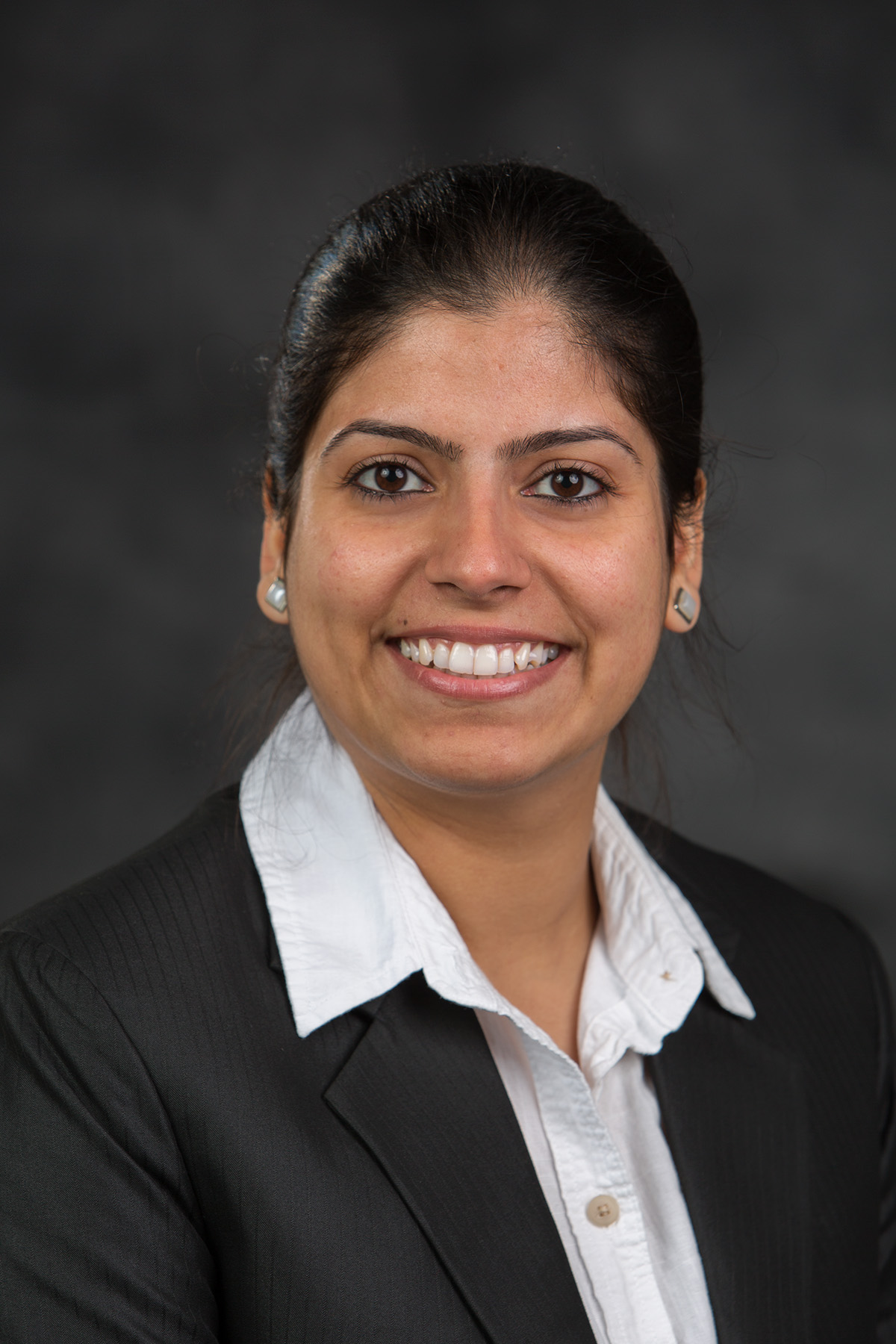
Profile Photo: Hardeep Kaur Dhalla

Hardeep Kaur Dhalla

  • Associate Professor
Profile Photo: Tim Krause

Tim Krause

  • Professor
  • Chair, Department of Computing and New Media Technologies
  • [ More… ]
Profile Photo: Tomi Heimonen

Tomi Heimonen

  • Associate Professor
  • Academic Director, M.S. Cybersecurity online degree program

Mathematics Education

This certificate program is intended for, but not limited to, those students pursuing a degree in elementary education, science education or special education. Can be completed concurrently with the student’s undergraduate degree in education or a related field with consent of program coordinator. 

The certificate is intended to provide mathematics content for those students already completing a major in education, teaching pedagogy and/or curricular design. Courses in this program focus on content standards suggested by the Wisconsin Mathematics Standards and best practices for teaching inquiry-based lessons. The certificate does not meet the requirements for license through the Wisconsin Department of Public Instruction (e.g. Mathematics Education license). 

The certificate program is administered through the Department of Mathematical Sciences.

Consists of a minimum of 15 credits.

Required

EDUC 205: Pluralism for Educators (2 cr.)

Choose 1 of the following:
Option A
MATH 111: Applied Calculus (4 cr.)
MATH 228: Fundamental Mathematical Concepts for Elementary Teachers (3 cr.)

Option B
MATH 225: Calculus (5 cr.)


Choose 2 of the following:
Option A
MATH 340: College Geometry with Teaching Methods (3 cr)
MED 340: Teaching Geometry (1 cr.)

Option B
MATH 226: Calculus II (5 cr.)
MED 350: Probability and Statistics with Teaching Methods (3 cr)
MED 350: Teaching Probability and Statistics (1 cr.)

Option C
MED 379: Teaching Middle School Mathematics (4 cr.)

For more information visit the Course Catalog, select “Permanent Working Catalog” in dropdown menu.

Physics for Educators

This certificate program is intended for, but not limited to, those students pursuing a degree in science education. The certificate can be completed concurrently with your undergraduate degree in Natural Sciences with teaching intent or a related field.

The certificate does not meet the requirements for a Physics license through the Wisconsin Department of Public Instruction.

Consists of 13 credits. View course catalog.
Required Courses, 13 credits:

  • PHYS 203 – College Physics I Credits: 5 and
  • PHYS 204 – College Physics II Credits: 5
    or
  • PHYS 240 – University Physics I Credits: 5 and
  • PHYS 250 – University Physics II Credits: 5

  • PHYS 300 – Modern Physics Credits: 3
    If you are completing the Physics 203/204 sequence, you need to take either Math 111 or Math 225 before taking Physics 300.

Earth and Space Science for Educators

This certificate program is intended for, but not limited to, those students pursuing a degree in science education. The certificate can be completed concurrently with your undergraduate degree in Natural Sciences with teaching intent or a related field. The certificate does not meet the requirements for an Earth/Space license through the Wisconsin Department of Public Instruction.

Consists of a minimum of 15 credits. The certificate is administered jointly by the Department of Physics and Astronomy and the Department of Geography and Geology.

Required Courses, 12 credits

  • ASTR 205 – The Solar System Credits: 4
  • ASTR 206 – Stars and Stellar Systems Credits: 4
  • GEOG 105 – The Dynamic Earth Credits: 3
  • GEOL 106 – Earth History Credits: 1

Elective Courses, 3 credits

Choose From:

  • ASTR 306 – Observational Astronomy Credits: 3
  • GEOG 208 – Weather and Climate Credits: 3
  • GEOG 308 – Climate: Past, Present, and Future Credits: 3 or
  • GEOL 308 – Climate: Past, Present, and Future Credits: 3
  • GEOG 312 – Geomorphology Credits: 3 or
  • GEOL 312 – Geomorphology Credits: 3
  • GEOL 104 – Physical Geology Credits: 4
  • GEOL 230 – Environmental Geology Credits: 3
  • GEOL 370 – Glacial Geology Credits: 3

For more information, please visit the UW-Stevens Point course catalog.

Information Security

The Information Security Certificate is intended for you if you are looking to develop competency in information security, either on your way to earning a degree in another technology field or as an alternative to other professional certifications in the field.

This certificate is intended to provide a broad understanding of the principles and practices of cybersecurity. This includes topics on endpoint and network security, risk management, security frameworks, and information assurance business practices.

This certificate consists of a minimum of 34 credits. View UW-Stevens Point course catalog.

Core Requirements (26 credits):

  • CIS 225 – Data Communication and Networks Credits: 4
  • CIS 226 – Introduction to Information Assurance Credits: 4
  • CIS 250 – Network Management Credits: 4
  • CIS 260 – Security Assessment and Risk Management Credits: 4
  • CIS 303 – Cybersecurity and Society Credits: 3
  • CNMT 101 – Introduction to Computing and Programming Credits: 3
  • CNMT 110 – Object-Oriented Programming Credits: 4

Elective Courses (8 credits minimum):

  • CIS 311 – Application Security Credits: 4
  • CIS 360 – Network and Enterprise Security Management Credits: 4
  • CIS 361 – Digital Forensics Credits: 4
  • CIS 365 – Offensive Network Security Credits: 4

FOR MORE INFORMATION

Contact:
School of Mathematics, Computing, Physics, and Astronomy
smcpa@uwsp.edu
715-346-2120

logo of Centers of Academic Excellence in Cyber Defense (CAE-CD)

National Cyber Defense Credential

UW-Stevens Point’s Cybersecurity Program has earned the
Centers of Academic Excellence in Cyber Defense (CAE-CD)
designation for meeting standards in the curriculum and
cybersecurity practice within the institution by the National
Centers of Academic Excellence in Cybersecurity
.

User Experience Design

The User Experience Design Certificate is intended for you if you are looking to develop competency in user experience design on your way to earning a degree in another field. This is a great entry point for students from any major who are curious about the discipline. You gain foundational knowledge and skills in UX design and web development.

This certificate is intended to provide a broad understanding of the principles and practices of user experience design. Topics include usability, user experience, accessibility, interaction design processes, and fundamentals of web design and development techniques. Discover essential techniques for designing interactive solutions that fit people’s needs and are easy to use and learn!

The User Experience Design Certificate consists of 15 credits. View UW-Stevens Point course catalog.

Core Requirements:

  • CNMT 101 – Introduction to Computing and Programming Credits: 3
  • CNMT 210 – Web Design and Development Credits: 4
  • WD 100 – Innovation for People and Computers Credits: 4
  • WD 201 – Interaction Design Credits: 4

CONTACT

UW-Stevens Point
Department of Computing and New Media Technologies
smcpa@uwsp.edu
715-346-2120

IT Operations

Advance Your Career in IT management. 100% online.

The UW Graduate Certificate in IT Operations helps you build the skills you need to step into roles such as project manager, technical project manager, and senior IT project manager. Become a skilled leader in planning and implementing IT processes across organizations. 

What You’ll Learn

The certificate curriculum was expertly designed to focus on project management in the context of technology functions. Topics of study include:

  • Traditional PMBOK techniques such as project identification, selection, and procurement
  • Cost/schedule preparation and monitoring
  • Agile IT project management 
  • Business analysis function in the modern IT organization

APPLY!

Learn everything you need to do to submit your application.  

COURSE SCHEDULE

The certificate curriculum was expertly designed to focus on project management in the context of technology functions.

TUITION & AID

The IT Operations Graduate Certificate is flexible and affordable. View available financial resources to assist your studies.

Why study Graduate Certificate for IT Operations?

IT project management requires strong project management skills. The University of Wisconsin Graduate Certificate in IT Operations teaches you how to successfully lead and manage teams working to implement organization-driven IT solutions. Learn how to structure a team, implement tools, develop timelines and budgets, perform business analysis, and support strategic goals.


Choose a Home Campus

The IT Operations Graduate Certificate is a partnership of UW Extended Campus and UW-La Crosse, UW-Oshkosh, UW-Parkside, UW-Stevens Point, and UW-Superior

WHAT TO EXPECT? 

The Graduate Certificate in IT Operations represents an in-program certificate and credential within the existing and well-established MS in Information Technology Management (ITM) program. The certificate program is offered as a fully online, asynchronous curriculum comprised of three existing foundational courses (9 credits) within the ITM curriculum. 

All course content is delivered through the program’s online learning management system. Students must earn a minimum 3.00 cumulative GPA in certificate coursework. We’ve developed a superior virtual lab for students to remotely access dozens of tools such as SQL Server and Tableau.

Applying to the IT Operations Graduate Certificate program

  • Bachelor’s degree with a 3.0 or higher undergraduate GPA
  • Completed coursework with a “C” or better—or demonstrated sufficient knowledge—in programming (object oriented, modern language), database, and computer networking. Program academic directors have the option to waive a prerequisite based, in part, on student work experience and background. Technical certifications such as Oracle, Microsoft, IBM, AWS, Cisco, or professional experience may be used in lieu of formal coursework to demonstrate proficiency at the discretion of the academic adviser at the student’s home campus. If you need to complete prerequisite coursework, this pre-approved list of options may assist you. Please contact an enrollment adviser for details.

Application Materials:

  • Your resume
  • Two letters of recommendation (can be professional or academic)
  • Up to 1,000 word statement of personal intent describing your decision to pursue the degree and what you believe you will bring to the information technology management field
  • No aptitude test (GRE, GMAT) requirements

*Campuses may waive some of these requirements as part of the comprehensive application process.

International Guidelines
This program welcomes online students from around the world. Online students do not qualify for an F-1 Student Visa to travel to the U.S. but instead can participate in our online courses remotely. If your native language is not English and/or you attended school outside of the U.S., you will likely need to provide proof of English language proficiency and an official translation or evaluation of academic transcripts.

University Accreditation

The IT Operations Graduate Certificate is approved by the University of Wisconsin Board of Regents and is pending approval by the Higher Learning Commission.

5/26
SUMMER 2026 START DATE
8/7
FINAL DAY OF SEMESTER
9/1
COURSE PREVIEW WEEK START
9/8
FALL 2026 START DATE
11/9
SPRING 2027 REGISTRATION OPEN
12/18
FINAL DAY OF SEMESTER
1/19
COURSE PREVIEW WEEK START
1/26
SPRING 2027 START DATE

Related Graduate Certificates:

CONTACT US

University of Wisconsin-Stevens Point
608-262-2011
learn@uwex.wisconsin.edu