Brewing Science

This undergraduate certificate can be completed concurrently with the student’s undergraduate degree in biology or biochemistry, or can be completed with a completed degree in biology or a related field with consent of program director. Must receive a grade of C or better in BIOL 354.

Consists of a minimum of 36 credits. View UW-Stevens Point course catalog.

Required Courses, 30-42 credits

  • BIOL 101 – General Biology Credits: 5
  • BIOL 101 – Principles of Biology I Credits: 5 and
  • BIOL 101- Principles of Biology II Credits: 5
  • CHEM 105 – Fundamental Chemistry Credits: 5 and
  • CHEM 106 – Fundamental Chemistry Credits: 5
    or
  • CHEM 117 – General Chemistry Principles Credits: 5
  • CHEM 220- Survey of Organic Chemistry Credits: 4
    or
  • CHEM 325 – Organic Chemistry Credits: 4 and
  • CHEM 326 – Organic Chemistry Credits: 4
  • BIOL 333 – General Microbiology Credits: 4
  • BIOL 354 – Science of Brewing Credits: 3
  • BIOL 499 – Biology Internship Credits: 1-4
  • CHEM 248 – Quantitative Analysis Credits: 4
  • CHEM 260 – Elementary Biochemistry Credits: 4 or
  • CHEM 365 – Biochemistry Credits: 4

Elective Courses, 6 credits
At least one course from two of the following three clusters:

Biology

Accounting and Business

Natural Resources

Applied Bioinformatics

Make the connection between the life sciences and data science

The Applied Bioinformatics Graduate Certificate is designed for those currently working in biotechnology and related settings, or healthcare and other data science occupations, who are seeking career advancement.

Courses are completed entirely online, in asynchronous format, with zero on-campus, virtual, or in-person meeting requirements, an ideal format for busy professionals. You can watch lectures, participate in online forums with your classmates, and although assignments have deadlines, you can do homework whenever it’s convenient for you.

CAREER OUTLOOK

With a broad range of exciting careers, the bioscience industry employment has grown by around 7 percent since 2016. Wage growth consistently exceeds other occupations. 

APPLY!

Learn everything you need to do to submit your application.  

INSTRUCTORS

Our UW Extended Campus instructors are leading professionals in their fields.

TUITION & AID

The Applied Bioinformatics program is flexible and affordable. View available financial resources to assist your studies.

WHAT TO EXPECT? 

Coursework in the Applied Bioinformatics Graduate Certificate focuses on developing the specialized data science skills required to process and analyze large-scale biological data sets.

Certificate courses are offered during fall and spring semesters in rotation. It is possible to earn your certificate within three semesters; however, based on work and life commitments, you made decide to take longer.

4 Courses. 12 Credits. 100% Online!

Applying to the M.S. Applied Bioinformatics online degree program

Program Admission Requirements*:

To be eligible for the Applied Bioinformatics Graduate Certificate, students must meet the following requirements:

  • Bachelor’s degree, in any discipline, from an accredited university (min. 3.0 GPA), and
  • Prerequisite coursework: one semester college-level biology with lab.

Students with a GPA below 3.0 may be considered for provisional admission. If this applies to you, we encourage you to contact an enrollment advisor for more information.

You may also need to submit the following application materials:

  • Official college transcripts,
  • Your resume,
  • Personal statement of up to 1,000 words describing your motivation to pursue this certificate.

If you do not meet the minimum admission requirements—such as having a GPA below 3.0 or missing prerequisite coursework—you will need to submit two letters of recommendation. These can be:

Academic (former professor or academic advisor)

Professional (a workplace colleague or supervisor)

Your recommenders should explain why they believe you will succeed in the program, especially highlighting your work experience or academic strengths that may not be reflected in your GPA or coursework.

International Guidelines
This program welcomes online students from around the world. Online students do not qualify for an F-1 Student Visa to travel to the U.S. but instead can participate in our online courses remotely. If your native language is not English and/or you attended school outside of the U.S., you will likely need to provide proof of English language proficiency and an official translation or evaluation of academic transcripts.

RELATED PROGRAMS

Applied Biotechnology M.S.
5/26
SUMMER 2026 START DATE
8/7
FINAL DAY OF SEMESTER
9/1
COURSE PREVIEW WEEK START
9/8
FALL 2026 START DATE
11/9
SPRING 2027 REGISTRATION OPEN
12/18
FINAL DAY OF SEMESTER
1/19
COURSE PREVIEW WEEK START
1/26
SPRING 2027 START DATE

CONTACT US

University of Wisconsin-Stevens Point
608-262-2011
learn@uwex.wisconsin.edu

Applied Biotechnology, M.S.

BLAZE A TRAIL IN THE ADVANCING FIELD OF BIOTECHNOLOGY WITH YOUR ONLINE DEGREE

Every day, biotechnology is working to solve some of the world’s most pressing problems and moving forward with revolutionary solutions. Whether your experience is based in healthcare, agriculture, or industry—the online Master of Science in Applied Biotechnology is an ideal choice for busy adults who are seeking advanced education and need the flexibility an online program offers.

You’ll graduate from the program with an understanding of the principles and techniques of biotechnology, including ethical, safety, and privacy concerns; funding; intellectual property and patents; professional and technical communication; experimental design and analysis; and organizational leadership—all within the scope of the global biotechnology industry.

CAREER OUTLOOK

With a broad range of exciting careers, the bioscience industry employment has grown by around 7 percent since 2016. Wage growth consistently exceeds other occupations. 

APPLY!

Learn everything you need to do to submit your application.  

INSTRUCTORS

Our UW Extended Campus instructors are leading professionals in their fields.

TUITION & AID

The M.S. Applied Biotechnology program is flexible and affordable. View available financial resources to assist your studies.

Which Degree Track is Right For You?

100% online UW Master of Science in Applied Biotechnology offers three specialization tracks to personalize your learning—quality assurance and compliance, business management, and research and development. Pursue what interests you by choosing one or multiple tracks as you advance through the degree.

Course Design

11 Courses. 31. Credits. 100% Online. Access course content from your desktop, laptop, tablet, or smartphone. You will have the freedom and flexiblility to work fully online around your schedule.


Modern-day Biotechnology

Biotechnology is an expansive field, founded on human curiosity and ingenuity. Growth in biotechnology owes a lot to the scientists who explored disease pathogens and genetic engineering in the centuries leading up to our own. Following a string of discoveries during the early 19th and 20th centuries, the pioneering work of startup companies in the 1970s and 1980s, such as Genentech, Amgen, Biogen, and others, led to novel products that promised to help improve our lives.


WHAT TO EXPECT? 

Coursework in the Master of Science in Applied Biotechnology focuses on developing a foundation in biotechnology principles and techniques through the core curriculum, then, you will choose one or more specialization tracks. There are no electives.

Students are required to complete, at minimum, eleven courses (31 credits) to earn their degree.

  • 6 required core courses (3 credits each)
  • Specialization track consisting of three courses (3 credits each)
  • Capstone prep (1 credit)
  • Capstone project course (3 credits) The capstone project course is an opportunity to gain valuable, practical knowledge through a project-based experience. Students may be able to complete the project at their current place of employment, or another professional organization. You’ll design your project to align with your interests and career goals.

ACCREDITATION

Whether online or on campus, University of Wisconsin programs have a reputation for delivering world-class education and student support. Accreditation is your assurance that you will graduate with skills that are relevant to your field and valued by employers. The Master of Science in Applied Biotechnology is approved by the University of Wisconsin Board of Regents and is fully accredited by the Higher Learning Commission.

Applying to the M.S. Applied Biotechnology online degree program

Program Admission Requirements*:

Applicants must have a bachelor’s degree and cumulative grade point average (GPA) of 3.0. Candidates submit a 1,000-word statement of personal intent describing your decision to pursue the degree. Application materials must be completed two weeks prior to the semester start to be considered for admission. No GRE or GMAT required.

Prerequisite Coursework:
Two semesters of college-level lab coursework in biology and/or chemistry. To satisfy the prerequisite, you must have completed either two semesters of biology, two semesters of chemistry, or one semester each of biology and chemistry, and all coursework must have a lab component. *Campuses may waive some of these requirements as part of the comprehensive application process.

Candidates who do not meet the minimum admission requirements—such as having a GPA below 3.0 or missing prerequisite coursework—submit two letters of recommendation. These can be:

  • Academic (former professor or academic advisor)
  • Professional (a workplace colleague or supervisor)

International Guidelines
This program welcomes online students from around the world. Online students do not qualify for an F-1 Student Visa to travel to the U.S. but instead can participate in our online courses remotely. If your native language is not English and/or you attended school outside of the U.S., you will likely need to provide proof of English language proficiency and an official translation or evaluation of academic transcripts.

5/26
SUMMER 2026 START DATE
8/7
FINAL DAY OF SEMESTER
9/1
COURSE PREVIEW WEEK START
9/8
FALL 2026 START DATE
11/9
SPRING 2027 REGISTRATION OPEN
12/18
FINAL DAY OF SEMESTER
1/19
COURSE PREVIEW WEEK START
1/26
SPRING 2027 START DATE

As a graduate in M.S. Applied Biotechnology you will:

  • Demonstrate professional and scientific communication
  • Demonstrate comprehensive understanding of organizational processes and product development pipelines
  • Distinguish among diverse methods and technologies and their applications in biotechnology
  • Demonstrate strategic leadership and decision-making skills necessary in biotechnology

RELATED PROGRAMS

What are the online Master of Science in Applied Biotechnology program fees?

Tuition for the UW Master of Science in Applied Biotechnology is a flat fee per credit whether you live in Wisconsin or out of state. Cost per credit is $875. Being an online program, there are no additional course or program fees such as segregated or technology fees. If software or special technology is required in one of your courses, it will be provided to you and is included in your tuition.

Financial aid may be available to you and is awarded by your home campus.

What are the program prerequisites?

Two semesters of college-level lab coursework in biology and/or chemistry. To satisfy the prerequisite, you must have completed either two semesters of biology, two semesters of chemistry, or one semester each of biology and chemistry, and all coursework must have a lab component. Please contact an enrollment adviser with questions, 1-608-262-2011.

What are the technology requirements?

As a student in our program, you will use and gain experience with a wide range of software. But you won’t need a brawny computer and you’ll never set foot in a computer lab. Our online, cloud-based Virtual Lab brings the computer lab to you! Learn more.

M.S. Applied Biotechnology courses provide enough personal attention?

Many students are surprised to find that they get to know their instructors and classmates better online than in a traditional classroom. You will receive personal attention from your instructors as they deliver lessons, direct you through activities, and answer your questions. You will feel connected and supported as you engage with other students through email, chat, video conferencing, discussion boards, and more.

What is the Master of Science in Applied Biotechnology course schedule?

Course availability for the Master of Science in Applied Biotechnology varies each fall, spring, and summer. Course offerings are subject to change due to fluctuating enrollment. If you are a current student, please consult with your campus adviser prior to registration.

How long does it take to complete the M.S. in Applied Biotechnology online degree?

Courses in the Master of Science in Applied Biotechnology are offered all three semesters in rotation. Completion time depends on how many courses a student takes during a semester and whether they attend all three semesters. Students in the program take, on average, 1-2 courses per semester. The program offers students the flexibility to formulate a completion plan with their academic advisor that takes into account personal time constraints such as work and family obligations.

How does the Master of Science in Applied Biotechnology degree support active military and veterans?

Benefits are available to qualifying veterans and those currently serving. Contact your home campus veteran services office for details.

CONTACT US

University of Wisconsin-Stevens Point
608-262-2011
learn@uwex.wisconsin.edu

Natural Science Education

GET READY TO INSPIRE WITH YOUR TEACHING DEGREE FROM UW-STEVENS POINT        

The UW-Stevens Point Natural Science Education program is one of the first within the Universities of Wisconsin to address the new science, grades 4-12, state requirements. Of critical importance, this program addresses the need for broadly trained and highly qualified science teachers in school districts across the state.

Students in the natural science major take course work from a core set of science courses, select a minor in chemistry, biology, physics, or earth and space sciences, and a certificate in an additional area of chemistry, biology, physics, earth and space sciences, or environmental sciences. This diverse array of science coursework provides ample knowledge to teach any science discipline, grades 4-12, and provides an opportunity to focus on an area of emphasis. 

Praised for its program outcomes, graduation and retention rates, advising services, student organization opportunities and vast program options, UW-Stevens Point was ranked second in the U.S. on Study.com’s Best Colleges for Education Majors list.

Department of Biology

Why study Natural Science Education at UW-Stevens Point?

Our program provides students with frequent opportunities for hands-on learning in grade 4-12 classrooms and schools. This includes practicum experiences working with school-aged children early and often throughout the program. UW-Stevens Point graduates with Secondary Science Teaching Certification typically have some of the highest full-time job placement rates within their first year after graduation across the UW System.​ For example, more than 90 percent of our recent science education graduates have been hired within one year of graduation.

Our Hands-on Experiences

UW-Stevens Point offers its students dedicated labs for molecular genetics, cell biology, human and animal physiology, plant taxonomy, human anatomy, higher vertebrates and lower vertebrates. We are able to study in 40,000 acres of private, county and state land within 20 miles of campus, providing a great diversity of habitats for scientific investigations, and we have the only student-run vivarium in the state. Plus, the department operates the Northern Aquaculture Demonstration Facility.


Scholarships and Awards

The Department of Biology recognizes outstanding students at the annual Spring Awards Ceremony. In 2026, a total of $55,000 was awarded thanks to our generous donors and endowed scholarships.


WHAT TO EXPECT

Students are immersed in a curriculum that emphasizes an inquiry-based approach and best practices in science education as well as a broad exposure to all scientific disciplines with a deep understanding of its intricacies. Students have opportunities to collaborate with faculty through independent, authentic scientific research, think critically about scientific conventions and how scientific disciplines are intertwined, and utilize state-of-the-art equipment throughout their course work.

At UWSP, we foster inclusivity in STEM fields by building and supporting communities of STEM learners. Educational coursework emphasizes the development of praxis through reflection and commitment to thinking and acting ethically concerning social and educational equity and justice. The program emphasizes the transformative power of education as a call to action to challenge injustice and empower all learners.

Students are able to directly put into practice skills and knowledge learned throughout their coursework during their student teaching, the culminating experience in a pre-service teacher’s academic program of study. This provides an opportunity for teacher candidates to practice and refine their knowledge and skills under the supervision and guidance of cooperating teachers and UWSP science faculty who have dedicated their careers to science education and mentorship.

GET INVOLVED ON CAMPUS

Through volunteer opportunities and varied professional development opportunities, you’ll be an active learner closely involved in real-world situations designed to ensure your professional success.

Our students are academically engaged, highly motivated and actively involved at the local, state, national and international levels. Student organizations are vital to your pre-professional experiences. As such, the School of Education sponsors the following organizations: Aspiring Educators, Association for the Education of Young Children, Kappa Delta Pi and Student Council for Exceptional Children. In addition, science departments in the College of Letters and Science offer similar opportunities to get involved with fellow students, professors and the community through the Botany Club, Herpetology Society, National Biological Honor Society, Chemistry Club, Society of Physics Students and Geo Club. Explore More!

You may be lucky enough to work with one of the Neale Fellows, select teachers whose projects make a difference at their schools and who work jointly with faculty teaching your classes.

MEET YOUR FACULTY

Faculty and staff from the School of Education, Department of Biology, Department of Chemistry and Biochemistry, Department of Physics, and Geospatial Sciences are caring, involved and committed to student success. They are dynamically responsive to the changes happening in education and scientific disciplines and offer outstanding support to our students’ professional preparation.

Archives: Faculty / Staff Profiles – Faculty / Staff Directory

Profile Photo: Krista Slemmons

Krista Slemmons

  • Professor
  • Natural Science Education coordinator
Profile Photo: Perry Cook

Perry Cook

  • Professor – Science Education
  • Director – Harju Center for Opportunities in Education
  • [ More… ]
452 College of Professional Studies
Profile Photo: Sarah Orlofske

Sarah Orlofske

  • Associate Professor
  • Curator of Animal Parasites

Chemistry Minor

The UW-Stevens Point chemistry minor is designed to give students a solid background in chemistry to supplement a major in other areas. The objective of a minor in chemistry is to provide you with knowledge of introductory and intermediate chemical principles and to have you acquire sufficient technical skills to perform capably in a modern chemical laboratory.

The minor consists of 26 credits (21 credits if taking Chem 117).

You may take one of the following course sequences:

  • Chem 105 and 106 or Chem 117, 248, 325, 326, and a minimum of 4 credits selected from Chem 329, 335, 365, 371, 373, 387, 395 or the combination of Water/Geology 487 and Water 492.
  • Chem 105 and 106 or Chem 117, 220, 248, 260, and the combination of Water/Geology 487 and Water 492.

It is highly recommended that students select the courses required to fulfill the minor in consultation with the faculty of the Department of Chemistry and Biochemistry in order to best complement the student’s major and career goals.

For more information visit the UW-Stevens Point course catalog.

Chemistry (ACS Certified)

STUDENTS PURSING A CHEMISTRY DEGREE WILL FIND A CHALLENGING, MODERN COURSE OF STUDY

The University of Wisconsin-Stevens Point Department of Chemistry and Biochemistry provides a supportive learning environment. Chemistry appeals to us because it touches on each branch of the physical sciences including biology, earth science, and environmental science.

Students may earn the American Chemical Society-certified chemistry degree. The certification indicates that the student has completed rigorous course work that provides them with the skills needed for a successful career in science. About 35 percent of UW-Stevens Point chemistry and biochemistry graduates go on to graduate or professional schools.

Department of Chemistry and Biochemistry

WHY STUDY CHEMISTRY AT UW-STEVENS POINT?

The Department of Chemistry and Biochemistry offers a challenging and modern course of study in a supportive learning environment. The department plays a central role in helping graduates find satisfying, appropriate employment through personal referrals and shared openings. Personal letters of recommendation are also available from faculty familiar with the student’s performance record. UWSP chemistry students take classes and conduct research in the university’s Haeni Chemistry Biology Building, a state-of-the-art, $75 million facility.


Guidance Just for You

We are committed to helping you achieve both your personal and professional goals. Students will work with their adviser to plan out their course of study, and discuss career options, and on- and off-campus opportunities including research internships and scholarships. If you love science, our university will feel like home to you!


Scholarships and Awards

The Department of Chemistry and Biochemistry administers several awards to recognize outstanding student performance in the chemistry curriculum. Awards are presented annually in the spring semester.


WHAT TO EXPECT

The $75 million Haeni Chemistry Biology Building is home for all chemistry majors. The department houses approximately $2 million of state-of-the-art instrumentation, giving students access to equipment used in diagnostic labs, hospitals, graduate programs, and environmental analysis labs throughout the country.

UWSP graduates in chemistry and biochemistry are extremely competitive in today’s job market. Successful job placement is usually attained within six months of graduation.

Chemistry pairs well with a variety of other UW-Stevens Point programs, including biology, mathematics, physics, paper science, chemical engineering, and psychology.

GET INVOLVED ON CAMPUS

The department supports the local chapter of the American Chemical Society-Student Affiliate. Also known as Chemistry Club, ACS-SA is a student-run organization that promotes interest in chemistry and science in general to campus and the local community.

The Department of Chemistry and Biochemistry has a variety of interesting research projects for students to choose from. Projects are available in the areas of nanotechnology, polymer chemistry, organic and inorganic synthesis, analytical chemistry, computational chemistry, environmental chemistry, biochemistry, microbiology, and molecular biology. Many chemistry majors present their research at the on-campus College of Letters and Sciences Undergraduate Research Symposium, at off-campus scientific conferences, and as co-authors on refereed journal articles.

MEET OUR FACULTY

Our chemistry courses, including laboratories, are taught by 15 Ph.D.-trained chemists who excel as instructors and mentors. Our faculty’s expertise encompasses every sub-discipline of chemistry. Meet your professors!

View All Faculty

Profile Photo: Joseph Mondloch

Joseph Mondloch

  • Associate Professor
Profile Photo: Kathryn McGarry

Kathryn McGarry

  • Associate Professor
Profile Photo: Nate Bowling

Nate Bowling

  • Professor
Profile Photo: Shannon Riha

Shannon Riha

  • Associate Professor
CBB 448

Aquaculture/Fish Culture

UWSP is leading the nation in aquaculture and aquaponic education opportunities through Wisconsin’s first aquaculture/Fish Culture Minor and hands-on internships at the state-of-the-art UWSP Northern Aquaculture Demonstration Facility. 

Aquaculture is the discipline that studies the culture of finfish, methods of production, environmental and ecological manipulation and assessment, selective breeding, nutrition, diseases, processing, marketing and operating of culture facilities. The aquaculture minor has been designed so that students interested in commercial fish farming, aquarium trade, or state, federal, and tribal hatchery programs can select from a cluster of elective courses to specialize the minor for their interests.

LEARNING SUSTAINABLE AQUACULTURE RESEARCH AND DEVELOPMENT

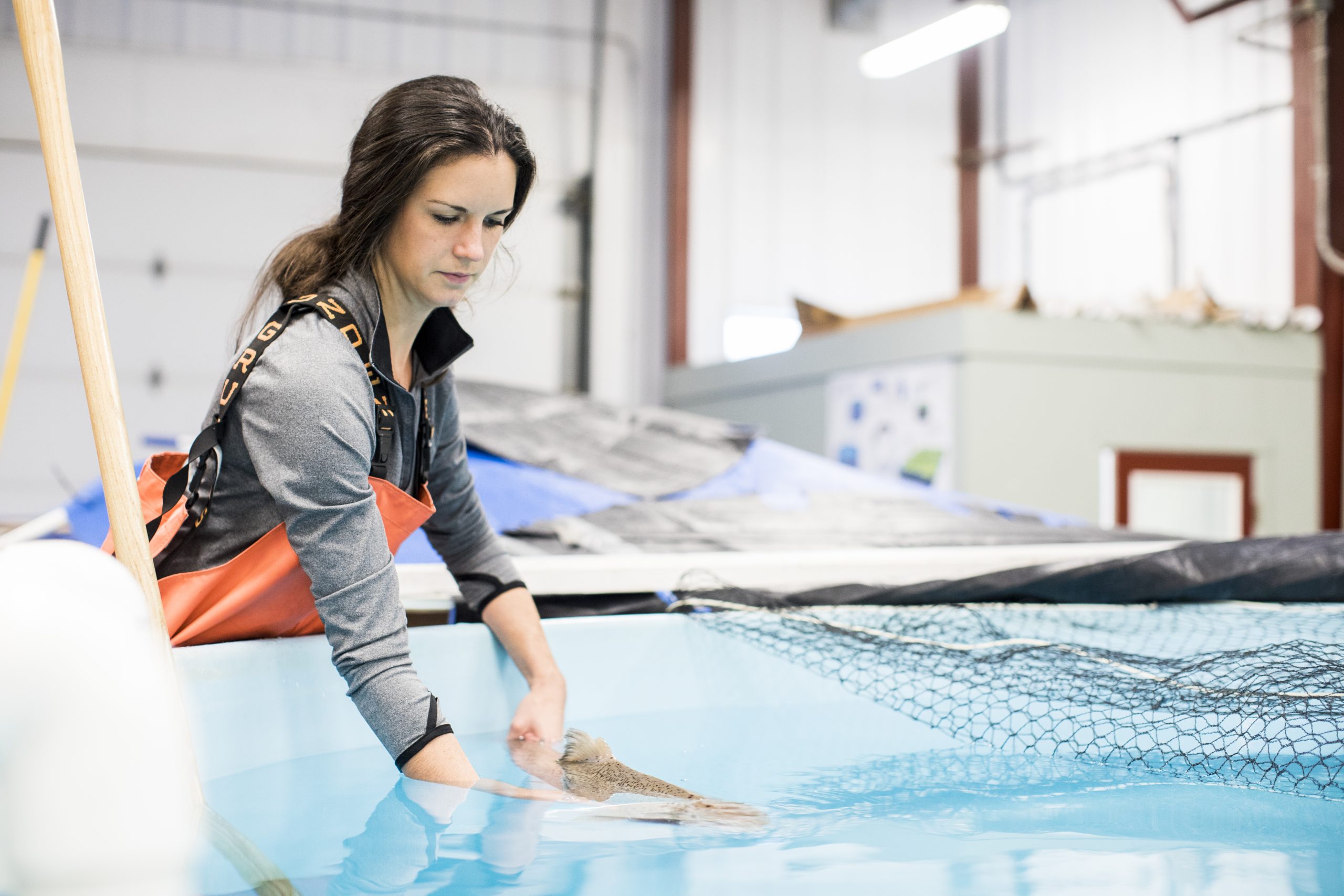
The UWSP Northern Aquaculture Demonstration Facility has a strong presence in student aquaculture education and job placement including internship opportunities and technician positions for recent graduates. The facility is national leader in aquaculture training and skill development, leading to nearly 100% job placement for aquaculture technicians and interns.

Aquaculture continues to be the fastest segment of food production systems globally. Students receive a unique and important skillset through the university as well as internships and technician positions at the state-of-the-art UWSP Northern Aquaculture Demonstration Facility. This unique training program leads to a rewarding career in aquaculture, aquaponics, fisheries or similar fields.

For more information visit the UW-Stevens Point course catalog.

Biochemistry

A BIOCHEMISTRY DEGREE COMBINES THE KNOWLEDGE OF BIOLOGY AND CHEMISTRY TO EXPLAIN LIFE PROCESSES

This interdisciplinary major has a chemistry-based curriculum, coupled with a significant biology component. The role of a biochemist is to look for understanding of organismal diversity in the principles and concepts of chemistry and physics, as well as in the structure, mechanisms and chemical processes that are common to all organisms. Pursuit of a biochemistry degree will allow students to explain life processes in terms of molecular structure and chemical reactions within living cells.

Department of Chemistry and Biochemistry

Why Study Biochemistry at UW-Stevens Point?

The biochemistry major will prepare students for admission into dental, medical, pharmacy and veterinary schools. Our students learn in-demand skills from experienced Ph.D. faculty members. They get hands-on research in areas such as virology, cancer biology, stem cell biology, human genetics, neurobiology, molecular ecology, genomics, proteomics, metabolomics, protein structure and function and many others. Our undergraduates often publish their findings with our faculty and are listed as co-authors in top-tier chemistry and biology research journals. UWSP Biochemistry students also routinely attend regional, national, and international conferences!

Applied Science Experiences

Our Department of Chemistry and Biochemistry faculty put a high priority on collaborating in research and discovery.  


Awards and Scholarships

The Department of Chemistry and Biochemistry has established a program of awards to encourage, reward, and recognize student excellence in the department. Each award includes a certificate and cash award.


WHAT TO EXPECT

If you love science, the School of Biology, Chemistry, and Biochemistry will feel like home to you. Drawing together two of the largest departments on campus, the UW-Stevens Point School of Biology, Chemistry, and Biochemistry offers challenging and modern coursework in a supportive learning environment. Working together in one of the newest laboratory facilities in the Universities of Wisconsin, our students and faculty put a high priority on collaborating in research and discovery. 

The school administers pre-professional programs including pre-chiropractic, pre-dental, pre-medical, pre-optometry, pre-physician assistant, pre-veterinary and pre-pharmacy. It will prepare students for admission to graduate biochemistry programs, and jobs in bioscience-related industries, in government laboratories, and in the state’s research hospitals. Our research shows there are many unfilled bioscience-related positions in Wisconsin, particularly in the Madison and Milwaukee areas.

GET INVOLVED ON CAMPUS

Students are strongly encouraged to get involved in a research project with a faculty mentor. The biology and chemistry faculties have a variety of research interests and students have many interesting projects to choose from.

Benefits for Students:

  • apply knowledge learned in courses to make new discoveries
  • chance to present results at on-campus and/or off-campus research meetings
  • potential to co-author on journal articles

For some students, the research opportunity presents a life-changing experience and they elect to pursue research as a career.

The department supports the local student chapter of the American Chemical Society and the American Society for Biochemistry and Molecular Biology (ASBMB) student affiliate. These are student-run organizations that help promote interest in chemistry and chemical education specifically and science in general. Biology student organizations include the Herpetology Society, the campus chapter of the Tri-Beta Lambda Omicron National Biological Honor Society, Pre-Med and Allied Health Club, and Animal and Pre-Vet Club.

The B.S. in Biochemistry at UW-Stevens Point is accredited by the American Society for Biochemistry and Molecular Biology through 2031. Students within the program are eligible to sit for the 2025 exam to be offered in April.

State-of-the-art Facilities

Our teaching and research labs in the Haeni Chemistry Biology Building are equipped with $2.5 million in modern instrumentation. Many courses have their own dedicated labs, while other labs are shared by two or three courses with similar equipment requirements. Most faculty members also maintain labs where they work with students on original research.


MEET YOUR FACULTY

The University of Wisconsin-Stevens Point Departments of Biology and Chemistry pride themselves on the strength and commitment of their faculty-to-undergraduate education. All courses required for a biochemistry degree are taught by Ph.D.-trained scientists who are effective instructors and mentors. We offer a challenging and modern course of study in a supportive learning environment.

View All Faculty

Profile Photo: Joseph Mondloch

Joseph Mondloch

  • Associate Professor
Profile Photo: Karin Bodensteiner

Karin Bodensteiner

  • Professor of Biology Academic Director
  • Online Associates of Arts and Sciences Degree
Profile Photo: Nate Bowling

Nate Bowling

  • Professor
Profile Photo: Shannon Riha

Shannon Riha

  • Associate Professor
CBB 448

Biology

EXPLORE YOUR INTEREST IN THE STUDY OF LIVING THINGS AND BUILD A CAREER

Join us at the University of Wisconsin-Stevens Point and learn how you can build a biological sciences career in fields such as education, private industry, government programs and medicine. In pursuing a biology degree, you will learn how life develops, functions and changes.

We are continually adding new, cutting-edge courses across the entire biology curriculum. There are outstanding collections of fish, reptiles, fossils, mammals, birds and plants. On-campus facilities for students include scanning and transmission electron microscopes, DNA sequencers, aquaculture labs, aquaria, greenhouses, and the only student-run vivarium in the state. Our proximity to 40,000 acres of private, county and state land is a tremendous asset for UWSP students.

Department of Biology

WHY STUDY BIOLOGY AT UW-STEVENS POINT?

The department places a high priority on collaborating with our students in both research and discovery to establish a deeper understanding of life and its natural processes. Students study in the state-of-the-art Haeni Chemistry Biology Building (HCBB) and the Daniel O. Trainer Natural Resources Building (TNR). The CBB, opened in 2018, is the best-equipped facility of its kind among 11 teaching-focused University of Wisconsin schools.  Students can shape their studies around their scientific interests and aspirations.

Our Hands-on Experiences

UW-Stevens Point offers its students dedicated labs for molecular genetics, cell biology, human and animal physiology, plant taxonomy, human anatomy, higher vertebrates and lower vertebrates. We are able to study in 40,000 acres of private, county and state land within 20 miles of campus, providing a great diversity of habitats for scientific investigations. The department is also home to two leading centers for aquaculture research, the Northern Aquaculture Demonstration Facility and Aquaponics Innovation Center. Plus, we have the only student-run vivarium in the state.


Scholarships and Awards

The Department Biology hosts an annual celebration of merit and research by students over the academic year. Awards and more than 30 scholarships are presented annually in the spring semester to continuing and graduating students.


EXPLORE LIVING LABS

Field courses take students off campus to conduct research with faculty. Students gain valuable, hands-on experience through research and field opportunities, including courses in Florida and Hawaii. These intense learning experiences provide hands-on, living labs to apply and understand ecological principles. Students may also take part in museum curation, greenhouse work, and shadowing of working professionals.


WHAT TO EXPECT

Our students begin with a year-long introduction to the biological sciences, then take courses in genetics, evolutionary biology, ecology, physiology (plant, animal, or human), and cell and molecular biology. Students also complete courses in chemistry and mathematics, and have up to 15 elective credits to complete the major. The biology major consists of a range of 55 to 62 credits, depending on the 100-level chemistry and cellular/molecular biology options taken.

Navigate the major with our Biology Major Map tool. Students should consult with the Biology Department faculty when selecting courses required to fulfill the major.

BIOLOGY

BIOLOGY: BOTANY AND PLANT SCIENCE OPTION

BIOLOGY: HUMAN AND ANIMAL HEALTH OPTION

Common areas of emphasis in biology include aquatic biology, biobusiness, biotechnology, botany, ecology/environmental, education, graduate work/research, horticulture, microbiology, natural history, pharmaceutical and biomedical sales, zoos and aquaria, and zoology. Students looking to advance in their profession after employment or enter graduate school, medical school, or veterinary medicine should consult their adviser about additional math, physics and chemistry coursework.

GET INVOLVED ON CAMPUS

Student-run organizations at UW-Stevens Point offer a number of opportunities to get involved with fellow students, professors, and the community.

More opportunities can be found on the Stevens Point Involvement Network (SPIN).

  • Animal Behavior
  • Botany Club
  • Pre Veterinary
  • Pre-Med and Allied Health
  • Pre-Physical Therapy
  • Neuroscience
  • Tri-Beta Lambda Omicron Chapter
  • Herpetology Society
  • Ichthyology and Aquarium Society
  • Wildlife Society
  • American Society for Biochemistry and Molecular Biology

MEET OUR FACULTY

Student-professor interaction is a high priority at UW-Stevens Point, with a low student-to-teacher ratio. Most of our classes and labs are taught by a Ph.D.-trained instructor with expertise in the field, and we offer many opportunities for undergraduate research.

View All Faculty

Profile Photo: Ann Impullitti

Ann Impullitti

  • Associate Professor
CBB 342, Research Lab 360
Profile Photo: Jennifer Bray

Jennifer Bray

  • Professor
  • Coordinator, Pre-Medical Preceptorship
Profile Photo: Paul Whitaker

Paul Whitaker

  • Assistant Dean, School of Biology, Chemistry, and Biochem…
  • Professor of Biology
Room 285C Wausau Campus
Profile Photo: Sarah Jane Alger

Sarah Jane Alger

  • Associate Professor
  • Chair, Department of Biology
TNR 439