The Law and Policy Minor prepares students for a range of careers in law oriented fields. The minor is excellent preparation for law school, and the course selection provides you with some of the skills and knowledge recommended by the American Bar Association for law school preparation. If you’re not interested in law school, the minor will also prepare you for many other careers in which an understanding of law, regulation, and public policy are crucial. Careers in public policy and administration, local, state, and federal government, or in the private sector in consulting firms that focus on public problems, environmental affairs and regulation, or human resources, are some of the possibilities.
This interdisciplinary minor draws on the study of law and legal institutions to prepare students to make an impact in society. Students will learn to analyze law and public policy from the perspective of different disciplines including political science, business and economics, sociology, philosophy, and psychology. The Law and Policy Minor is recommended for students who are interested in law school.
The minor is fulfilled with 24 credits as outlined below. Visit UW-Stevens Point course catalog for more.
Internships in law-related fields are also possible and strongly encouraged.
Required Courses, 9-10 credits:
POLI 212 – Law and Legal Systems Credits: 3
Take 3 credits from:
POLI 330 – Constitutional Law Credits: 3
POLI 335 – Law and Society Credits: 3
Take 3-4 credits from:
ECON 110 – Principles of Macroeconomics Credits: 3 **
POLI 301 – Methods of Policy Analysis Credits: 3 **
PSYC 300 – Statistics for Psychologists Credits: 4 **
SOC 351 – Social Statistics Credits: 4 **
Elective Courses, 15 credits
Choose 9 credits from the following:
POLI 320 – Legislative Process Credits: 3
POLI 330 – Constitutional Law Credits: 3
POLI 331 – Constitutional Law: Special Topics Credits: 3
POLI 335 – Law and Society Credits: 3
POLI 338 – Environmental Law and Regulation Credits: 3
POLI 385 – International Organizations and Law Credits: 3
POLI 388 – International Law and Human Rights Credits: 3
POLI 450 – Law, Policy, and Regulation Credits: 3
Choose 6 credits from the following:
BUS 340 – Business Law and Ethics Credits: 3
BUS 341 – Advanced Business Law Credits: 3
BUS 342 – International Business Law Credits: 3
ECON 317 – Economic Analysis of the Law Credits: 3
PHIL 315 – Philosophy of Law Credits: 3
PHIL 336 – Social and Political Philosophy Credits: 3
Political Science
ENGAGE AS A GLOBAL CITIZEN; EARN A DEGREE IN POLITICAL SCIENCE AT UW-STEVENS POINT
The political science major allows students to study the government and politics of the United States and other countries, their foreign affairs and foreign policies, and international relations. Students also have opportunities to explore other areas of interest in the social sciences and humanities. Our courses cover social scientific, theoretical, and philosophical approaches to politics. Students pursuing a political science degree often participate in campus and community politics and receive individual attention from faculty who teach small, dynamic classes. Some students earn internships in local, state, or national government. Many majors choose to study or intern abroad, even with the British Parliament.
If you’re looking for an education that prepares you for a career in politics, public administration, the law, or in the non-governmental and private sectors, political science at UW-Stevens Point is for you.
Many UWSP political science majors attend graduate school in areas such as public administration, public policy, law, and international relations. Others enter the workforce directly upon graduation securing jobs in local and state government, the courts and criminal justice systems, the private sector, and a variety of non-governmental organizations. Political Science graduates work as policy analysts, communicators, teachers, entrepreneurs and business owners, and financial planners, among other professions. Some even hold elected office.
High-achieving students in the Political Science program are eligible for many significant awards and scholarships thanks to generous support from our alumni, friends, and corporate partners. In late March, information and an application form are emailed to all majors and recipients are notified by letter prior to the end of the spring semester. All award and scholarship selections are determined by the Political Science Scholarship Committee.
Our full-time faculty members, all with doctorates from leading universities, are dedicated teachers and active researchers in their respective fields. They teach introductory courses in American politics and global affairs, as well as a wide range of upper-level seminars on subjects such as constitutional law, environmental politics and policy, European politics, Latin American politics, U.S. foreign policy, minority group politics, gender and politics, human rights, public policy analysis, and terrorism and homeland security.
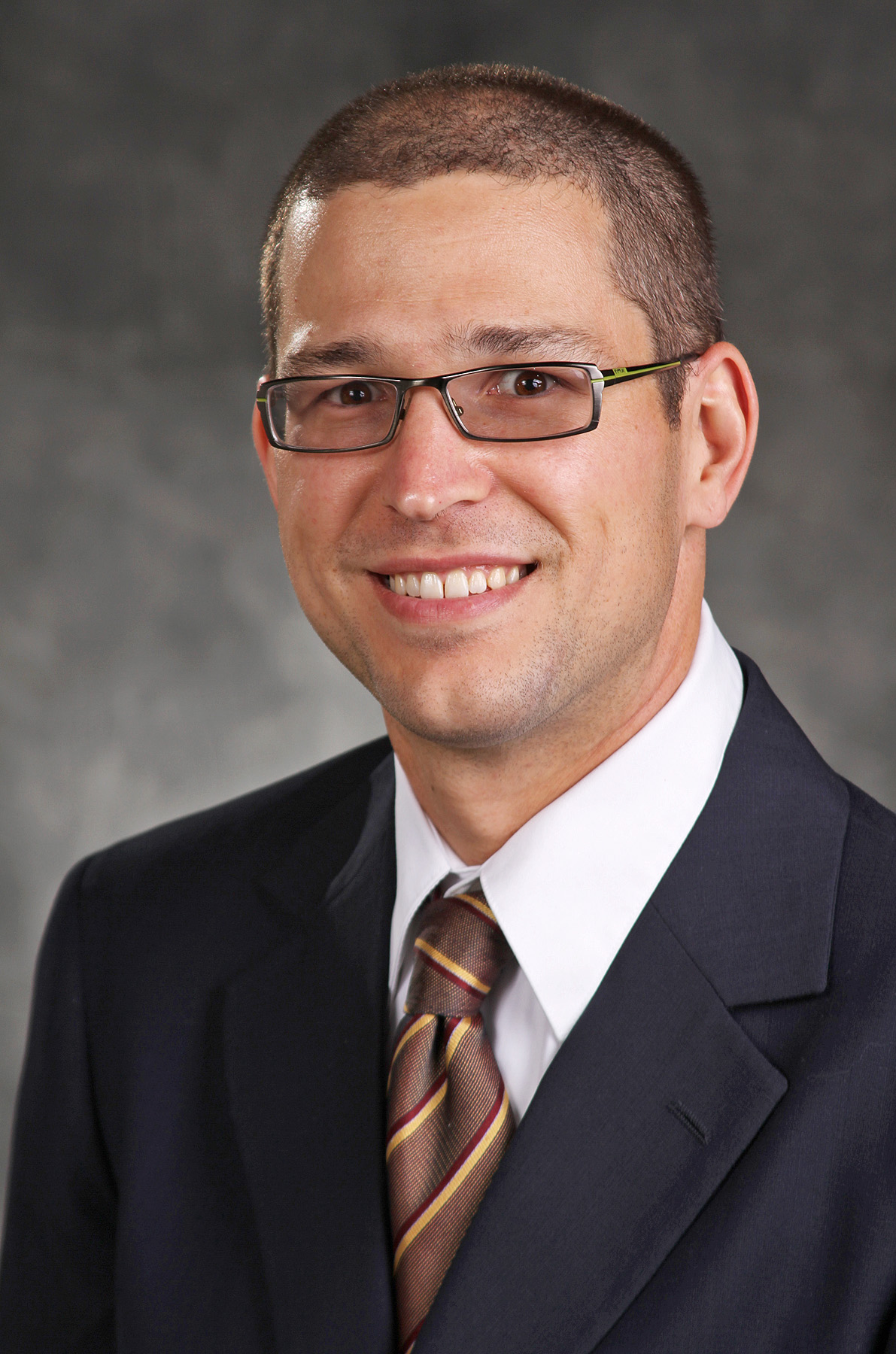
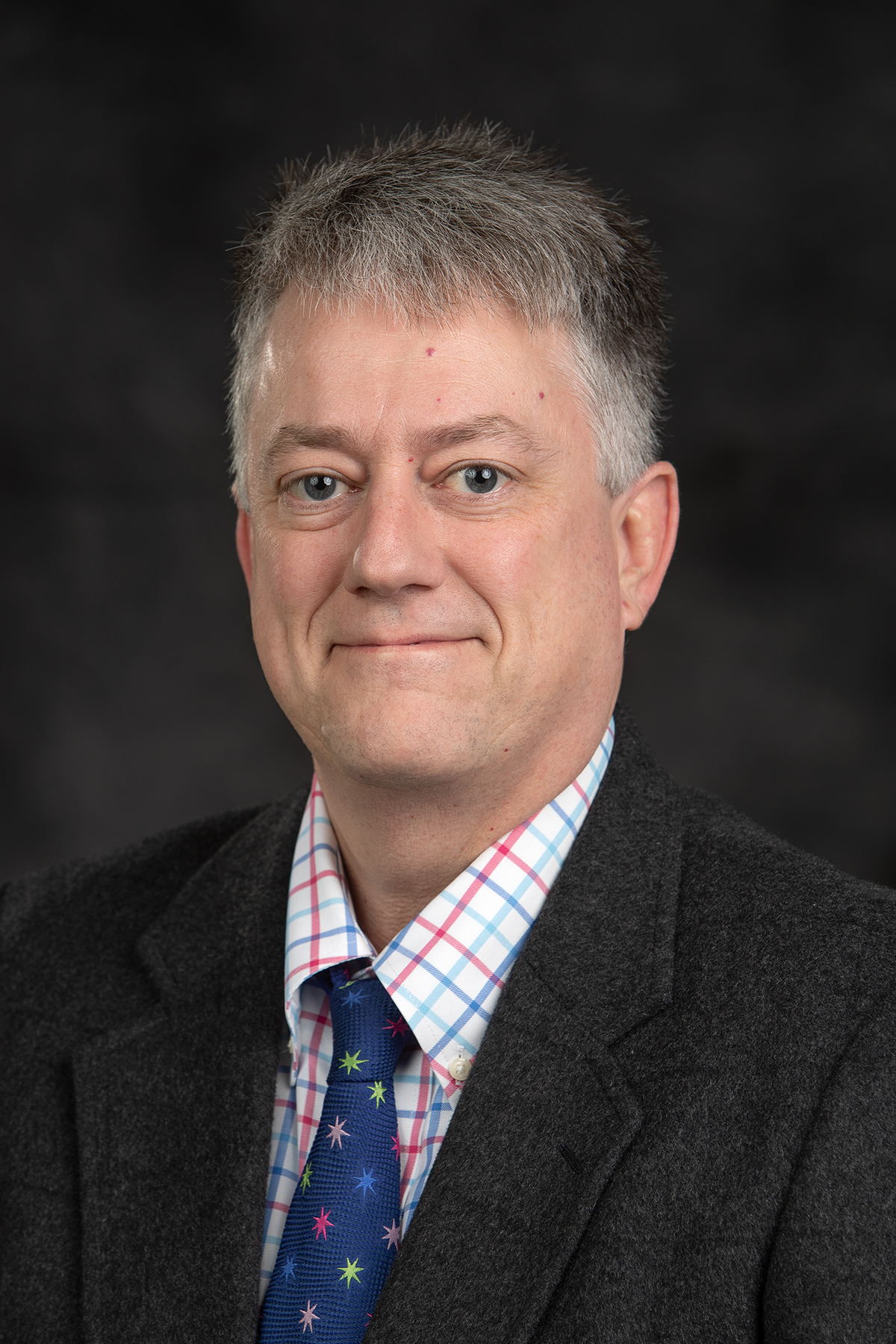
Dr. Blakeman is a specialist with books on the Supreme Court and the role of religion in politics. Dr. Collins’recently published book and articles examine populism and social movements in the Andean region of South America. Dr. Mapes-Martins’ area of expertise is environmental politics and policy including climate change. Dr. Park’s research, which has appeared in several journal articles, focuses on the political behavior and views of Asian Americans within the U.S. political System. On our Wausau campus, Dr. Gunderson’s research and publications have focused on women in the military, war crimes and Ukraine.
Qualified majors can serve in an internship with local or national government or even internationally. Interns have served in a variety of places, from district attorney’s offices, police departments, and mayor’s offices, to government offices at the state and federal level. The department participates in several Washington, D.C., internship programs, as well as international internships supervised by the Office of International Education.
Our Political Science graduates are the single largest group of applicants who are accepted and enroll in law school. UWSP has a 73% acceptance rate in law school applications. Two-thirds of UWSP students who are admitted to law school are Political Science majors! Connect with us about pre-law advising.
The Law and Policy Minor prepares students for a range of careers in law oriented fields. The minor is excellent preparation for law school, and the course selection provides you with some of the skills and knowledge recommended by the American Bar Association for law school preparation. If you’re not interested in law school, the minor will also prepare you for many other careers in which an understanding of law, regulation, and public policy are crucial.
Peace Studies is an opportunity to devote part of your college career to the problems of war, violence, and oppression. Practitioners work for positive social change through non-profit organizations, government agencies, and business firms in jobs such as project coordinators, media specialists, lobbyists, grant writers, and lawyers.
The certificate in international relations provides students with working knowledge of the international governance system including international security, international political economy, international organizations and law, and foreign policy.
“I’ve always been passionate about government and public affairs. My family is really engaged. Political Science is a really expansive field and you can go into a lot of things with it. We covered European and Latin American politics, public administration and policy, environmental policies, and international relations. The degree lays a solid foundation for you to build a career.”
Ariana Vruwink ’17
GET INVOLVED ON CAMPUS
Political Science students can build their resumes through a variety of activities. The College of Letters and Science Undergraduate Research Symposium gives students the opportunity to present research projects undertaken with a faculty mentor.
Student organizations include the Model UN and Student Legal Society. Pointers Vote Coalition is a nonpartisan student organization that works to increase student civic engagement and voting to ensure that student voices can make a difference in policy across all levels of government. Many of our majors get involved in the Student Government Association, representing the student body of UW-Stevens Point. Pi Sigma Alpha is the honor society for college students in political science and government.
Political Science graduates comprise the single largest group of UWSP students who attend law school and work as attorneys. The Political Science Department houses the pre-law advising on campus and we have a very successful placement record-73% of UWSP seniors who apply to law school are admitted to at least one school. Interested students should contact the Pre-Law Adviser Professor John Blakeman for more information, john.blakeman@uwsp.edu.
The department offers small classes taught by a dedicated faculty, and a lot of individual attention and advising. Our faculty come from some of the best Political Science Ph.D. programs and are engaged in ongoing research projects. The faculty have extensive field experience studying, teaching, working, and pursuing research in Europe, Latin America, and Asia.
The International Relations Certificate offered by the Department of Political Science provides students with an opportunity to pursue an interest in international relations as a complement to their majors. The Certificate is comprised of relevant political science courses focusing on concepts and issues in international affairs and the workings of the diplomatic world.
This 15-credit certificate is intended for students who are seeking to …
pursue a career with organizations and agencies involved in international affairs, such as the U.S. State Department and other government agencies, international organizations like the UN, international non-governmental organizations such as Amnesty International, or global companies
learn more about foreign affairs and diplomacy, and/or
study global politics and international development.
Why study International Relations at UW-Stevens Point?
The Department of Political Science in UWSP is home to faculty with extensive educational experience in Europe, South America, and Asia. The faculty’s research interests in foreign affairs and international relations include state compliance with international organizations and law, democratization, indigenous political movements in South America, corruption and ethnic discrimination in Europe, international environmental policy and climate change, and American states, federalism, and foreign trade.
The Certificate in International Relations provides students with working knowledge of international governance including the United Nations system, international law, international security, and foreign policy. Students develop research and analytical skills for addressing policy questions in international relations and learn about the political, legal, and constitutional constraints and opportunities faced by governments when engaging in international relations.
Minimum grade point average: 2.0/4.0 in certificate courses Number of credit hours to be earned: 15
Required Courses: (6 credits) Poli 180 – Introduction to Global Affairs
Complete ANY of the following: Poli 385 – International Organizations and Law Poli 387 – International Simulation Poli 388 – International Law and Human Rights
Electives: (9 credits from the following list) Econ 362 – Economic Development Pax 200 – Dilemmas of War and Peace Poli 305 – Climate Change Politics and Policy Poli 363 – Politics of the European Union Poli 374 – Political Development Poli 382 – Latin America in World Affairs Poli 383 – U.S. Foreign Policy Poli 386 – Politics of Terrorism and Homeland Security Poli 387 – International Simulation Poli 490 – Selected Problems in Political Science (topic must focus on international relations) Poli 455 – Internship (internship must be in appropriate agency or similar entity that focuses on international relations or must be with a foreign government office, agency, business, etc. ) Poli 499 – Special Work (Independent Study––topic must focus on international relations)
Employment Opportunities
The Certificate in International Relations is designed for students who are interested in pursuing graduate education and/or careers in international affairs. Future employment opportunities include, but are not limited to, working for the U.S. government’s foreign policy or intelligence agencies; the U.S. military; foreign policy think tanks; international government or non-governmental organizations; the national security industry; multi-national corporations; state commerce departments; and even local governments that conduct international trade policy. Students not interested in a political career can use their expertise in international relations to make a mark for themselves in the field of law and business. In addition, the Certificate is also an effective way of indicating to graduate schools (as well as future employers) that you have a strong interest in global affairs.
Public Administration and Policy Analysis
Many students minor in Public Administration and Policy Analysis and also major or minor in Political Science. Political Science courses can be counted for both.
Government (6 cr.) Principles (6 cr.) Functional Areas (6 cr.) Tools of Analysis (7 cr.)
Learn more about the Public Administration and Policy Analysis Minor on UWSP course catalog.
Peace Studies
Peace Studies is a response to the serious problems facing humanity, including war, violence, and oppression. Problems such as these reach well beyond any single academic discipline, and require a sharing of research and analysis across the spectrum of knowledge.
At its core, Peace Studies asks: How do we build and sustain peaceful and just societies? Peace Studies is an opportunity to devote part of your college career to the problems of war, violence, and oppression. More importantly, it is a place to explore what we can do about them. What are our responses to a world hungering for peace and justice? What can we do for the victims of poverty, war, and oppression?
What can I do with a Peace Studies Minor?
Peace Studies now encompasses the study of nonviolence, social justice, and the root causes of war as well as conflict mediation and transformation, transitional justice, and post-conflict development. “Practitioners” can be found working to limit violence in families and impoverished neighborhoods, helping reconstruct civil society in war-torn regions, and building sustainable communities in the U.S. and overseas. They work for positive social change through non-profit organizations, government agencies, and business firms in jobs such as project coordinators, media specialists, lobbyists, grant writers, counselors, area specialists, and lawyers.
A variety of excellent graduate programs are available. For more information on careers and graduate studies, visit the links at www.peacejusticestudies.org.
A minor in Peace Studies consists of 18 credits:
An Introduction to Peace Studies (PAX 200, 3 credits)
12 credits in an area of concentration, chosen from the following: Conflict Studies, Global Development, Social Justice and Human Rights
A senior seminar or individually planned thesis project (PAX 490 or 491, 3 credits)