Mathematics Education

This certificate program is intended for, but not limited to, those students pursuing a degree in elementary education, science education or special education. Can be completed concurrently with the student’s undergraduate degree in education or a related field with consent of program coordinator. 

The certificate is intended to provide mathematics content for those students already completing a major in education, teaching pedagogy and/or curricular design. Courses in this program focus on content standards suggested by the Wisconsin Mathematics Standards and best practices for teaching inquiry-based lessons. The certificate does not meet the requirements for license through the Wisconsin Department of Public Instruction (e.g. Mathematics Education license). 

The certificate program is administered through the Department of Mathematical Sciences.

Consists of a minimum of 15 credits.

Required

EDUC 205: Pluralism for Educators (2 cr.)

Choose 1 of the following:
Option A
MATH 111: Applied Calculus (4 cr.)
MATH 228: Fundamental Mathematical Concepts for Elementary Teachers (3 cr.)

Option B
MATH 225: Calculus (5 cr.)


Choose 2 of the following:
Option A
MATH 340: College Geometry with Teaching Methods (3 cr)
MED 340: Teaching Geometry (1 cr.)

Option B
MATH 226: Calculus II (5 cr.)
MED 350: Probability and Statistics with Teaching Methods (3 cr)
MED 350: Teaching Probability and Statistics (1 cr.)

Option C
MED 379: Teaching Middle School Mathematics (4 cr.)

For more information visit the Course Catalog, select “Permanent Working Catalog” in dropdown menu.

STEM Education

This certificate program is intended for, but not limited to, you if you are pursuing a degree in education. Can be completed concurrently with your undergraduate degree in education, or a related field with consent of the program coordinator.

This certificate is intended to provide STEM (Science, Technology, Engineering, and Mathematics) content if you are already completing a major in education, teaching pedagogy and/or curricular design. Courses in this program focus on content standards suggested by the Common Core State Standards, Next Generation Science Standards and best practices for teaching inquiry-based lessons. This certificate does not meet the requirements for license through the Wisconsin Department of Public Instruction (e.g. Science, Technology, or Mathematics Education license).

This certificate program is administered through the Department of Mathematical Sciences.

Consists of a minimum of 15 credits. View course catalog. Select “Permanent Working Catalog” in drop-down menu.

Mathematics Minor

A Mathematics minor shows employers and graduate schools that you have strong analytical skills! Plus, a minor does not require many additional courses, especially for math-intensive majors like Business, Chemistry, Physics or PSEN. If you take Calculus I and II, you’re almost halfway to earning the minor.

The minor consists of 28 credits:

1. Mathematics 225, 226, 227, 230, 300.

2. At least 6 credits from Math 305, 310, 315, 320, 323, 324, 327, 330, 331, 332, 335, 356, 357, 367, 372.

For more information, view course catalog

Applied Mathematics

A Mathematics minor shows employers and graduate schools that you have strong analytical skills! Plus, a minor does not require many additional courses, especially for math-intensive majors like Business, Chemistry, Physics or PSEN. If you take Calculus I and II, you’re almost halfway to a minor.

Description – Consists of 26 credits:
1. Mathematics 225, 226, 230. 

2. Complete two from the following courses: Math 310, 315, 356, 357.

3. Complete two additional courses from Math 227, 305, 310, 315, 320, 356, 357, 362, 367.

For more information visit the UW-Stevens Point course catalog.

Mathematics: Education Option

PREPARE TO LEAD WITH A SECONDARY/MIDDLE SCHOOL TEACHING DEGREE IN MATHEMATICS

The UW-Stevens Point mathematics education major is an undergraduate program that focuses on the knowledge, skills and dispositions needed to teach mathematics to students, grades 4-12. Successful candidates in the program earn a bachelor’s degree and a Wisconsin teaching license in mathematics education.

Praised for its program outcomes, graduation and retention rates, advising services, student organization opportunities and vast program options, UW-Stevens Point was ranked second in the U.S. on Study.com’s Best Colleges for Education Majors list.

Department of Mathematical Sciences

Why study Mathematics Education at UW-Stevens Point?

UW-Stevens Point graduates in the School of Education typically have some of the highest career outcome rates in full-time teaching jobs within their first year after graduation across the UW System.​ Mathematics education graduates are well prepared to teach children in diverse classroom settings. This option is structured to ensure students satisfy the licensing requirements for secondary teacher certification by completing dedicated geometry and statistics courses containing integrated educational methods.


Scholarships and Awards

High-achieving students are eligible for many significant awards and scholarships thanks to generous support from our alumni, friends, and corporate partners. We have scholarship opportunities for fall and spring semester, with selections determined by the Department of Mathematical Sciences.

 
Kameron Anderson ’23

Hired Before Graduation

Mathematics Education

Kameron Anderson ’23 was hired before graduation at P.J. Jacobs Junior High School in Stevens Point as a math teacher.


Ranked #2 in the U.S.

For the second year in a row, the education program at the University of Wisconsin-Stevens Point has been ranked second in the nation according to Study.com.


WHAT TO EXPECT

The Mathematics Education major will complete dedicated geometry and statistics courses containing integrated educational methods. Additional mathematics courses from the areas of analysis, abstract algebra, and discrete mathematics provide a comprehensive content preparation. Additional educational training in mathematics teaching technology, mathematics educational methods, and the history of mathematics ensure subject competency. A secondary/middle school student teaching experience completes the requirements for this major.

Gain Experience Outside the Classroom

Our program provides students with frequent opportunities for hands-on learning in PK-12 classrooms and schools. This includes practicum experiences working with school-aged children early and often throughout the program.

Student teaching is the culminating experience in the teacher candidate’s academic program of study at UW-Stevens Point. It provides an opportunity for teacher candidates to practice and refine their knowledge and skills under the supervision and guidance of cooperating teachers and our own faculty who have dedicated their careers to education and a lifetime of student learning.

GET INVOLVED ON CAMPUS

Through volunteer opportunities and varied professional development opportunities, students will be active learners closely involved in real-world situations designed to ensure your professional success.

Our students are academically engaged, highly motivated and actively involved at the local, state, national and international levels. Student organizations are vital to pre-professional experiences. As such, the School of Education sponsors the following organizations: Aspiring Educators, Association for the Education of Young Children, Kappa Delta Pi, Student Council for Exceptional Children, and Math Club, which is sponsored by the Department of Mathematical Sciences.

MEET YOUR FACULTY

The Department of Mathematical Sciences has about 20 faculty members. They have interests in topology, geometry, actuarial mathematics, probability and statistics, and operations research. The department includes three Mathematics Education professors who manage the teacher education programs and perform scholarship in the mathematics education field.

View All Faculty

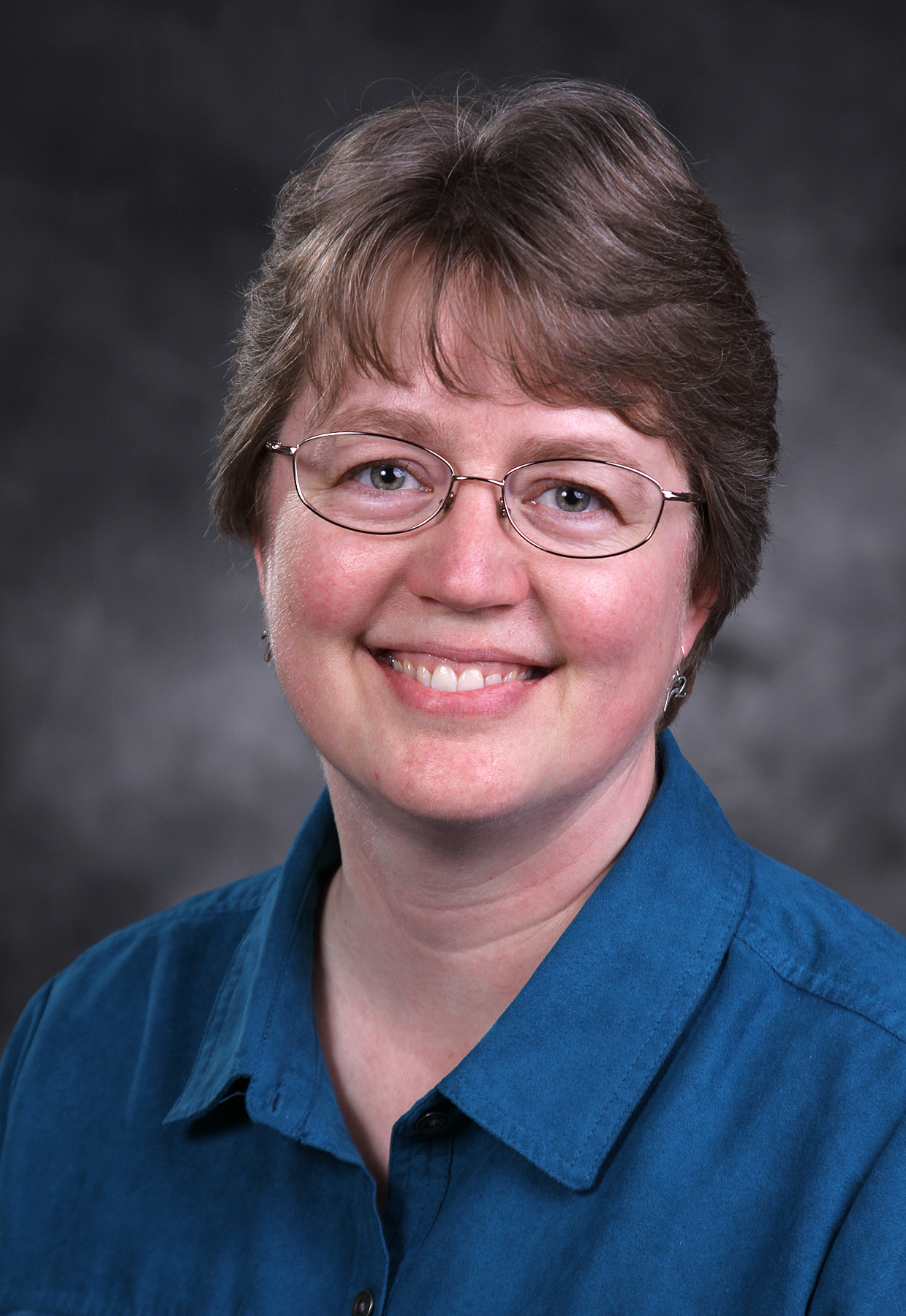
Profile Photo: Cindy McCabe

Cindy McCabe

  • Assistant Dean, School of Mathematics, Computing, Physics…
  • Professor
Profile Photo: Senfeng Liang

Senfeng Liang

  • Associate Professor, Math Education
SCI D329
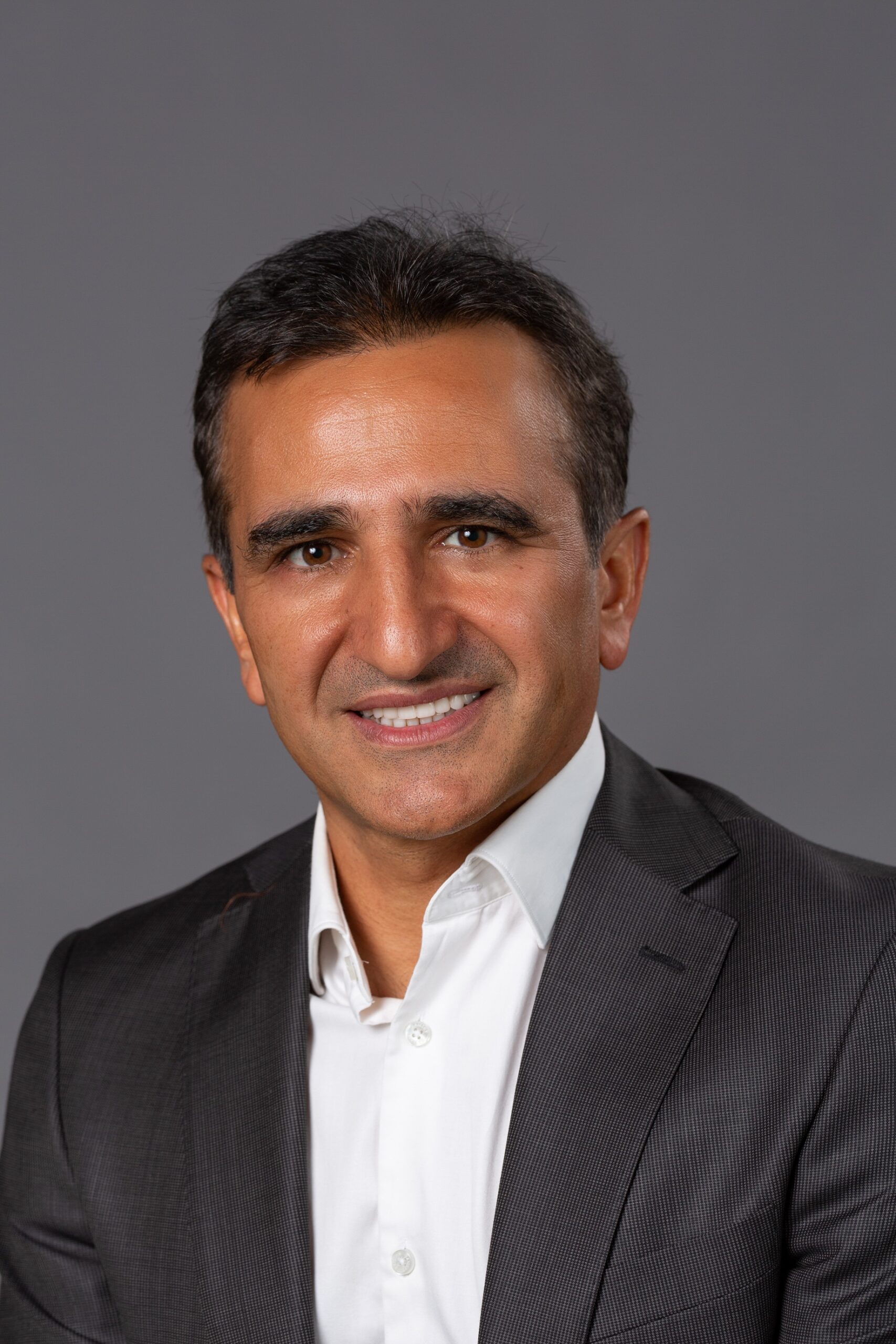
Profile Photo: Sinan Kanbir

Sinan Kanbir

  • Associate Professor
DPI logo

DPI ACCREDITATION

UW-Stevens Point’s teacher education programs are accredited by the Wisconsin Department of Public Instruction.

Mathematics

SOLVE PROBLEMS AND EXPAND YOUR HORIZONS WITH A DEGREE IN MATHEMATICS FROM UW-STEVENS POINT

A Bachelor of Science degree in mathematical sciences prepares students for jobs in statistics, logistics, actuarial science, mathematical modeling and education. Our students enjoy upper level mathematics courses with 20 or fewer students to allow for individualized support. The mathematics program at UW-Stevens Point is large enough to offer a full range of courses, yet small enough to give you a chance to work directly with professors. We are also noted for our work with technology.

Department of Mathematical Sciences

Why study Mathematics at UW-Stevens Point?

A Bachelor of Science degree in mathematical sciences prepares students for jobs in statistics, logistics, actuarial science, mathematical modeling and education. UW-Stevens Point mathematics graduates enjoy careers in varied industries including insurance, banking, financial services, government, education, software publishing, consulting, e-commerce, health care and law.

 
Kameron Anderson ’23

Graduates to Know

Mathematics Education

Interested in where UW-Stevens Point mathematics graduates end up? Here are some examples from recent graduates of the department.


Scholarships and Awards

High-achieving students are eligible for many significant awards and scholarships thanks to generous support from our alumni, friends, and corporate partners. We have scholarship opportunities for fall and spring semester, with selections determined by the Department of Mathematical Sciences.


Student Opportunities

Use your interest in math to help on campus. Students serve as tutors for over 100 courses each semester in the Tutoring-Learning Center. Our program hires outstanding students recommended by faculty in consultation with the STEM Tutoring Coordinator. Tutors help students understand course material, review for tests, and develop study skills. They bring experience, expertise, and enthusiasm to group discussions and one-on-one tutorials.


WHAT TO EXPECT

After taking three semesters of calculus and one semester of linear algebra, students complete the mathematics degree program. This option allows you the flexibility either to specialize (in applied mathematics for example) or to acquire a broad background in mathematics by selecting from various areas of mathematics such as linear algebra, abstract algebra, analysis, applied mathematics, history of mathematics, number theory, topology, and probability & statistics.

Mathematics is used to solve problems in medicine, economics, management, geography, chemistry, engineering, physics and computer science. On the other hand, mathematics can also be viewed as an artistic expression of intellect. Mathematics is limited only by one’s imagination, logic and creativity. Mathematics has something for everyone!

GET INVOLVED ON CAMPUS

Math Club promotes an appreciation for mathematics and emphasizes its breadth and applications. The club provides opportunities to interact with mathematics and mathematicians, both professional and amateur, through conference trips, guest speakers, competitions and social events.

Work in a unique student-run center that adapts math equations to optimize schedules to serve collegiate teams. The UWSP Center for Athletic Scheduling is a self-supporting, non-profit organization collaborating to meet the needs of intercollegiate athletic conferences across the country. The only of its kind employing undergraduates!

More opportunities can be found on the Stevens Point Involvement Network (SPIN).

The National Science Foundation funds many research opportunities for undergraduates through its Research Experiences for Undergraduates Sites program. An REU Site consists of a group of 10 or so undergraduates who work in the research programs of the host institution. Each student is associated with a specific research project, where he/she works closely with the faculty and other researchers.

Graduate School Opportunities

Graduate school provides an excellent opportunity to learn and do research in any number of exciting areas of mathematics. Also, an advanced degree in mathematics can potentially open up career paths both in industry and academia (i.e. research careers and university careers with teaching and research) that might not otherwise be available to you.


meet your faculty

The Department of Mathematical Sciences has about 20 faculty members. They have interests in topology, geometry, actuarial mathematics, probability and statistics, and operations research. The department includes three Mathematics Education professors who manage the teacher education programs and perform scholarship in the mathematics education field.

View All Faculty

Profile Photo: Cindy McCabe

Cindy McCabe

  • Assistant Dean, School of Mathematics, Computing, Physics…
  • Professor
Profile Photo: Edwin Herman

Edwin Herman

  • Professor
Profile Photo: Kevin Schoenecker

Kevin Schoenecker

  • Associate Professor
Profile Photo: Mick Veum

Mick Veum

  • Professor

Mathematics: Actuarial Option

BEGIN YOUR REWARDING WORK MANAGING RISK; EARN A DEGREE IN ACTUARIAL MATH

The mathematics actuarial program features a strong concentration of mathematics courses, including linear algebra and probability and statistics, along with other courses in applied mathematics, business and economics, and preparation courses for Society of Actuaries (SOA) examinations.

Students graduate with a solid background in math, finance, accounting, and statistics, giving them the experience to succeed as a business professional. The mathematics program at UW-Stevens Point is large enough to offer a full range of courses, yet small enough to give you a chance to work directly with professors.

Department of Mathematical Sciences

Why study Actuarial Mathematics at UW-Stevens Point?

You will work with faculty experienced in actuarial mathematics, probability and statistics, mathematics education and operations research. Our sought-after graduates benefit from small class sizes. They benefit from one-on-one support from faculty-mentors in the Department of Mathematics.


Scholarships and Awards

High-achieving students are eligible for many significant awards and scholarships thanks to generous support from our alumni, friends, and corporate partners. We have scholarship opportunities for fall and spring semester, with selections determined by the Department of Mathematical Sciences.


Student Opportunities

Use your interest in math to help on campus. Students serve as tutors for over 100 courses each semester in the Tutoring-Learning Center. Our program hires outstanding students recommended by faculty in consultation with the STEM Tutoring Coordinator. Tutors help students understand course material, review for tests, and develop study skills. They bring experience, expertise, and enthusiasm to group discussions and one-on-one tutorials.


WHAT TO EXPECT

A Bachelor of Science degree in mathematical sciences prepares students for jobs in actuarial science, statistics, logistics, mathematical modeling and education. UW-Stevens Point mathematics graduates enjoy careers in varied industries including insurance, banking, financial services, government, education, software publishing, consulting, e-commerce, health care and law.

There is excellent job security and job placement for a career in actuarial math. According to the U.S. Bureau of Labor Statistics, employment of actuaries from 2024-2034 will grow 22 percent, much faster than average occupation growth in the period.

While the Mathematics major with Actuarial Emphasis is specifically designed to fulfill actuarial society requirements, the content courses also provide preparation for careers in Business and Finance with a stronger quantitative background than a Business major. A double major with Data Analytics provides an excellent background in Quantitative Business Analysis, for example. Other options that students may consider are a Mathematics major with a Business or Economics minor; a Business or Economics major with a Mathematics minor, or a Mathematics/Economics double major. With proper course selection, any of these combinations may also cover the same material.

GET INVOLVED ON CAMPUS

Math Club promotes an appreciation for mathematics and emphasizes its breadth and applications. The club provides opportunities to interact with mathematics and mathematicians, both professional and amateur, through conference trips, guest speakers, competitions and social events.

The Center for Athletic Scheduling is a self-supporting, non-profit, student-run organization whose mission is to provide athletic schedules to intercollegiate athletic conferences across the country.

More opportunities can be found on the Stevens Point Involvement Network (SPIN).

The National Science Foundation funds many research opportunities for undergraduates through its Research Experiences for Undergraduates Sites program. An REU Site consists of a group of 10 or so undergraduates who work in the research programs of the host institution. Each student is associated with a specific research project, where he/she works closely with the faculty and other researchers. The American Mathematical Society provides other sponsored and grant-funded student opportunities.

MEet your faculty

The Department of Mathematical Sciences has about 20 faculty members. They have interests in topology, geometry, actuarial mathematics, probability and statistics, and operations research.

View All Faculty

Profile Photo: Cindy McCabe

Cindy McCabe

  • Assistant Dean, School of Mathematics, Computing, Physics…
  • Professor
Profile Photo: Edwin Herman

Edwin Herman

  • Professor
Profile Photo: Kevin Schoenecker

Kevin Schoenecker

  • Associate Professor
Profile Photo: Mick Veum

Mick Veum

  • Professor