
Step Outside
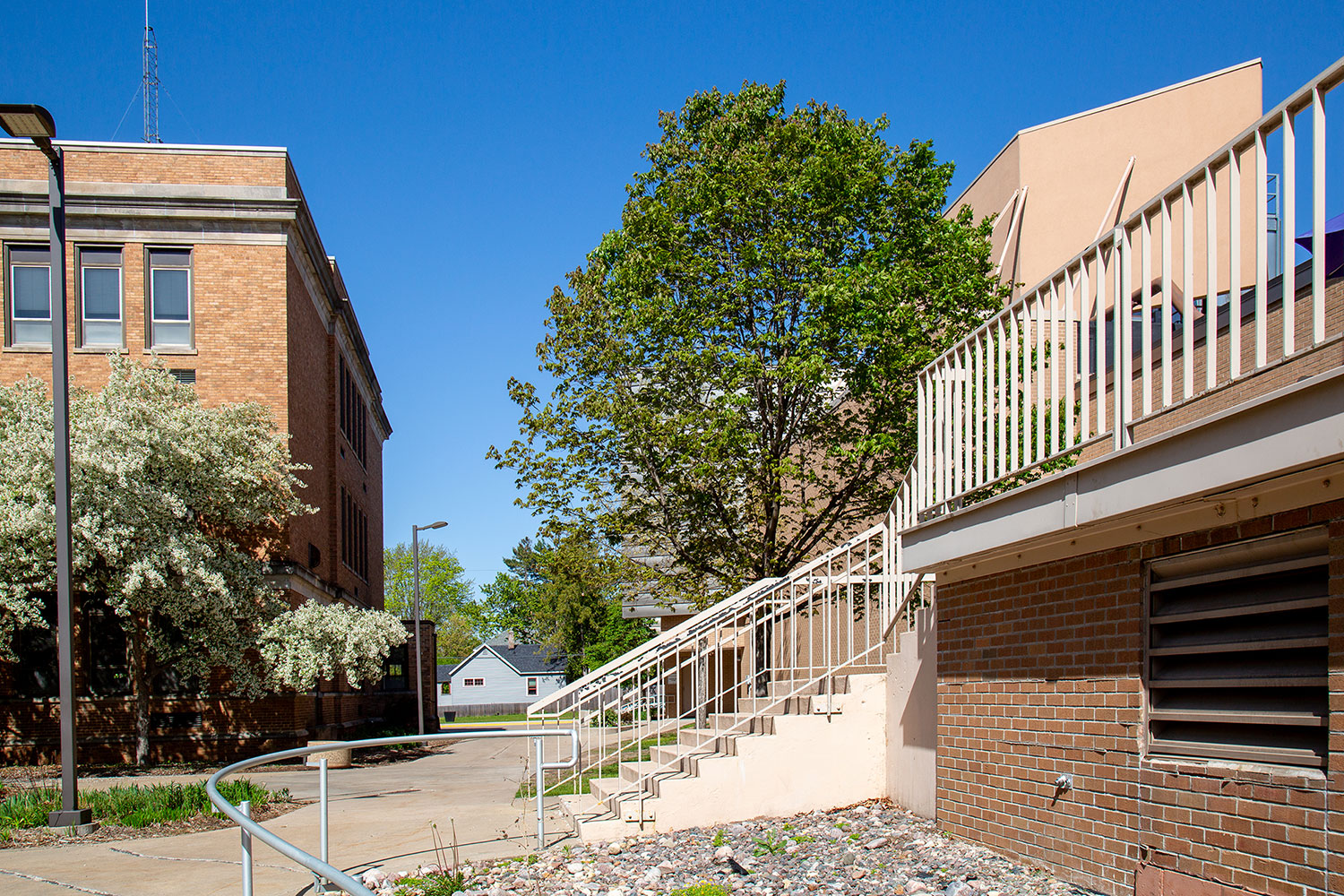
If stepping outside the safe four walls of your classroom with your students seems a little daunting, we can help. With a little preparation, you can transform the space outside your building into an outdoor classroom!
Where to Begin?
Remember, whether you have a bare parking lot, an open field, or a 20-acre school forest, you have an outdoor classroom. You may find that a child who does not flourish inside those four walls will bud, blossom, and come to life outdoors.
- Remind your students it’s not recess. You’re outside, yes, but you’re there to learn AND have fun!
- Discuss all outdoor classroom expectations before leaving the room; they’ll be similar to your indoor classroom, but students who are excited to get outside may forget even the most basic rules of your classroom.
- Does your school have guidelines for outdoor learning? Do you need to notify the principal? Is there a consent form needed?
- Be prepared to deal with bees, mosquitoes, muddy feet, and scraped knees. They happen and are easily managed if you think ahead. Put a first-aid kit in a backpack, along with some paper towels and a bottle of water.
- If your students are getting squirrely, have them form a circle. This will draw their attention back to the task at hand.
- It may be helpful to take a whistle or other noise maker to get your student’s attention when they are at a distance.
- Don’t forget the headcount!
What do you have to work with?
Take a quick look at what is on your school site. If you have any of the things listed below, and we know you do, there are lessons you can do outside. Make a list of what you have and start brainstorming your lesson connections.
- Tree(s)
- Shrub(s)
- Lawn/Athletic field
- Flower bed
- Parking lot
- Playground
Reflect and Revise
If this is new to you, don’t worry about perfection, but think about improvement when you reflect. Just like with all other lessons, decide what went well and what could be improved.
Use your students and the assessment portion of the lesson just like you would in your indoor classroom.
Remember, the goal – learning – is the same!
School Grounds Success Story
Wausau’s Montessori School teacher & students head outside to learn
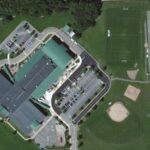
Wausau Area Montessori teachers have found that periodically moving the classroom outside has increased students’ interest in math, reading, and English. For example, the teachers at Wausau Area Montessori teach perimeter to students by having them walk the outer edge of their school grounds – a lesson that can be easily expanded in the classroom.
Enhance your Site
When you are comfortable taking your students outside for activities on your existing site, your ideas for curriculum connections grow. If adding something to enhance your site will help student learning, go for it! Site enhancements can be done as needs arrive or while you are Developing Your Site.
Need an Idea?
Enhancing your site can be as easy as setting out a bench or picking up litter!
- Plant flowers and shrubs to attract wildlife
- Put up a birdfeeder or birdhouse
- Plant a tree
Needs Assessment
Before you start enhancing your site, step back and gather some information from teachers, administrators, custodians, students, community members, and parents. These Needs Assessments are an important part of Developing Your Site and will be a good starting point for Enhancing Your Site as well. The assessments will help you answer some important questions.
- What are the needs of the school community? (That means everyone!)
- What’s being done on our site now?
- What do we want to do on our site?
- What tools, resources, and materials do we need to enhance our site?
We’ve created example needs assessments that you may want to use for gathering information. Remember, there are free online tools to help you conduct your survey as well that make it easier to administer and tabulate the results.
Site Assessment
Remember to take a look at what the site has to offer. If you choose to go on and “Develop Your Site,” the site assessment will be very important. You’ll get great information to consider and a head-start on a potential future project if you take the time now to do a site assessment.
School Grounds Success Story
D. C. Everest’s prairie restoration
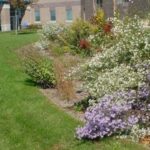
D. C. Everest Middle School’s prairie restoration provides more than just beauty. It provides a great opportunity to teach outside the school building. Janis Krueger and Cindy Damrow attended the RESTORE Institute with the Earth Partnership for Schools Program at the UW Arboretum in Madison. With inspiration from the training and a vision for what could be, a native prairie began to take shape outside the DC Everest Middle School. The approximately 900 square foot area contains plant species that students investigated, grew, and planted!
Develop Your Site
Education outside your classroom makes your students thrive!
To make the most of your site and your time and increase curriculum connections even more, you may need to develop a major project.
Where to Begin?
Education outside your classroom makes your students thrive! To make the most of your site and your time and increase curriculum connections even more, you may need to develop a major project.
This is going to be big, don’t plan to do it alone. Remember to take your time – good education is your goal. Ask yourself (and be honest) if you are really ready for a whole developed project or would a few site enhancements do the trick with less stress? If not, try enhancing your site instead!
If you’re ready to dig in, LEAF’s School Grounds Handbook is an excellent resource to lead you through the process, step-by-step.
Gain Support
Let’s face it. This isn’t going to be easy. One or two people can’t do this alone. You are going to need a broad base of support – interested people committed to seeing the project through to completion. Involving a wide variety of people from the beginning will help prevent burnout and keep interest high. It will also ensure that teachers, students, administrators, facilities staff, and the community feel a sense of ownership in the school grounds project. So get started on creating a School Grounds Committee.
Gather Information
Take time to learn more about your site and the opinions of the school community. By doing brief needs assessments with staff and students and a site assessment, you’ll have all the information you need to create your written plan.
Write Your Plan
Now that your committee is formed and you are armed with information, you are ready to create a written plan. Your plan should give readers a basic understanding of why your school grounds project is important, what topics the education programs will cover, and how the school grounds site will be developed.
Design the Dream
It’s time to put your thoughts and ideas into a visual format. You have all the background work done and know what you want to do. Design your site to encompass as many of your great ideas as you can.
Implement It
Don’t stop now! Getting everything ready was the hard part. If you’ve cultivated the community relationships, this is the time for them to shine. Does one of your parent group members have landscaping equipment? Are the Master Gardeners anxious to help you find the right plants for the butterfly garden? Does the local tree care business have tree nursery connections to get you large trees at cost? Does the art teacher have student projects planned that would be great in a sculpture garden?
Here are some resources to get you started!
School Grounds Success Story
Berlin High School Native Roots Education Gardens
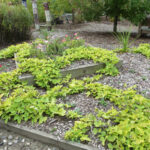
The Native Roots Education Gardens began as two acres of manicured lawn just outside the Berlin High School doors to the west. Gardens were designed by Paula Hanson (Art Instructor) and Pat Arndt (Environmental Science Instructor) over a five year period. All garden funding was accomplished through grant writing, community donations, volunteer machinery and labor with no school district financial support. Successful grants were obtained from the Wisconsin Environmental Education Board (WEEB), National Gardening Association, and the local Wild Ones Organization. Berlin High School students were involved in construction of all gardens from digging of the pond, hauling rocks, spreading soil and mulch,
constructing raised beds, to planting of perennials, shrubs, and trees.
School Grounds Resources
Lessons
- All About My Tree | A LEAF Forestry Lesson for grades K-1 in PDF | Students adopt one tree as their own – students record their observations and draw an adopted tree. Students then share information about their trees and create a class scrapbook.
- Caring for the Future of Forests | A LEAF Forestry Lesson for grades 4 in PDF | Students learn what a tree needs to grow, how to choose an appropriate site, how to properly plant a tree, and care for it.
- Estimating And Graphing Outdoors | A LEAF Forestry Lesson for grades K-4 in Google | Students will estimate the number of objects inside a sample plot and then create a classroom graph of the data collected.
- Forest Ecology Observations | A LEAF Forestry Lesson for grades 9-12 in Google | Students will step outside to connect ecology concepts learned in the classroom to the ecosystem and communities found outdoors in the ‘natural’ environment.
- Forest Habitat Scavenger Hunt | A LEAF Forestry Lesson for grades 2-3 in PDF | Students go on a scavenger hunt and play a game to learn about habitat needs of organisms in a forest.
- Forest Haiku | A LEAF Forestry Lesson for grades K-4 in Google | Students will use observations and experiences at the forest to creatively write two haiku poems.
- Forest Mapping | A LEAF Forestry Lesson for grades 7-8 in PDF | Students work in small groups to map features of a forest plot. Included in their data collection are the measurement, identification, and aging of trees. As a large group, students compare their information and discuss unique features of the area.
- GPS Basics On Your School Grounds | A LEAF Forestry Lesson for grades 5-8 in Google | Students will become familiar with the use of GPS technology. They will use GPS to navigate to a point and will observe and describe that site as a team.
- I Can Be a Forester | A LEAF Forestry Lesson for grades 2-3 in PDF | Students get a taste of what foresters do. First, they learn about the many roles of foresters. Then, students collect data from a forest plot and discuss how this information is useful.
- I See Color All Around | A LEAF Forestry Lesson for grades K-4 in Google | Students will practice their color words by finding objects outside that match the color words.
- Measurement: Inches and Centimeters | A LEAF Forestry Lesson for grades K-4 in Google | Students will practice measurement and graphing skills by using rulers to measure the length of common objects they find outside.
- Patterns and Shapes In Nature | A LEAF Forestry Lesson for grades K-4 in Google | Students will go outside to locate objects that match the shape words on their worksheet.
- Plant Biology On Your School Grounds | A LEAF Forestry Lesson for grades 5-8 in Google | Students will step outside on their school grounds to connect plant vocabulary words learned in the classroom to plants found outside on the school site.
- Searching for Basic Needs | A LEAF Forestry Lesson for grades K-1 in PDF | Students explore what an imaginary animal needs to survive and decide if it could live on their playground. Then, students look at the needs of real animals that may live in their schoolyard.
- Sensing the Forest | A LEAF Forestry Lesson for grades K-1 in PDF | Students learn about living and nonliving parts of the forest through a series of sensory activities. The lesson concludes with each student using his or her senses of touch, smell, and hearing to investigate a tree while blindfolded.
- Tree Identification | A LEAF Forestry Lesson for grades 7-8 in PDF | Students learn to use a dichotomous key to identify Wisconsin trees. Students also participate in hands-on activities that help them learn tree identification vocabulary. Students work in groups to study and identify trees and discover the process is not difficult when broken into steps.
In-services and Workshops
View upcoming workshops or make custom inquiry at
Additional Resources
Wisconsin Center for Environmental Education Kits:
This resource provides educational kits for checkout for a variety of hands-on materials about environmental education topics.
Wisconsin Green & Healthy Schools:
This program is a web-based, self-paced and voluntary program available to all Wisconsin public and private elementary, middle and high schools. The program is designed to support and encourage schools in their quest for a healthy, safe and environmentally friendly learning environment. Assess your school site as part of this program!
Project Learning Tree:
Project Learning Tree is an award-winning environmental education program for PreK-12 formal and non-formal educators, Project Learning Tree is designated for all educators, youth leaders and naturalists. The materials are available through PLT workshops lead by certified instructors.
In addition to Project Learning Tree, Project WET & Project WILD offer additional resources and opportunities for you to incorporate your school site into your curriculum.
Grants:
The Natural Resources Foundation of Wisconsin offers several grant funds to support outdoor learning, including:
Research:
Studies have shown that students’ performance and development improve when they learn in and about the outdoors.
EEK! Environmental Education for Kids
EEK! Environmental Education for Kids is a Wisconsin-specific resource with activities, teaching tools, and online content for youth to Connect, Explore, Engage with nature and the environment.
Environmental Education in Wisconsin:
This website can offer you curriculum, event information, grant information, and even examples of the things other schools are doing. You can even put your own school site information on the site for others to read about!
The Educator’s Resource Center:
Find resource recommendations for various subject areas in the monthly Educator’s Resource Corner from the WCEE online on the EE in Wisconsin website. Read summaries of the latest activity guides, DVDs, books, and web resources on dozens of topics.