
Members of our College of Letters and Science faculty are excited to present our Faculty Forum for the 2026-2027 academic year. The faculty lecture series is open to the public and free of charge. Light refreshments served.
For more information, contact: Robert Sirabian, Department of English, email robert.sirabian@uwsp.edu
FALL SEMESTER
326 CPS
Vanessa Bailey: Geography and Geology
Oct. 7, 2026
“Modeling Modern and Prehistoric Surface Hydrology in the Upper Escalante Watershed of Utah”
Climate and demographic changes introduce challenges to the availability of water resources in the western United States, and appropriate planning and management require understanding how these resources respond to dynamic environmental conditions. Vanessa Bailey modifies a dynamic global vegetation model (DGVM), LPJ-GUESS, to incorporate routing and the effect of slope on runoff in the Escalante watershed of southern Utah, greatly improving the spatial representation of streamflow estimates. She then uses the same modified model and watershed to test climate records for two past periods of different population dynamics. This work emphasizes how even small changes in climate can be aggregated to larger impacts downstream and builds towards an understanding of future limitations driven by climate change and human demand.
233 CPS
Salvador Lopez Rivera: World Languages and Literatures
Nov. 11, 2026
“Of Pigs and Men: Anthropocentrism, Gender, and Race in Marie Darrieussecq’s Truismes and Oscar Coop-Phane’s Le procès du cochon and Un Arabe”
Oddly, pigs have become increasingly frequent in contemporary French literary fiction, where they appear as protagonists rather than mere background characters. What can pigs do for literary narratives better than other animals? In this presentation, Lopez-Rivera argues that the liminality of pigs–their simultaneous proximity to and objectification by humans–helps contemporary authors Marie Darrieussecq and Oscar Coop-Phane examine the conceptual parallels and intersections between anthropocentrism and animality on one side, and gender and race on the other in their novels Truismes (1999), Le procès du cochon (2019), and Un Arabe (2025).
326 CPS
Jeff Verona: English
Dec. 3, 2026
“The Visual Aesthetic of the Future”
What does the future look like? Rather than being random or haphazard, our concept of the visual appearance of the future arises from the journey that “the present” makes as it becomes “the future.” Classic science fiction, such as Wells’ When the Sleeper Wakes and the film Metropolis, offers one aesthetic of the future-an aesthetic made real in the structures and exhibits of the 1939 New York World’s Fair. But when the journey of the present into the future changes, as it did in the 1970s, a different aesthetic emerges, as depicted in Gibson’s Neuromancer and films like Dark Star and Alien.
SPRING SEMESTER
TBA CPS
Vera Klekovkina: World Language and Literatures
Feb. 11, 2027
“Designing AI for Learning: Enhancing Oral Proficiency in French through the Speakology AI Project”
This presentation explores the implementation of the Speakology AI project in French 101 and French 102 and examines how thoughtful instructional design can transform AI into an effective language-learning partner. Rather than relying on AI as a standalone tool, we carefully integrated Speakology into a pedagogically grounded ecosystem that included an OER textbook, proficiency-oriented learning outcomes, and scaffolded communicative activities. Drawing on student performance data and IRB-approved research, we will demonstrate how this intentional design contributed to measurable gains in students’ target-language proficiency. The presentation offers three complementary perspectives: the instructors’ views on AI integration, the student facilitator’s perspective as both a multilingual language learner and project collaborator, and students’ own voices through written reflections on their learning experience.
TBA CPS
Chris Diehm: Philosophy
March 10, 2027
“Digital or Deep? A Deep Ecological Caution about Connection to Virtual Nature”
Over the last several decades, connection to nature has emerged as a key dimension of contemporary environmental conservation. Yet as human populations have continued to urbanize, there has been a push to explore alternative means of connecting people to nature, including the use of virtual reality nature experiences. Diehm’s paper draws on deep ecological philosophy and conservation psychology to argue that virtual nature experience is a poor substitute for connecting with actual natural environments, mainly because the former lacks key features of nature experience that are known to foster pro-environmental outcomes. Virtual nature experience also provides “optimized” experiences which intensify human control over the “nature” user’s encounter, and thus implicitly endorses the human domination of nature.
TBA CPS
Tom Leek: World Language and Literatures
April 8, 2027
A Meaning Machine: The Tarot Deck from Gam to Divination
In the 15th-century, the Tarot deck emerged as an extension of a regular card deck for games; for hundreds of years it was, as far as anyone knows, only used for gaming. Though certain corners of Europe still play variations of Tarot games, in much of the world the deck has become more associated with occult purposes, which paradoxically are more accessible than the games. In this talk, we will explore this historical transformation to understand the link between gaming and mysticism
TBA CPS
Justin Sipiorski: Biology
May 6, 2027
Can Natural History Collection Specimens Be Used in Long-term Ecological and Evolutionary Research?
Natural history collections often comprise vast holdings of commonly occurring organisms. Occasionally, these specimens have been gathered over significant spatiotemporal scales. Usually, museum specimens have been collected opportunistically—with no systematic plan to sample from similar places, by season, or by similar means. Over the past 15 years, my students and I have explored answering research questions about long-term ecological or evolutionary trends in the natural histories of common Wisconsin fishes based on natural history/ichthyological collections at the Olson Museum
ARCHIVE
Sept. 25, 2025 – Lara Garrido
World Languages and Literatures: “Opposing Sexualities, Colonial and Post-Colonial Femininity in La Guaracha del Macho Camacho.” Luis Rafael Sánchez sought to symbolize how Puerto Rican culture appears to be at an impasse by using a traffic jam as the backdrop for the story to unfold. Garrido argues that it is rather a split between the colonial past and the imperial present that is inevitably intertwined with the island’s culture, which is represented in the feminine ideals of the novel.
Oct. 9, 2025 – Sandra Neumann
Psychology: “Lessons I’ve Learned about Teaching in Support of, and As an Advocate for and with, Queer Students.” Some of us remember the murder of Matthew Shepard in October 1998. However, many queer students have died since then in the aftermath of anti-queer violence including Nex Benedict, who died in 2024 – 25 years, 4 months, and 8 days after Matthew. These deaths connect different generations of the queer community, past and present, still at risk. The purpose of this talk is to share six “lessons” learned over 25 years of teaching as an open lesbian to an increasing number of Queer students. Using the deaths of Matthew Shepard and Nex Benedict as a backdrop, Dr. Neumann will explore how to better incorporate advocacy for and with Queer students into teaching efforts.
Nov. 20, 2025- Heather Molenda-Figueira
Psychology: “Female Brain, Male Brain: Functional Differences or Fiction?” Much has been made of sex differences in the brain in popular press and culture. But what are the differences, and what do they mean, if anything? In this presentation, Dr. Molenda-Figueira reviews how sex differences in the brain develop and what structural differences exist. Further, we’ll examine which sex differences are consistent and how they might inform us about behaviors from cognition, language and emotional states.
Dec. 2, 2025 – Patrick Miller
Philosophy: “Intoxication for the Revolution: Bataille and Benjamin on the Politics of Surrealism” Georges Bataille and Walter Benjamin, both influential philosophers and critics of the early 20th century, wrote about the potential of this art movement. They wrote about the revolution potential of this movement to access the unconscious and communal powers that could upend the status quo. This talk will discuss the political goals of the Surrealists and the possibilities Bataille and Benjamin saw in the movement. These will be explored with an eye towards how Bataille and Benjamin moved towards other revolutionary means and why.
Feb. 12, 2026 – Robert Sirabian/ Wade Mahon
During London: High and Low, a three-week study abroad course this June, students read 18th– and 19th-century British literature and saw three dramatic performances, both classic works and those belonging to popular culture, some leaning towards the seedy. The course focused on London itself as the central character of the readings and plays. In Imagined London (2004), Anna Quindlen tellingly notes, “Yet it is the glory of London that it is always ending and beginning anew, and that a visitor, with a good eye and indefatigable feet, will find in her travels all the Londons she has ever met in the pages of books, one atop the other, like the strata of the Earth.” This presentation will illustrate how teaching abroad focuses not on locale as simply a static backdrop or collection of tourist spots but rather as an interplay of reading imaginatively, thinking critically, and exploring a city’s neighborhoods, streets, sights, and sounds through the layers of historical time.
March 10, 2026 – Amy Zlimen Ticho/ David Barry – Sociology & Social Work: “Natural Burial: An Exploratory Study of Attitudes and Practices Among Funeral Directors in the U.S.” This presentation examines the knowledge, impressions, attitudes, and practices pertaining to natural burial among funeral directors through a multi-state, anonymous survey project. This study offers important contributions to the field of death studies and environmental sociology, in that it helps to uncover funeral directors’ perspectives and contributes to an understanding of the social aspects of natural burial. Findings from the study reveal an unbalanced concentration of support for natural burial practices and a paradox between how funeral directors self-describe support versus the realities of their practice. Potential future trajectories and the impact on death systems in the U.S. are discussed.
April 9, 2026
Kristine Prahl – “Biology: Biofuels and The Role of Genetically Engineered Yeast”
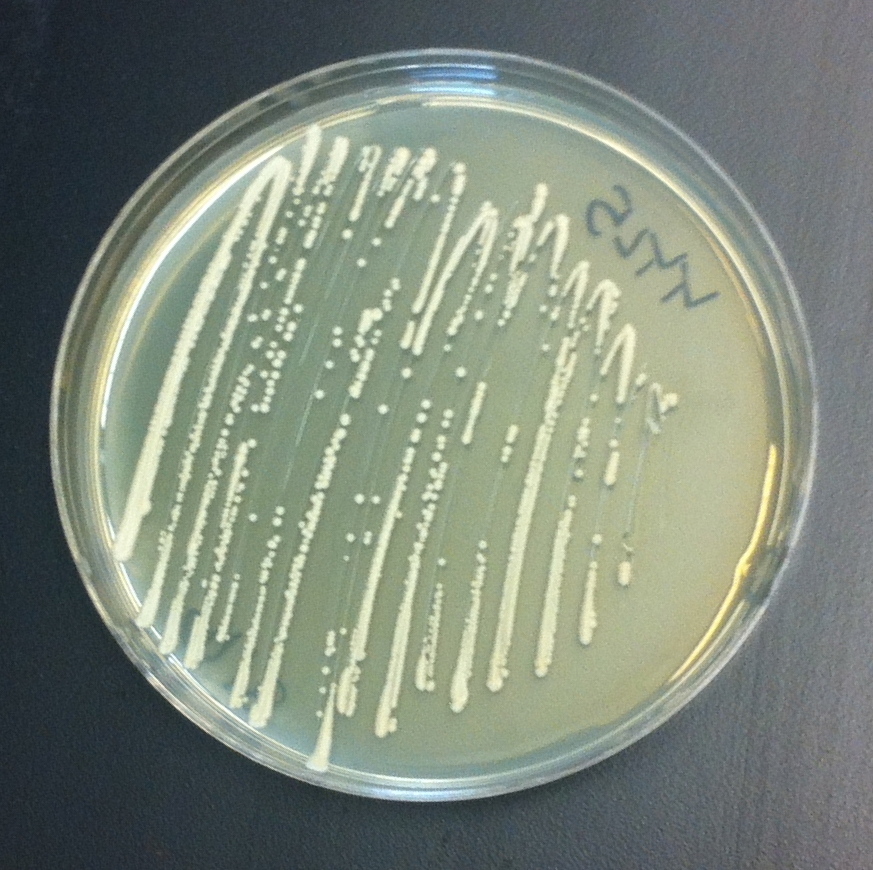
The presentation will discuss the importance and history of biofuels, including various generations of biofuels. Dr. Prahl will especially focus on ethanol and her efforts to enhance the ability of yeast to produce ethanol from xylose. She engineered a strain with an extra copy of a gene for alcohol dehydrogenase. The strain was then analyzed to determine if it had elevated alcohol dehydrogenase activity and if it had an increased rate of ethanol production.
May 5, 2026
Lisa Siewert – Geography & Geology: “Integrating GIS and Geoscience along the Ice Age Trail”
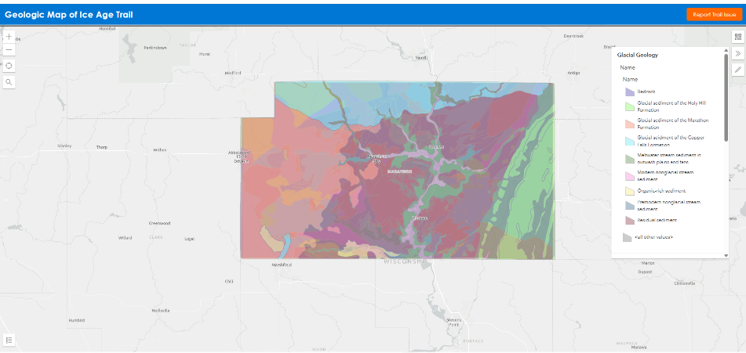
This presentation showcases the creation of an interactive geologic map of Wisconsin’s Ice Age Trail, developed as the capstone project for Siewert’s MS in Cartography and GIS. The map focuses on glacial features such as moraines, kettle lakes, outwash plains, and exposed bedrock across Lincoln, Marathon, Langlade, and Portage counties. Designed for public use, the map provides accessible descriptions, layered visualizations, and mobile-friendly features to enhance the hiking experience. She will share the tools and techniques used and how user feedback from Ice Age Trail hikers helped shape the final design. Beyond the map itself, she’ll reflect on how this project connects geoscience, cartography, and public education.