
Forest Management Strategies for a Changing Climate
Adaptation in Action: Realigning Ecosystems After Disturbance
Jun. 17, 2026 | Noon-1 P.M. CT
Join us as we discuss realigning ecosystems after disturbance and other practical applications of Strategy 10 from The Adaptation Workbook created by the Northern Institute of Applied Climate Science (NIACS). Laura Slavsky a Resilience Forester at The Nature Conservancy in Minnesota will discuss her work planning and directing post-fire reforestation efforts in Northeastern Minnesota.
PRESENTERS
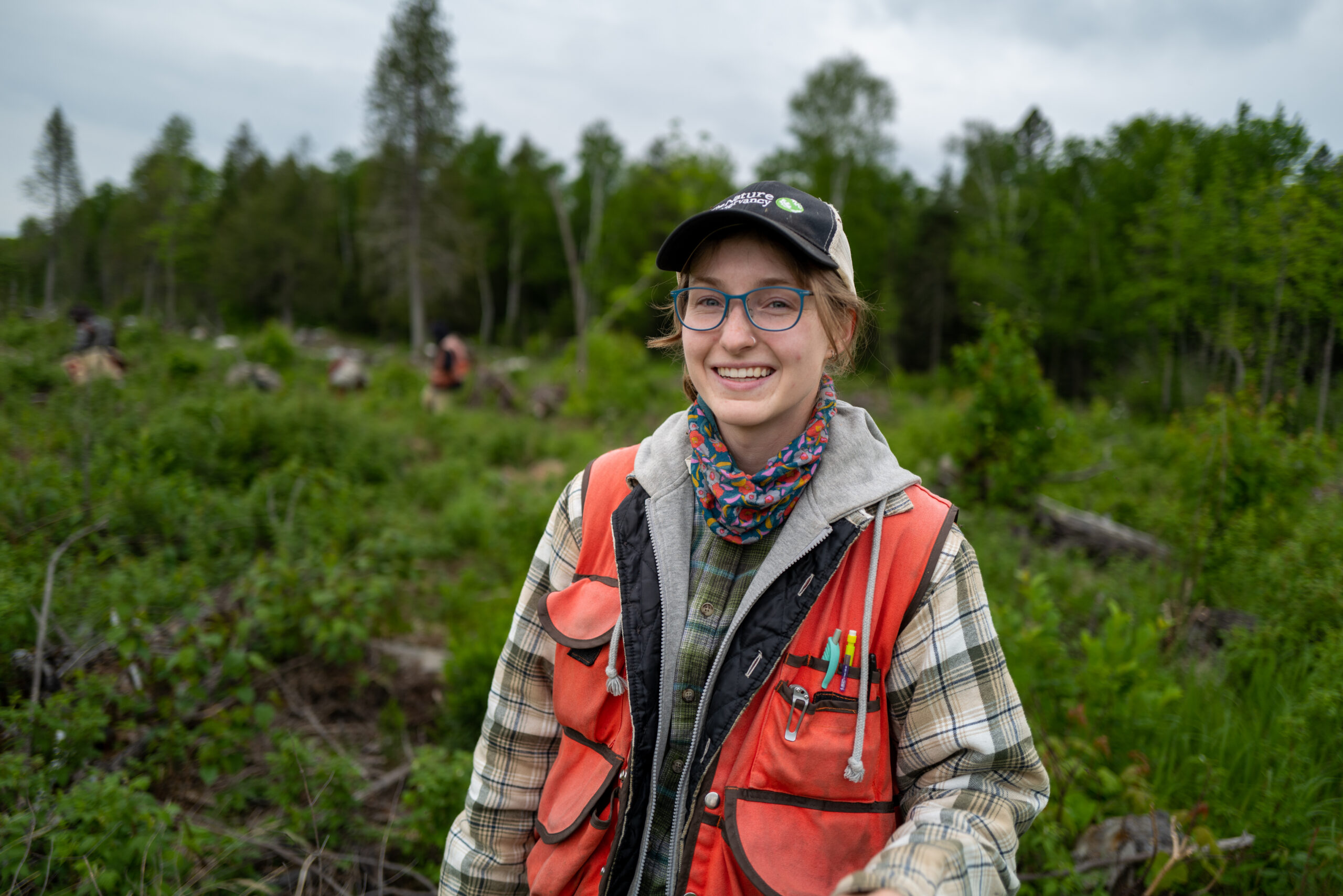
Laura Slavsky
Resilience Forester, The Nature Conservancy
Laura is a Resilience Forester for The Nature Conservancy based in Duluth, MN. She received a Master of Forestry degree from Michigan Technological University. Laura’s current work focuses on planning and directing on-the-ground forest restoration management and tending projects at scale across public lands in northern Minnesota.

TBA Soon
TBA
Bio coming soon.

Keith Phelps
Working Lands Forestry Educator, Natural Resource Institute, University of Wisconsin-Madison Division of Extension
Keith is a Natural Resources Educator in Forestry located in Appleton, WI. Keith develops statewide programs and outreach to improve forest resilience, promote ecological stewardship, and increase awareness of forest carbon markets in partnership with the Wisconsin Department of Natural Resources.
Prior to joining UW Extension, Keith worked in ecological restoration and wetland consulting and holds a master’s in forest resources from Clemson University. In his free time, Keith enjoys hiking, cooking, drawing, writing poetry, and playing guitar.
Additional Resources
Continuing Education
This webinar has been pre-approved for the following:
1.5 Society of American Foresters (SAF) Cat. 1 CFEs
1.0 Wisconsin DNR Cooperating Forester CEUs
Please contact wfc@uwsp.edu for more information. CEUs and CFEs are not available for those watching the recorded session.


Evaluation
The Wisconsin Forestry Center and the webinar presenters appreciate you taking the time to share your feedback.
Please complete the evaluation for the June 15 webinar NIACS Strategy 10: Realigning Ecosystems After Disturbance.
Thank you!
This series is possible through a grant from the Wisconsin SFI® Implementation Committee. The mission of the Wisconsin SFI® Implementation Committee (WI SIC) is to promote and enhance SFI and sustainable forestry practices within Wisconsin through grassroots collaboration with stakeholders, partners, and those who benefit from managed forests.
The Wisconsin Initiative on Climate Change Impacts (WICCI) is a statewide collaboration of scientists and stakeholders formed as a partnership between UW-Madison’s Nelson Institute for Environmental Studies and the Wisconsin Department of Natural Resources. WICCI’s goals are to evaluate climate change impacts on Wisconsin and foster solutions.
Meet Your Hosts

Wisconsin Forestry Center
The Wisconsin Forestry Center (WFC) is dedicated to serving the needs of Wisconsin’s forestry community through partner-driven professional and workforce development, applied research, and community outreach initiatives that promote vibrant, sustainable forests and forest-based economies.
Wisconsin Department of Natural Resources
Wisconsin’s 17 million acres of forestlands and millions of urban trees significantly enhance the quality of life in our state. The Wisconsin DNR dedicates itself to the sustainable management and protection of this precious resource so that it continues to provide a host of ecological, economic and social benefits for years to come. Learn about Wisconsin forestry by visiting the Division of Forestry publications catalog, external news site and forestry videos.