
Forest Management Strategies for a Changing Climate
Adaptation in Action: Assisted Migration: Enhancing Genetic Diversity / Facilitating Community Transitions
Recorded May 20, 2026
Join us as we explore practical applications of Strategies 8 and 9 from The Adaptation Workbook created by the Northern Institute of Applied Climate Science (NIACS). Miranda Thomas Curzon, Ph.D., Associate Professor at Iowa State University, will talk about the Adaptive Silviculture for Climate Change (ASCC) project in the Driftless area. Driftless ASCC blends research with demonstration sites to evaluate different silvicultural approaches to climate change adaptation at oak forests across the Driftless region. Scott O’Donnell, Ph.D., WI DNR Forest Genetics and Ecology Specialist, will present on the Desired Regeneration through Assisted Migration (DREAM) project, an assisted migration experiment that blends silvicultural treatments with tree planting at sites in Northern WI.
The recorded session will be available soon.
PRESENTERS
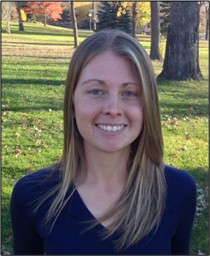
Miranda Thomas Curzon, Ph.D.
Associate Professor of Silviculture and Applied Forest Ecology, Iowa State University
Dr. Miranda Thomas Curzon is an Associate Professor in the Natural Resource Ecology and Management Department at Iowa State University. She holds a M.S. from the University of Vermont and a Ph.D. in from the University of Minnesota. Her research addresses many topics in silviculture relevant to the northern forest of the U.S. and Canada and forests across the Central Hardwood Forest Region with a focus on climate adaptation and ecological silviculture. She serves as an Associate Editor for the Journal of Forestry and for the Canadian Journal of Forest Research. She is also the Past-Chair for Iowa Society of American Foresters.
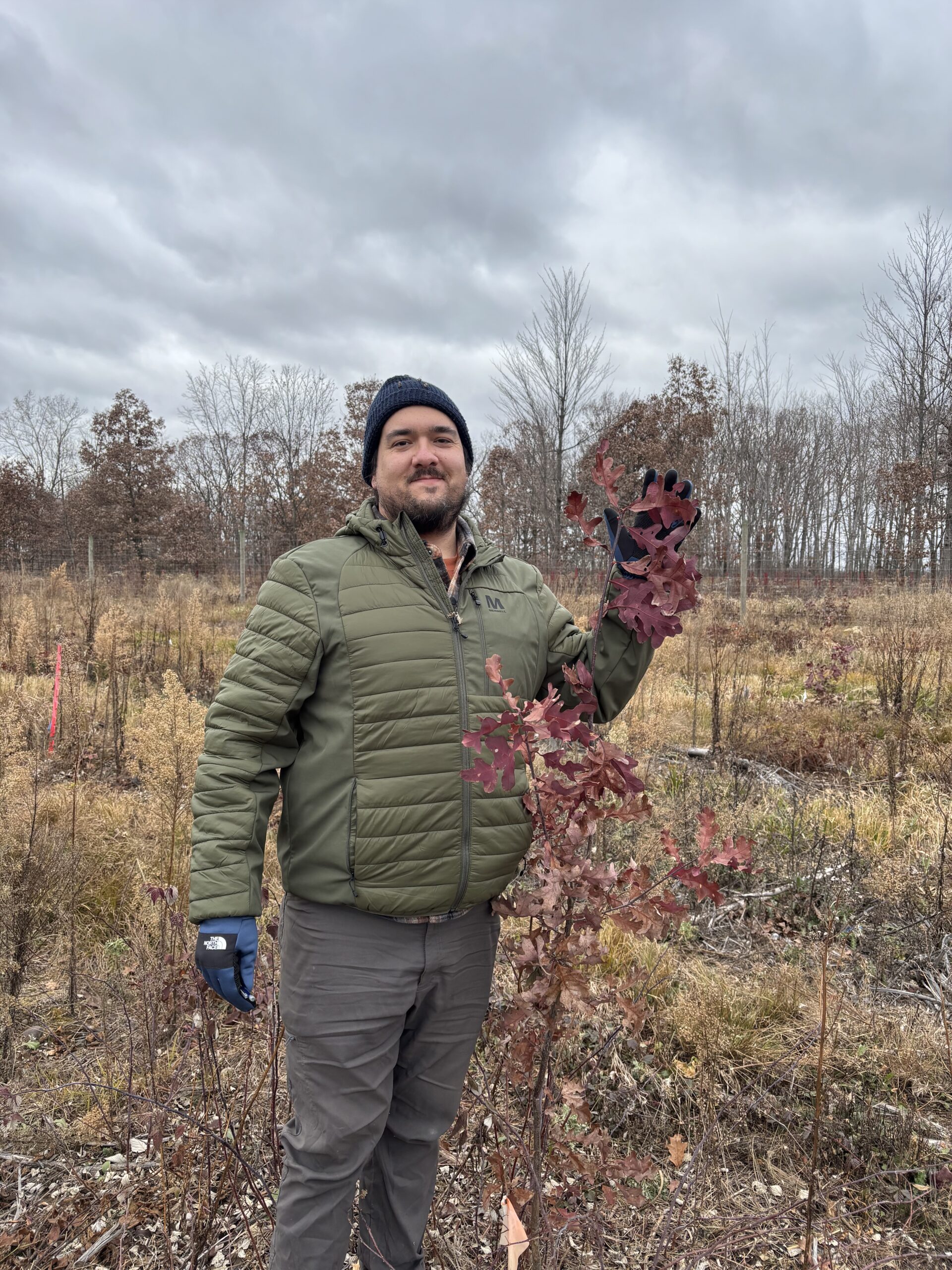
Scott O’Donnell, Ph.D.
Genetics and Ecology Specialist, Division of Forestry, Wisconsin Department of Natural Resources
Scott O’Donnell is the Genetics and Ecology Specialist with the Wisconsin Department of Natural Resources in the Forestry Division. Scott went to East Stroudsburg University of Pennsylvania for his undergraduate degree and received his Ph.D. in Biology from UCLA for his research on landscape genomics and hybridization in oak trees. His current work for the WDNR includes identifying the best seed sources for Wisconsin forests and establishing pest and disease resistant seed orchards for American elm and black ash.
Moderator

Jason Holmes
Inventory and Analysis Forester, Bayfield County
I live with my wife and 3 kids in Washburn, Wisconsin on Lake Superior’s beautiful Chequamegon Bay. I’m a second career forester who was previously an ordained minister. I earned a Master of Forestry degree from Michigan Technological University and have spent most of my forestry years at Bayfield County where I currently work as the Inventory & Analysis Forester. In my free time you’ll find me making music on my 1963 Hammond organ or hitting the mountain bike and cross-country ski trails with family and friends.
Additional Resources
Continuing Education
This webinar has been pre-approved for the following:
1.5 Society of American Foresters (SAF) Cat. 1 CFEs
1.0 Wisconsin DNR Cooperating Forester CEUs
Please contact wfc@uwsp.edu for more information. CEUs and CFEs are not available for those watching the recorded session.


Evaluation
The Wisconsin Forestry Center and the webinar presenters appreciate you taking the time to share your feedback.
Please complete the evaluation form for the March 20 webinar NIACS Strategies 8 and 9: Adaptation in Action: Assisted Migration: Enhancing Genetic Diversity / Facilitating Community Transitions.
Thank you!
This series is possible through a grant from the Wisconsin SFI® Implementation Committee. The mission of the Wisconsin SFI® Implementation Committee (WI SIC) is to promote and enhance SFI and sustainable forestry practices within Wisconsin through grassroots collaboration with stakeholders, partners, and those who benefit from managed forests.
The Wisconsin Initiative on Climate Change Impacts (WICCI) is a statewide collaboration of scientists and stakeholders formed as a partnership between UW-Madison’s Nelson Institute for Environmental Studies and the Wisconsin Department of Natural Resources. WICCI’s goals are to evaluate climate change impacts on Wisconsin and foster solutions.
Meet Your Hosts

Wisconsin Forestry Center
The Wisconsin Forestry Center (WFC) is dedicated to serving the needs of Wisconsin’s forestry community through partner-driven professional and workforce development, applied research, and community outreach initiatives that promote vibrant, sustainable forests and forest-based economies.
Wisconsin Department of Natural Resources
Wisconsin’s 17 million acres of forestlands and millions of urban trees significantly enhance the quality of life in our state. The Wisconsin DNR dedicates itself to the sustainable management and protection of this precious resource so that it continues to provide a host of ecological, economic and social benefits for years to come. Learn about Wisconsin forestry by visiting the Division of Forestry publications catalog, external news site and forestry videos.