Prescribed Fire for Forest Management Series
Training the Next Generation: Incorporating Prescribed Fire Content into College Curriclum
Recorded Dec. 10, 2025
What does it take to build a University Wildland Fire Program? Come learn from three professors who manage wildland fire programs on three different campuses. They’ll share about the staff that spearhead each program; outside partners who provide real-world expertise; the blending of fire ecology and fire management; and of course, the students themselves, and how they get hands-on experience with fire researchers and managers. We’ll also discuss the similarities and differences between their universities and programs, and how you can apply their lessons learned. Bring your questions!
PANELISTS

Todd Aschenbach, Ph.D.
Professor, Grand Valley State University
Dr. Todd Aschenbach is a Professor in the Natural Resources and Environmental Management Program at Grand Valley State University in Grand Rapids, Michigan where he teaches courses in Ecological Restoration, Wildland Fire Management, Soil Science, and Beekeeping. Dr. Aschenbach earned his B.S. in Biology and Wildlife Management from the University of Wisconsin-Stevens Point. He worked as an environmental consultant in the Chicago area before going on to earn his M.S. and Ph.D. in Ecology & Evolutionary Biology from the University of Kansas. Dr. Aschenbach has research experience in a variety of ecosystems and currently integrates fire, soil science, and invasive species management in the context of ecological restoration. He also serves as an on-call wildland firefighter for the Michigan Department of Natural Resources and works with the US Forest Service as part of their Fire Behavior Assessment Team on western wildfire research.

Evan Larson, Ph.D.
Professor and Chair of Environmental Sciences & Society, University of Wisconsin-Platteville
Evan Larson is a father, husband, teacher, scientist, and enthusiast of wild places. His childhood took place in the woods of central Minnesota, helping his parents tend 80 acres of mixed hardwood forests, wetlands, and a beautiful open meadow. Drawn by mountains, oceans, and forests, his formal education includes an Environmental Science bachelor’s degree from Willamette University, degrees in geography from the University of Tennessee-Knoxville (M.S.) and the University of Minnesota (PhD), and a Faculty Fulbright fellowship to Mid Sweden University in Sundsvall. Less formally, Evan’s philosophy of life has been informed by significant doses of reflection, books, chainsaws and firewood. Evan’s engagement with fire started as a child while helping his family with prescribed burns to keep their meadow open, and has grown through two decades of research in tree-ring research focusing on fire history and fire ecology. His work has come to center on the enduring relationships between people and place that are enacted and moderated through fire. Humbled by the expertise and knowledge of his co-panelists, Evan comes to this conversation while still in the early stages of a fire program at UW-Platteville, with the hopes that by tending to campus lands through flame he and his colleagues can help prepare the future fire work force while also contributing to the resurgence of a fire culture.
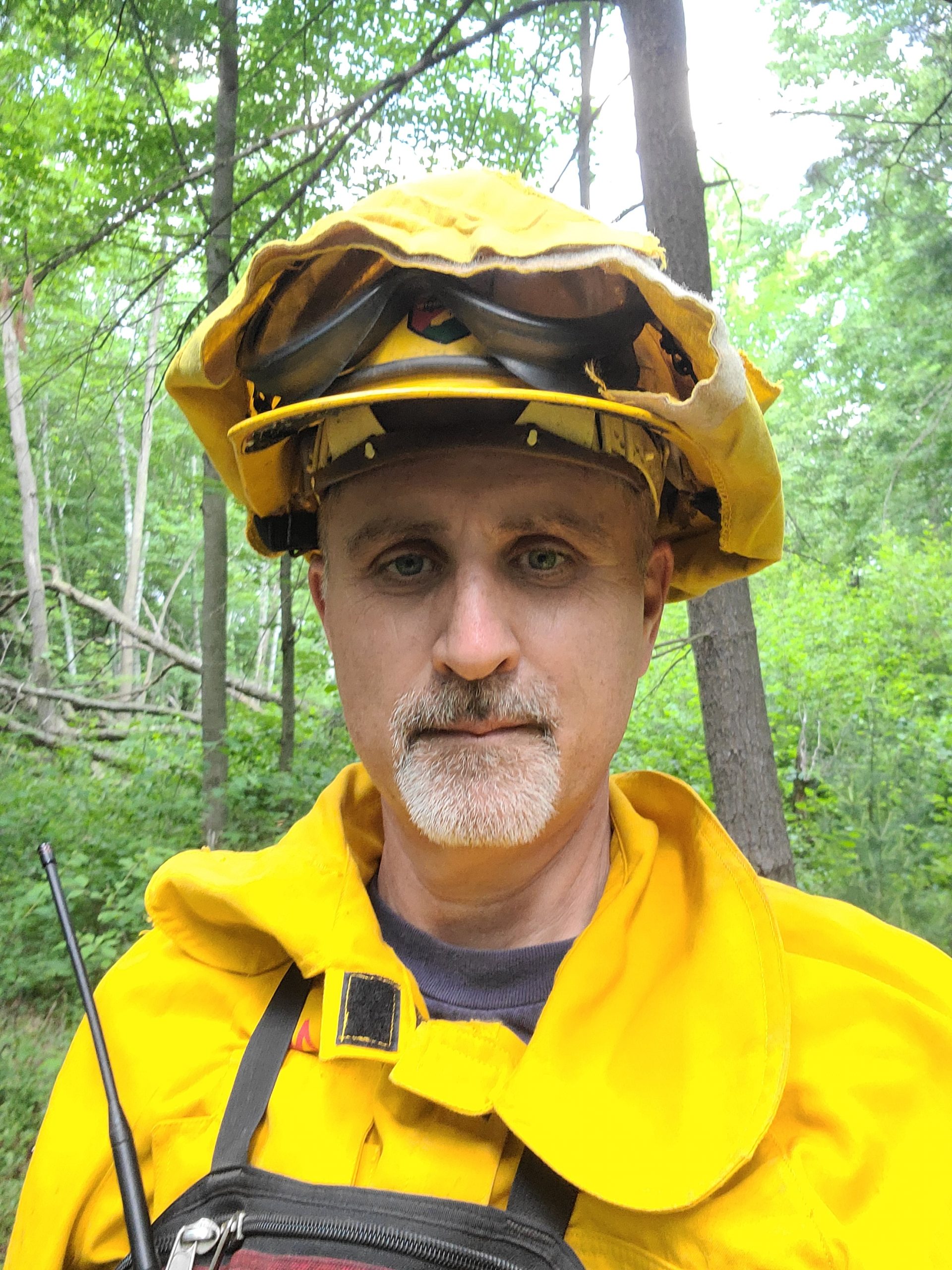
Michael Tiller, Ph.D.
Assistant Professor of Forest and Fire Management, College of Natural Resources, University of Wisconsin-Stevens Point
Michael grew up in Northern California where he enjoyed an active outdoor lifestyle hunting, fishing, camping, and skiing in the beautiful Sierra Nevada Mountains and coastal redwoods. He enjoyed a 10-year career with Cal Fire serving as a Firefighter and Fire Apparatus Engineer. In 2006, he moved to College Station, Texas where he attended Texas A&M University and earned a B.S. in Wildlife and Fisheries Science. After completing his B.S. degree, he attended Stephen F. Austin State University where he earned an M.S. degree in Environmental Science and Ph. D. in Forestry, both with a research focus on understory fuel flammability in forest and rangeland ecosystems. Michael also served as a Wildland Urban Interface Specialist for the Texas A&M Forest Service for 2-years where he was actively engaged with fuels management and prescribed burning. He recently accepted an Assistant Professor of Forest Ecology position at UW-Stevens Point where he leads the fire science program and serves as an adviser for the UWSP Fire Crew.
MODERATOR
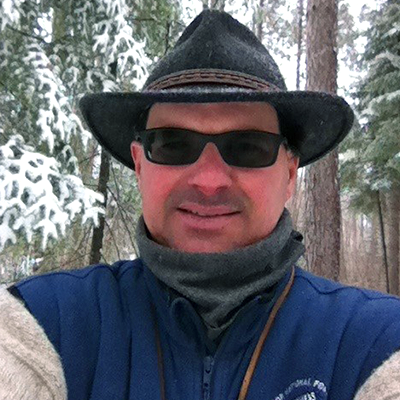
Jack McGowan-Stinski
Program Manager, Lake States Fire Science Consortium (A Joint Fire Science Program Exchange)
Jack is the Program Manager for the Lake States Fire Science Consortium, funded by the Joint Fire Science Program, and administered through the Ohio State University. His main duties include managing the activities of LSFSC, and liaising with researchers, land and fire managers, and policymakers across the Lake States Region. Jack received a B.S. in Wildlife Biology from the University of Wisconsin-Stevens Point, and a M.S. in Conservation Biology from Central Michigan University. Jack’s professional experiences include – Fire Manager and Land Steward for The Nature Conservancy, a Consultant/Contractor and Burn Boss, multiple seasonal positions with USFS and State DNRs. Jack is one of the founders of the Michigan Prescribed Fire Council, actively participates on steering committees/boards for the Coalition of Prescribed Fire Councils, the NE MW Regional Prescribed Fire Council, and MI and MN Councils, and supported the start-up of other State RX Councils in IL, IN, MI, MN, OH, PA, and WI. When not sharing fire and natural resource management stories, Jack will disappear for as long as possible into the wilds of MN and WI to explore, hunt, fish, kayak, snowshoe, and immerse in a wide variety of arts and crafts projects.
Additional Resources
Continuing Education
This webinar series has been pre-approved for the following:
- 18.0 Society of American Foresters (SAF) Cat. 1 CFEs (1.5 CFEs per webinar)
- 12.0 SER Certified Ecological Restoration Practitioner (CERP) CECs (1.0 CEU per webinar)
- 12.0 Wisconsin DNR Cooperating Forester CEUs (1.0 CEU per webinar)
If you would like a Certificate of Completion for a webinar, please send your request to wfc@uwsp.edu. Certificates are sent only by request.Certificates of completion are available by emailing wfc@uwsp.edu. Certificates will be emailed to you within 7-10 business days.

Resources
Training the Next Generation – Aschenbach

Platinum Sponsors
Gold Sponsors