
Prescribed Fire for Forest Management Series
Loss of Old-growth Forest to Fire
Recorded Feb. 4, 2026
Fire suppression and past selective logging of large trees have fundamentally changed frequent-fire-adapted forests in California. The culmination of these changes produced forests that are vulnerable to catastrophic change by wildfire, drought, and bark beetles, with climate change exacerbating this vulnerability. Management options available to address this problem include mechanical treatments (Mech), prescribed fire (Fire), or combinations of these treatments (Mech + Fire). All three active treatments (Fire, Mech, Mech + Fire) produced forest conditions that were much more resistant to wildfire than the untreated control and Mech + Fire improved forest resilience the most. There are multiple pathways for achieving success in Sierra Nevada mixed conifer forests.
PRESENTER

Scott L. Stephens, Ph.D.
Professor, Environmental Science, Policy & Management, Rausser College of Natural Resources, University of California Berkeley
Scott Stephens is interested in the interactions of wildland fire and ecosystems. This includes how prehistoric fires once interacted with ecosystems, how current wildland fires are affecting ecosystems, and how future fires and management will influence people and ecosystems. He is also interested in wildland fire and forest policy and how it can be improved to meet the challenges of the coming decades, both nationally and internationally. Working with Indigenous partners to learn how to steward ecosystems into the future with climate change is a key area of research.
Stephens has given testimony on fire and forest policy at the US House of Representatives, the White House, California Assembly and Senate, California Governor’s office, and served on the 2024 US Wildfire Commission. He is on the Board of Directors of the Climate Wildfire Institute and is one of the leaders of The Stewardship Project which is a partnership of Indigenous people and western science to improve federal fire policy. He was selected in the Top 1% of Researchers Worldwide in 2024 and 2025.
MODERATOR
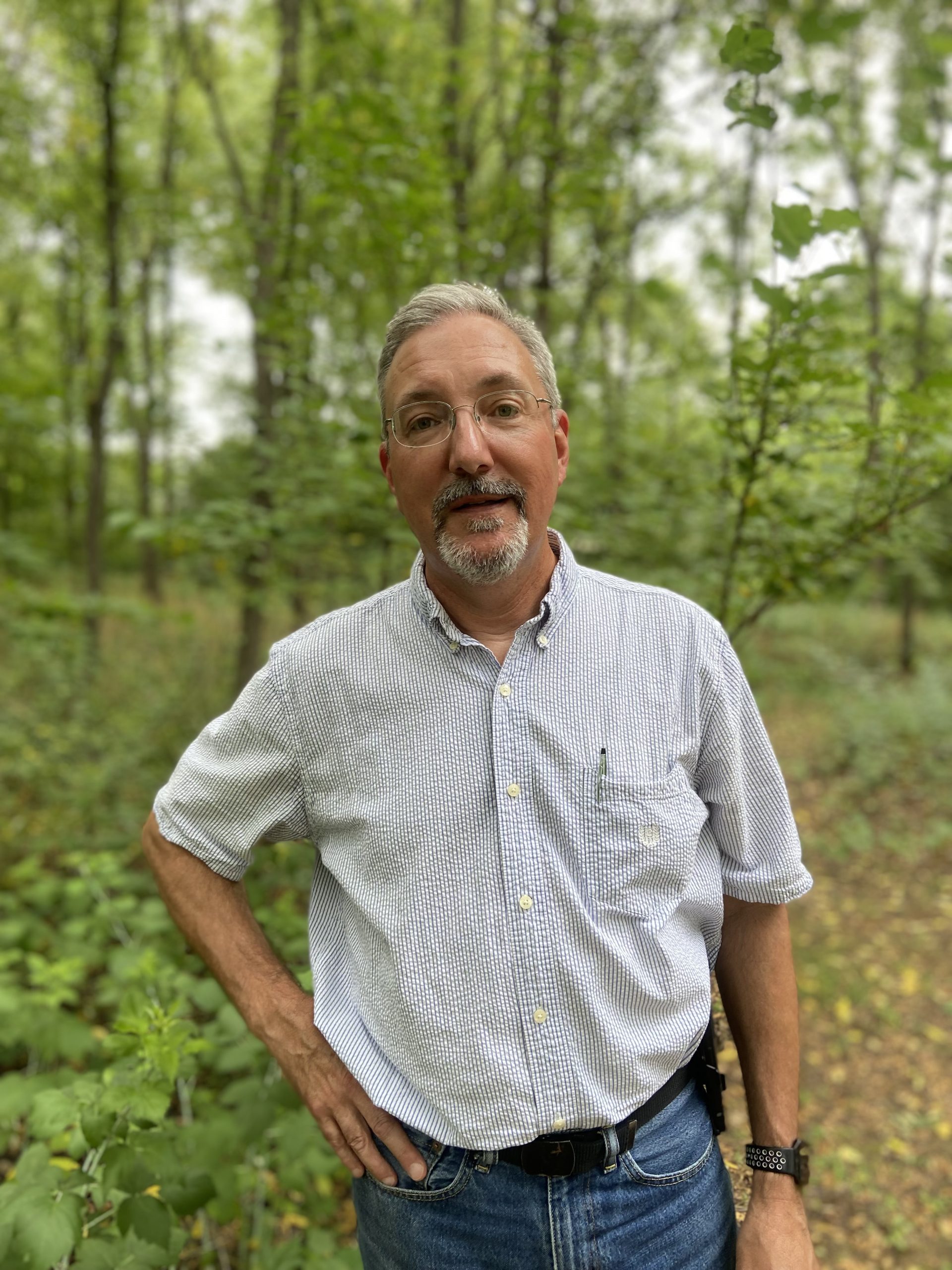
Brad Hutnik
Forest Ecologist/Silviculturist, Division of Forestry – Wisconsin Department of Natural Resources
Brad Hutnik is a forest ecologist / silviculturist with the Wisconsin Department of Natural Resources. Since 2012, Brad has served as a member of the WDNR Silviculture Team. As such, Brad currently works statewide on forest ecology and silviculture issues and has been involved with prescribed fire as a management tool throughout his career. Brad previously served as the Lower Wisconsin State Riverway forester (2002-2012) and worked as a staff forester at Clark Forestry, Inc. (1997-2002). Brad received a bachelor’s degree in forest management at the University of Wisconsin-Stevens Point in 1997. He is a Certified Silviculturist (USDA-FS) and co-host of UWSP’s SilviCast podcast.
Additional Resources
Continuing Education
This webinar series has been pre-approved for the following:
- 18.0 Society of American Foresters (SAF) Cat. 1 CFEs (1.5 CFEs per webinar)
- 12.0 SER Certified Ecological Restoration Practitioner (CERP) CECs (1.0 CEU per webinar)
- 12.0 Wisconsin DNR Cooperating Forester CEUs (1.0 CEU per webinar)
If you would like a Certificate of Completion for a webinar, please send your request to wfc@uwsp.edu. Certificates are sent only by request.

Resources
No additional resources were provided for this webinar.

Platinum Sponsors
Gold Sponsors