
Forest Management Strategies for a Changing Climate
Adaptation in Action: Maintaining and Enhancing Species and Structural Diversity
April 15, 2026 | Noon-1 p.m. CT
Learn about practical applications of Strategy 5 from The Adaptation Workbook created by the Northern Institute of Applied Climate Science (NIACS). Gena Abramson, Forestry Specialist with the Bad River Band of Lake Superior Chippewa will discuss climate-informed prescriptions. Matt Dallman, Northwoods Strategy Director of the Midwest Division of The Nature Conservancy, will talk about TNC’s work to create a more diverse and resilient age structure and species mix at their Caroline Lake Preserve in Iron and Ashland Counties.
Photo Credit: Kevin Sink
PRESENTERS

Gena Abramson
Forestry Specialist, Bad River Band of Lake Superior Chippewa
Boozhoo. (Hello) My name is Gena Abramson. I work and live on the Bad River Reservation. Having grown up in eastern South Dakota, my fondness for trees came much later in life so I began my forestry career with the Wisconsin DNR and transitioned to Bad River after completing my education at Northland College in 2019. Having been hired as their first actual trained “forester” nearly 7 years ago, I’ve played a key role in developing the Mashkiiziibii Natural Resources Forestry program.
With the help of the Nature Conservancy as well as other grantors, we have planted over 100,000 trees. Our Forest Stewardship plan focuses on aspen and ash removal while encouraging long lived species. Ultimately, our goal is to create a healthier, more diverse forest for the 7th generation into the future.

Matt Dallman
Northwoods Strategy Director, Midwest Division, The Nature Conservancy
Matt Dallman has over 30 years’ experience working on a variety of conservation projects throughout Wisconsin for The Nature Conservancy (TNC). Recently, he has taken on new responsibilities overseeing the Midwest Division’s Northwoods strategy, with a specific focus on working with partners to implement science and projects to develop climate-resilient forests across the Northwoods of Michigan, Minnesota and Wisconsin. Since joining TNC, Matt has been involved with projects that have protected more than 110,000 acres of natural areas and working forests. Matt is currently working to expand efforts to protect, manage and connect resilient forest lands, with an eye toward influencing how forests are managed by both public and private owners.
Moderator

Johanna Desprez
Natural Resources Educator, Forestry & Wildlife, UW-Madison Extension
Johanna Desprez is a Natural Resources Educator in Forestry with UW-Madison Extension. Johanna manages a program called the Wisconsin Stewardship Plan Project in partnership with the Wisconsin DNR. This program connects Wisconsin landowners with foresters to develop land management plans for the landowners. Johanna also develops educational materials and classes to support woodland owners implementing their Forest Stewardship Plans. Prior to joining UW-Madison Extension, she led the creation and launch of the Assessing Vegetative Impact of Deer (AVID) citizen science project with University of Minnesota Extension. While earning her master’s degree in forestry, her research focused on spatial temporal changes of tree species in the Eastern United States, and the impacts of climate change.
Additional Resources
Continuing Education
This webinar has been pre-approved for the following:
1.5 Society of American Foresters (SAF) Cat. 1 CFEs
1.0 Wisconsin DNR Cooperating Forester CEUs
Please contact wfc@uwsp.edu for more information. CEUs and CFEs are not available for those watching the recorded session.


Evaluation
The Wisconsin Forestry Center and the webinar presenters appreciate you taking the time to share your feedback.
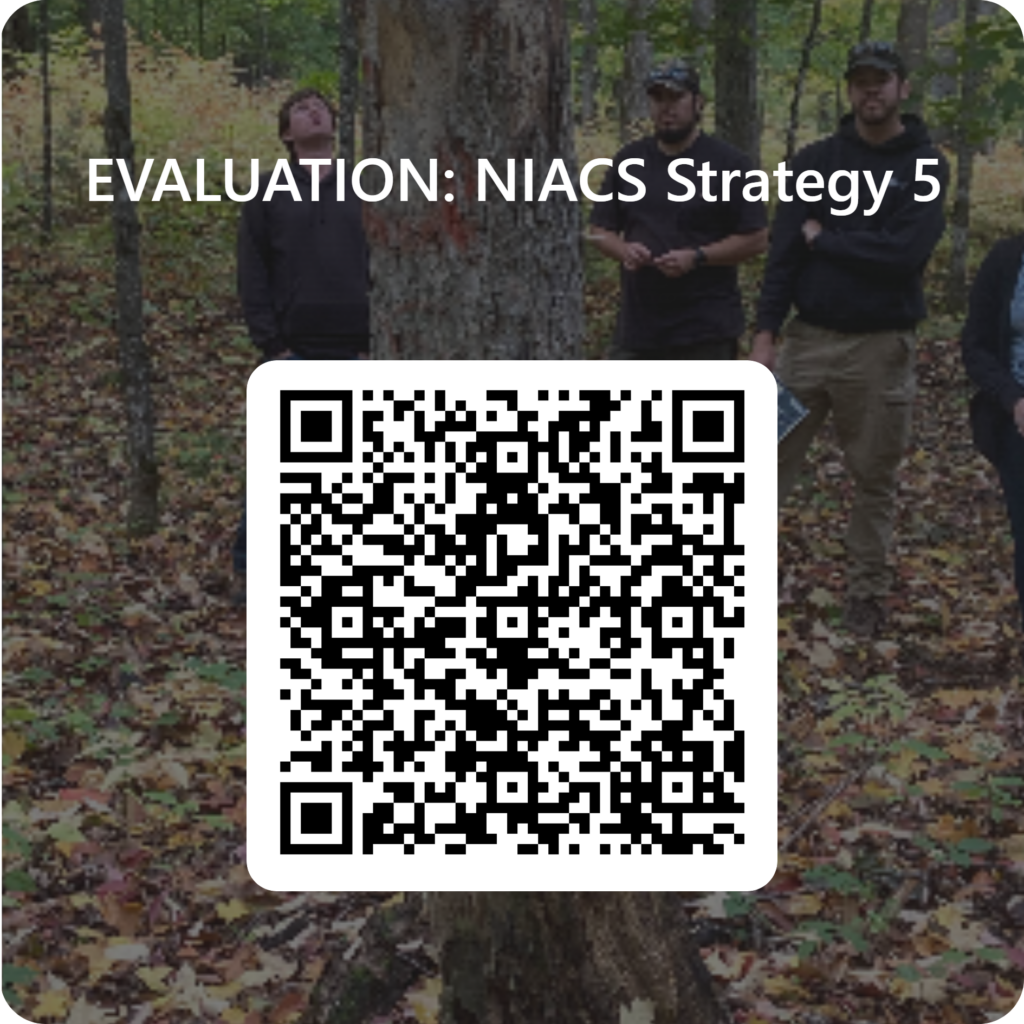
Please complete the evaluation form for the April 15 webinar NIACS Strategy 5: Maintain and Enhance Species and Structural Diversity.
Thank you!
This series is possible through a grant from the Wisconsin SFI® Implementation Committee. The mission of the Wisconsin SFI® Implementation Committee (WI SIC) is to promote and enhance SFI and sustainable forestry practices within Wisconsin through grassroots collaboration with stakeholders, partners, and those who benefit from managed forests.
The Wisconsin Initiative on Climate Change Impacts (WICCI) is a statewide collaboration of scientists and stakeholders formed as a partnership between UW-Madison’s Nelson Institute for Environmental Studies and the Wisconsin Department of Natural Resources. WICCI’s goals are to evaluate climate change impacts on Wisconsin and foster solutions.
Meet Your Hosts

Wisconsin Forestry Center
The Wisconsin Forestry Center (WFC) is dedicated to serving the needs of Wisconsin’s forestry community through partner-driven professional and workforce development, applied research, and community outreach initiatives that promote vibrant, sustainable forests and forest-based economies.
Wisconsin Department of Natural Resources
Wisconsin’s 17 million acres of forestlands and millions of urban trees significantly enhance the quality of life in our state. The Wisconsin DNR dedicates itself to the sustainable management and protection of this precious resource so that it continues to provide a host of ecological, economic and social benefits for years to come. Learn about Wisconsin forestry by visiting the Division of Forestry publications catalog, external news site and forestry videos.