Family Adversity and Adaptation

Help those facing challenges

The family adversity and adaptation certificate at UW-Stevens Point allows you to become conversant in challenges facing individuals and families today as well as strategies and techniques to deal with that stress in healthy ways.

Infused with principles and strategies from validated models such as Adverse Childhood Experiences – ACEs, Trauma Informed Care – TIC, and Mental Health First Aid. Individuals from any background are invited to complete the certificate which is an asset for those working with individuals and families in a variety of professions such as education, nursing, counseling, social work, and more.

Course Catalog

School of Health Sciences and Wellness

Programs

School of Health Sciences and Wellness
D127 Science Building
2001 Fourth Ave.
Stevens Point, WI 54481-3897
715-346-3766
health@uwsp.edu
College of Professional Studies

Child Life Specialist Preparation

The child life specialist preparation certificate is ideal for you if you are seeking a career as child life specialists and helps you meet the first, academic, steps towards certification. It is also beneficial if you are seeking skills and understanding that can be employed in a variety of settings such as hospitals, child advocacy centers, schools, camp and bereavement programs, women’s shelters, hospice, trauma centers and more. Students from any major may complete the certificate which is particularly well suited if you are pursuing a major in family and consumer sciences-child life and family studies.

Child life specialists provide evidence-based, developmentally appropriate interventions including therapeutic play, preparation and education that reduce fear, anxiety and pain for children and youth. See childlife.org for more information

Why study Child Life Specialist at UW-Stevens Point?

The Child Life Specialist Preparation Certificate, one of our newest additions to the University of Wisconsin-Stevens Point family and consumer sciences-child life and family studies major, leads to an occupation in which child life specialists provide evidence-based, developmentally appropriate interventions including therapeutic play, preparation and education that reduce fear, anxiety, and pain for children and youth.


Practicum Student

Sophie Smith

Sophie Smith served as a child life practicum student at Community Hospice & Palliative Care in Jacksonville, Fla.


Insights of Interns

Casey Brodhagen

Casey Brodhagen was served as a child life intern at Children’s Wisconsin in Milwaukee.

 
Major: Family and Consumer Sciences

Option: Child Life and Family Studies

Child life and family studies students at UW-Stevens Point are nationally certified to work with families in a variety of settings, agencies and programs. Graduates take positions working in childcare, youth centers, adoption agencies, family crisis and elder care programs. Additionally, the Child Life Specialist Preparation Certificate leads to an occupation in which child life specialists provide evidence-based, developmentally appropriate interventions including therapeutic play, preparation and education that reduce fear, anxiety, and pain for children and youth.


Pre-Approved Courses

Complete the 10 required/recommended courses required by the Association of Child Life Professionals.


Pursuing child life at UW-Stevens Point

  • Join the Child Life Association of Stevens Point (CLASP), the student organization focused on helping each other on the path to careers in child life. Watch CLASP interviews with Certified Child Life Specialists to learn more about their path into the field.
  • Start volunteering and working with children who are healthy and typically developing, as well as children who are fighting illness or disease, are grieving or have developmental challenges. Log and track these hours; you will need at least 100 hours in each category, but successful students often have hundreds of hours in both categories.
  • Plan to complete a practicum experience, which is essentially a two or three week intense job shadow with a Certified Child Life Specialist in a hospital.
  • Know that your final two steps in the process will be an internship, a 600-hour experience in a hospital and a certifying exam.

Headlines

Meet Your Faculty and Staff

The faculty and staff members  of the School of Health Sciences and Wellness are committed to developing professionals who study, promote and model lifelong wellness for individuals, families and communities, building a stronger, healthier community. 

View all our faculty/staff
Profile Photo: Sterling Wall

Sterling Wall

  • Professor – Family and Consumer Sciences
  • Coordinator – Child Life Specialist Program
207 College of Professional Studies

School of Health Sciences and Wellness
D127 Science Building
2001 Fourth Ave.
Stevens Point, WI 54481-3897
715-346-3766
health@uwsp.edu
College of Professional Studies

Child, Youth and Family Studies

Study the importance of family dynamics

The child, youth and family studies minor at UW-Stevens Point consists of 21 credits. It provides a means to enhance a human development knowledge base for students in other related fields.

This is also available as a major: Family and Consumer Sciences – Child Life and Family Studies

The coursework provides students with knowledge and understanding of issues regarding children and their families and emphasizes the importance of family dynamics, resiliency, community wellness and quality of life.

Students can tailor curriculum to reflect their interests and career goals.

Course Catalog

School of Health Sciences and Wellness

Programs

School of Health Sciences and Wellness
D127 Science Building
2001 Fourth Ave.
Stevens Point, WI 54481-3897
715-346-3766
health@uwsp.edu
College of Professional Studies

Nursing

Help patients maintain and recover their health and well-being

When you choose nursing at UW-Stevens Point, you will find a path to your BSN that is cost effective, flexible and supportive. Students can pursue pre-nursing with our 1+2+1 partnership program or RN to BSN completion for those with an Associate Degree in Nursing completed or in progress. Pre-nursing students start classes at UWSP, transition to the local technical college for four semesters of RN classes then finish their BSN degree with UWSP.

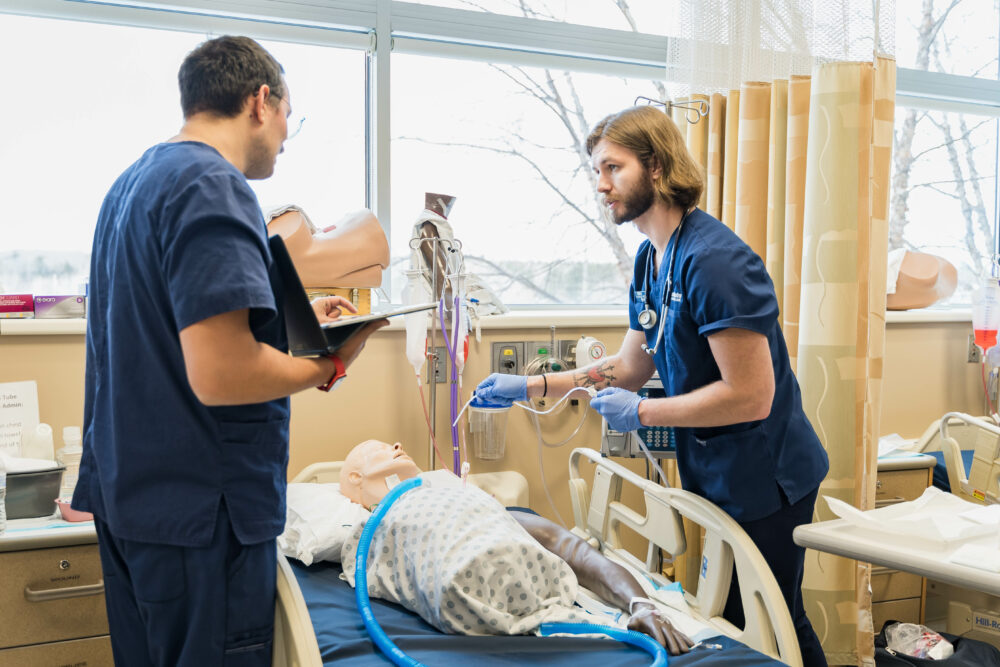
Northcentral Technical college students working on a manikin.

GET STARTED TODAY!

Request information and start your journey to making an impact with a degree in nursing from UW-Stevens Point.

Loading…

Why choose Nursing at UW-Stevens Point?

When you choose nursing at the University of Wisconsin-Stevens Point, you’ll have two options: pre-nursing (provides prerequisite courses for admission to schools of nursing) or the Bachelor of Science in Nursing completion program designed for associate degree or diploma registered nurses. UW-Stevens Point also offers the pre-nursing program that can satisfy prerequisites to our 1+2+1 nursing partnership program, or to other BSN programs.

Nursing

Hired Before Graduation

Jasmin Duranceau

Jasmin Duranceau was hired before graduation at Aspirus Birthing Center in Wausau, Wis., as a registered nurse.

 
Medical Laboratory Science

Alumni Map

Where are they now?

UW-Stevens Point alumni live and work all over the world—so if you’re looking for networking opportunities close to a new home or contact info for fellow Pointer in another city, you’re in luck. Looking for a fellow Pointer near you or want to add your pin? Start with our map.


What to Expect? 

According to the Wisconsin Center for Nursing, the current increasing demand for RNs in the state of Wisconsin–coupled with the decreasing total number of RNs–will lead to supply demand gap of 35 percent by 2035.

Just about anywhere doctors work, RNs do too, including but not limited to hospitals, doctor’s offices, clinics, hospice, emergency rooms, intensive care, government agencies, corporations, and more. In fact, RNs also work in other areas where physicians typically do not, including home health and schools. According to the Bureau of Labor Statistics, over half of all RNs work in hospitals.

Pre-Nursing Paths at UW-Stevens Point

The 1+2+1 nursing partnership program (1 year at UWSP + 2 years at Partner Program + 1 year at UWSP) offers an opportunity for high school graduates to earn both an Associate Degree in Nursing (ADN) and a Bachelor of Science Degree in Nursing (BSN) through the collaborative programs of UW-Stevens Point, Mid-State Technical College (Stevens Point, Wisconsin Rapids and Marshfield), Northcentral Technical College (Wausau) and Nicolet College (Rhinelander).

About the Pre-Nursing Program

Students entering the program can experience traditional college opportunities, including: living on campus, NCAA athletics, and participation in student organizations while also taking advantage of the high quality, nationally accredited expertise of UWSP and our partner ADN programs.

Students may begin their coursework at UWSP or partner institutions by taking general education courses in addition to the partnership program’s ADN admission requirements. It is possible to be dually enrolled at UWSP and the local partner institution to complete these requirements.

This program provides an efficient and affordable path to becoming a Registered Nurse (RN) in Central Wisconsin. For students beginning at UWSP, the program provides a competitive application process for UWSP students to gain entrance into a partner’s ADN program at Mid-State, NTC or Nicolet. Meeting the minimum requirements does not guarantee selection via the competitive application process. Priority for selection is given to students that have: (1) successfully completed pre-nursing and general education requirements, (2) greater credit hours with UWSP, and (3) a higher cumulative GPA. Students may be selected for placement in the ADN program at any of our three partner institutions: Mid-State, NTC or Nicolet.

Upon completion of the ADN, students then complete the RN to BSN Completion program with UWSP. The RN to BSN Completion program requires students to have an Associate Degree in Nursing.

Nursing Application Information

When do I apply to the Nursing Program?

  • There is not a set requirement on when you must apply, but if you want to follow our sample graduation plan as an incoming freshman starting in the fall, and want to graduate with both your Associate Degree in Nursing (ADN) and your Bachelor of Science in Nursing (BSN) within the four-year timeframe, it is recommended to apply at the end of your second semester of freshman year, while enrolled in General Anatomy and Physiology with the technical college. Transfer students or students bringing in a lot of dual enrollment credits from high school may want to develop a customized grad plan with the UWSP nursing adviser to determine application timeline. Students who were required to take MATH 90 based on the math placement test will likely apply during their fourth semester and graduate with the BSN in 4.5 years total.
  • UWSP Pre-Nursing 1+2+1 Application Checklist
International Nursing Partnership Program

The 1+2+1 partnership program is a unique opportunity for UWSP students. In this program, students spend 1 year at UWSP + 2 years at a partner program school completing associate degree in nursing and then +1 year back at UWSP for completion of the BSN degree. This unique opportunity gets students into the workforce sooner, gaining salary and benefit options with licensure, while completing a bachelor’s degree.

Students get the best of both worlds with our 1+2+1 program, they get to experience traditional college opportunities, including: living on campus, NCAA athletics and participation in student organizations–all of this while taking advantage of the high-quality, nationally accredited expertise of UW-Stevens Point and our partnering programs. The nursing partner program is with Northcentral Technical College in Wausau, Wisconsin.

For more information about the UW-Stevens Point international nursing program, contact Krista Nelsen, international recruitment specialist, at 715-346-2702 or krista.nelsen@uwsp.edu. You may also learn more about the Office of International Education.

Professional Licensure Disclosure (NC-SARA)

The United States Department of Education requires institutions that provide distance education to disclose information for programs leading to professional certification or licensure about whether each program meets state educational requirements for initial licensure or certification. Following is this disclosure information for this program:

This program meets the certification/licensure requirements in the following states/territories*: Alabama, Arizona, Arkansas, Colorado, Delaware, Florida, Georgia, Idaho, Indiana, Iowa, Kansas, Kentucky, Louisiana, Maine, Maryland, Mississippi, Missouri, Montana, Nebraska, New Hampshire, New Jersey, New Mexico, North Carolina, North Dakota, Ohio, Oklahoma, Rhode Island, South Carolina, South Dakota, Tennessee, Texas, Utah, Vermont, Virginia, Washington, West Virginia, Wisconsin, Wyoming

This program does not meet the certification/licensure requirements in the following states/territories**: Alaska, American Samoa, California, Connecticut, District of Columbia, Federated States of Micronesia, Guam, Hawaii, Illinois, Massachusetts, Michigan, Minnesota, Nevada, New York, Northern Mariana Islands, Oregon, Pennsylvania, Puerto Rico, Republic of Palau, Republic of the Marshall Islands, U.S. Virgin Islands

* The UW-Stevens Point Pre-Nursing (1+2+1) curriculum fulfills the State of Wisconsin requirements for licensure. Additionally, the Nurse Licensure Compact (NLC) permits licensed nurses to practice in participating states. More information on states that participate in the NLC may be found here: https://www.nursecompact.com/

** Several states and territories in the “do not meet” list above have legislation and implementation pending to join the Nurse Licensure Compact (NLC). Prospective students in any of these states should examine the status of the NLC agreements at: https://www.nursecompact.com/.
Nursing 1+2+1 FAQs

What do the numbers “1+2+1” mean?

The numbers 1+2+1 represent the general structure of a student’s academic journey through the program:

“1” = Your first year is primarily spent taking courses through UWSP, building your foundation in science and general education. Some students may take anatomy and physiology courses through a partner institution, depending on availability.

“+2” = During years two and three, you are dually enrolled with a technical college, completing your associate degree in nursing (ADN). You’ll still take at least one UWSP course each semester and remain fully connected to UWSP. 38 nursing credits are completed at the technical college partner for the ADN.

“+1” = Your final year is spent completing your Bachelor of Science in Nursing (BSN) through UWSP, with flexible online or Zoom-based courses.

Technically, the timeline is closer to “1.5 + 2 + 0.5,” but “1+2+1” is a simpler way to describe the flow—and it sticks! Refer to the Sample Graduation Plan for Pre-Nursing 1+2+1 Program for a better understanding of the course flow and structure.

Do students “leave” UWSP during the program for the “+2”?

Not exactly. Students are UWSP students from start to finish. Typically, on a traditional path, during semesters 4-7, they are dually enrolled with a technical college while continuing UWSP coursework. They take at least one UWSP course online each semester during this time. Clinicals are coordinated through the technical college as part of the ADN portion of the program. Students remain eligible for UWSP housing, athletics, financial aid, and student life throughout the entire program. Transfer students or students who changed their major to nursing may have a different path.

How long does the program take?

This is up to every individual student. Traditional students with no prior college credits can follow our standard four-year plan. Students are generally able to complete everything in 4 years if they are successful at their first attempts at every class. Some students choose to go part-time due to being a non-traditional student, transferring from other schools, already having a bachelor’s degree in a different field, or changing their major to nursing. Transfer students or students who changed their major to nursing may have a different path. New students with many dual enrollment or AP courses may possibly graduate early. Contact the UWSP nursing advisor in the School of Health Sciences and Wellness Student Success Center for a customized graduation plan if necessary.

Can students participate in athletics and student life?

Yes! Students remain eligible for athletics, student organizations and campus housing throughout the program. Even during dual enrollment, credits taken at the technical college count toward full-time enrollment for athletic eligibility and student engagement.

Are financial aid and military benefits available?

Yes. All financial aid and military benefits are handled through UWSP, even during dual enrollment. The credits taken at the technical college are included in the total credit load used to determine financial aid eligibility. The process is called a consortium agreement.

Which technical colleges are part of the program?

Students may choose from:

Are there waitlists?

UWSP has not had a waitlist in the past 6 years, and students have consistently been placed in their first or second choice ADN program if eligible. However, waitlists cannot be guaranteed in the future. The UWSP nursing program works closely with partners to maintain seat availability for our students and negotiate for more openings when needed.

Generally, students get their first choice and have always at least received their second choice, although not guaranteed. This depends on factors such as UWSP GPA, number of UWSP credits, and number of students wanting to attend a specific technical college partner.

How much money can students save?

Students save significantly because a typical student in semesters 4–7—the four semesters of the ADN portion—is primarily billed by the technical college partner, where tuition is nearly half the cost of traditional UWSP tuition. During this time, students typically take one UWSP course per semester billed by UWSP at their tuition rate.

In total, at least 38 of the 120 credits required for graduation are billed by the technical college partner. 38 is the number of ADN credits you will earn at the technical college partner.

What are the entrance requirements for the +2 portion and when do students apply?

Applications are fully hosted by UWSP. To apply, students generally need the following courses:

  • General Chemistry
  • General Anatomy and Physiology
  • Advanced Anatomy and Physiology
  • Human Growth and Development or Developmental Psychology
  • Nursing Assistant (CNA) course
  • Statistics course
  • Minimum 2.5 cumulative GPA

Generally, these courses must be completed with a “C” or better; or be in progress for the current semester in which they are applying; or registered for the following semester. Requirements may vary slightly between partner colleges—please refer to the 1+2+1 Application Checklist (PDF) for full details.

There is no strict deadline, but timing matters if you want to stay on track for a four-year graduation.

  • If you’re an incoming freshman starting in the fall and plan to follow the sample graduation plan, it’s recommended to apply at the end of your second semester, while enrolled in General Anatomy and Physiology at the technical college.
  • Transfer students or those bringing in dual enrollment/AP credits should meet with the UWSP nursing advisor in the School of Health Sciences and Wellness Student Success Center to create a customized graduation plan and determine the best time to apply.
  • Students who are required to take MATH 90 based on placement testing will likely apply in their fourth semester and graduate in approximately 4.5 years, with an added semester.

Application cycles:

  • To start the ADN program in a fall semester, apply in December of the previous year (about 9 months in advance).
  • To start in a spring semester, apply in May of the previous year (about 9 months in advance).
How important are grades and is there an entrance exam or essay?

While a 2.5 GPA is the minimum for admission, nursing courses at the technical college are rigorous and follow a higher grading scale—any grade below 80% is considered failing and must be repeated. A 3.0 cumulative GPA or higher is more closely aligned with the academic expectations of the program.

No. There are no entrance exams (like the HESI), no essays and no letters of recommendation required. The application is based on academic information only.

Can students switch technical college partners once they have started the ADN portion?

No. Once a student begins the ADN portion of the program with a technical college partner, they must complete the program with that same institution.

If they wish to change partners (e.g., from MSTC to NTC), they would need to withdraw from the 1+2+1 program and apply to the new technical college as a transfer student.

Transferring nursing courses between institutions can be complex and is not guaranteed. Curriculum differences and clinical placement requirements often make switching mid-program difficult.

Where are clinical sites located, when do they begin and who coordinates them?

Clinical placements are typically within 5-45 minutes of the UWSP campus. The first term of the ADN will have a long-term care facility component. Locations include:

Mid-State Technical College

  • Wisconsin Rapids
  • Stevens Point
    • Aspirus Stevens Point Hospital
    • long-term care facilities
  • Marshfield
    • Marshfield Medical Center
    • long-term care facilities
  • Adams (occasionally 1st semester clinical only of ADN)
    • long-term care facilities

Northcentral Technical College

  • Wausau area
    • Aspirus Hospitals
    • NTC Healthcare Simulation Center
    • long-term care facilities

Nicolet College – rural health experience option

  • Rhinelander area

Students do not always get to choose their clinical site. Placement depends on availability at the time of registration, especially for MSTC, which serves multiple city locations. Technical colleges can change clinical partners as needed. When students attend MSTC, they do not get assigned a “home campus” so classes and clinical sites will vary in location.

Who coordinates clinicals?

Clinicals typically begin in semester 4 (spring of sophomore year) and are coordinated through the technical college as part of the ADN portion of the program. Students will have clinical rotations for all four ADN terms!

A final clinical through UWSP is done typically after the summer of semester 8, through NURS 455 – Concepts in Nursing Practice, which is a capstone project that you will be required to complete with your employer as a working nurse. Students can still walk for graduation in May, prior to completion of this final clinical course the following summer.

Refer to the Sample Graduation Plan for Pre-Nursing 1+2+1 Program for a better understanding of the clinical flow and structure.

When do students become licensed nurses and what are the NCLEX pass rates?
  • Typically, after semester 7—or after term 4 of the ADN—students are eligible to take the NCLEX-RN to become Registered Nurses (RNs).
  • Optional Certification: After semester 5—or after term 2 of the ADN—students may take the NCLEX-PN to become Licensed Practical Nurses (LPNs). This can be a great way to gain experience and earn higher part-time pay while finishing their degree.

Becoming an LPN mid-program is a unique benefit of the 1+2+1 model—something not typically available in traditional four-year BSN programs!

What are the NCLEX pass rates?

Since students take the NCLEX exams as part of their ADN program, UWSP does not report NCLEX pass rates. A simple Google search for “NCLEX pass rates WI” will lead you to the most recent data, including the 2024 NCLEX Pass Rate Report (PDF) from the Wisconsin Department of Safety and Professional Services.

Note: While NCLEX pass rates can be a helpful indicator of program quality, they should be interpreted with care. Rates can vary year to year based on cohort size, student preparation, and other factors. A single year’s data may not reflect the overall strength or supportiveness of a program.

Are BSN (400-level at UWSP) courses flexible?

Yes. BSN-level courses are offered:

  • 100% online (asynchronous)
  • Live via Zoom (synchronous) with a choice to attend either Wednesday mornings or Thursday evenings. Your choice! Missed classes are recorded.

RN to BSN Information

The RN to BSN completion program is designed for associate degree or diploma registered nurses (RNs). Students complete requirements for the Bachelor of Science in Nursing through UW-Stevens Point. The nursing curriculum consists of 31 required nursing credits: 9 core courses (including 1 credit introductory course and a 3 credit capstone course) and two electives. Nursing courses are offered through a synchronous Zoom hybrid format where classes are held at convenient times through Zoom with the addition of online coursework. The Zoom classes have a weekly morning and evening option. In addition, a fully online class format is offered through BSN@Home.

RN to BSN Completion Admission Process

Admission Requirements

  • Hold an associate degree or diploma degree from an accredited program of nursing
  • Minimum cumulative GPA of 2.5
  • Wisconsin residency
  • RN licensure in the state of Wisconsin

Tuition

  • UW-Stevens Point tuition rates decrease with increasing credit load.
  • BSN@Home online course tuition is a flat fee of $452/credit.

Application Steps 1-4

  1. Apply to UW-Stevens Point
  2. Activate your username and password
  3. Complete the demographic form with BSN@Home
  4. Contact ian.rode@uwsp.edu for application approval
RN to BSN Course Options

NURS 310 – Professional Essentials (1 cr.)
NURS 430 or 407* – Foundations of Professional Nursing Practice (3 cr.)
NURS 431 or 441* – Chronic Care Management (3 cr.)
NURS 432 or 452* – Aging and Health (3 cr.)
NURS 433 or 453* – Information Management and Health Care Technology (3 cr.)
NURS 434 or 454* – Community Health Nursing (3 cr.)
NURS 436 or 446* – Research and Evidence-Based Practice (3 cr.)
NURS 437 or 447* – Leadership and Management (3 cr.)
NURS 455 – Concepts in Nursing Practice (3 cr.)
Nursing Elective 1 (3 cr.)
Nursing Elective 2 (3 cr.)
CHEM 101 – Basic Chemistry (5 cr.)
HSW 301 – Fundamentals of Biostatistics (3 cr.) OR
MATH 255 – Elementary Statistical Methods (4 cr.)

Explore Career Opportunities in Nursing

The Institute of Medicine (IOM) in a 2011 report The Future of Nursing: Leading Change, Advancing Health identified the need for nurses to obtain a baccalaureate degree to meet the changing healthcare environment. The IOM set a goal of 80 percent of nurses be baccalaureate prepared by 2020. The Wisconsin 2016 RN Workforce Survey reported that 46.1 percent of all licensed nurses in the State were baccalaureate prepared at the time of the licensing in 2016. Many institutions, to meet the demands of the workforce, are emphasizing baccalaureate preparation and requiring it for leadership and some clinical roles.

Further Your Health Education

After earning your BSN, further your health education with the online Health and Wellness Coaching Graduate Certificate from UW-Stevens Point and the National Wellness Institute. As a health and wellness coach, you will guide individuals during their transformative journey of achieving lasting changes and enhanced well-being by helping them overcome hurdles, surpass limitations and tap into their own unrealized personal and professional potential.

BSN@Home Info Sessions

Get Involved on Campus

Joining a health-related student organization, you may help with blood drives, raise funds for overseas orphanages, strategize and plan for graduate school and network with professionals from allied health care fields.

Nursing

Navigate Your Major

Major Maps help students map their first day to the first job in their chosen field. While a four-year plan outlines classes to get a degree, Major Maps help students learn how to build career-ready skills and experiences outside the classroom. Each Major Map shows how students can get the most of their UW-Stevens Point journey from enrollment to graduation and beyond. It’s a roadmap to discovering your purpose!


Meet Your Faculty and Staff

The faculty and staff members  of the School of Health Sciences and Wellness are committed to developing professionals who study, promote and model lifelong wellness for individuals, families and communities, building a stronger, healthier community. 

View all our faculty/staff
Profile Photo: Elizabeth Lamb

Elizabeth Lamb

  • Assistant Professor – Nursing
D142 Science Building
Profile Photo: Ian Rode

Ian Rode

  • Recruitment and Student Success Specialist – School of He…
C128E Science Building
Profile Photo: Krista Polomis

Krista Polomis

  • Assistant Teaching Professor – Nursing
D131 Science Building
Profile Photo: Lorraine Zoromski

Lorraine Zoromski

  • Director – RN to BSN Program
  • Associate Professor – Nursing

Accreditation

Accreditation

(add logo)

The RN to BSN Completion baccalaureate degree in nursing at the University of Wisconsin-Stevens Point is accredited by the Commission on Collegiate Nursing Education, 655 K Street, NW, Suite 750, Washington, DC 20001, 202-887-6791.

School of Health Sciences and Wellness

Programs

School of Health Sciences and Wellness
D127 Science Building
2001 Fourth Ave.
Stevens Point, WI 54481-3897
715-346-3766
health@uwsp.edu
College of Professional Studies

Health Science and Wellness: Pre-Physical Therapy

Choosing the pre-physical therapy option for your health science and wellness degree will help prepare you for admission to a graduate program offering the doctorate in physical therapy (DPT) which is required before you can become a licensed physical therapist.

Physical therapists work in hospitals, clinics, nursing homes, schools, rehabilitation centers, and other settings to evaluate physical problems and administer therapeutic treatments that help patients increase their flexibility and range of motion in order to improve overall physical functioning and health.

Health Science and Wellness: Pre-Occupational Therapy

The health science degree with the pre-occupational therapy option will be your first step leading to a career in occupational therapy. It’s considered a pre-professional degree because it prepares you for further study in graduate school. The second step is completion of a master’s degree in occupational therapy, which is the minimum degree required to get your license and become a practicing occupational therapist.

Occupational therapists work with people who have been disabled by physical illness or injury, birth defects, emotional disorders, aging, drug abuse, or other problems. They work in hospitals, school systems, and rehabilitation centers to facilitate therapeutic activities that help improve their patients’ everyday lives.

Health Science and Wellness: Pre-Athletic Training

The pre-athletic training major provides foundational knowledge for the future health care professional and prepares you for admission to a graduate program to become a certified athletic trainer. Athletic trainers are highly qualified, multi-skilled health care professionals whose practice encompasses the prevention, examination, diagnosis, treatment, and rehabilitation of emergent, acute or chronic injuries and medical conditions.

Family and Consumer Sciences – Teacher Education

Become certified to teach family and consumer sciences in elementary and secondary schools and technical institutions or community colleges through the family and consumer sciences-teacher education program at UW-Stevens Point.

As part of your training you have the opportunity to put your skills to use working side-by-side with professionals such as student teaching in an FCS classroom.

Family and Consumer Sciences – Child Life and Family Studies

Child life and family studies students at UW-Stevens Point are nationally certified to work with families in a variety of settings, agencies and programs. Graduates take positions working in childcare, youth centers, adoption agencies, family crisis and elder care programs.

Communication Sciences and Disorders

Start your Journey to becoming a Speech-Language Pathologist or Audiologist

As an undergraduate in the communication sciences and disorders program at UW-Stevens Point, you will study the development of children’s speech and language skills, the anatomy and physiology of the speech and hearing mechanisms, as well as how speech, language and hearing impairments may impact successful communication. 

During your first two years, you’ll be provided with an overview of the field, clinic observations, and an introduction to normal communication processes. At the junior level, you will study disorders and intervention programs and as a senior, you will experience management of cases. 

To prepare for our program, high school students should focus on courses in biology, physics, chemistry, psychology, mathematics and communication. Volunteer work with all ages is encouraged, as is shadowing of speech-language pathologists and audiologists. 

Why study Communication Sciences and Disorders at UW-Stevens Point?

The Speech, Language and Hearing Clinic is a clinical training facility with a reputation for excellence in serving the university and Central Wisconsin by providing clinical services as part of the pre-professional preparation of undergraduate CSD students. The facilities and equipment available for teaching, clinic and research activities rank with the finest in the Midwest. In addition, our designated student study areas, dedicated computer labs and mini-kitchen are all designed to make you an active member of the Communication Sciences and Disorders family.

Speech, Language and Hearing Clinic

Services, including evaluation, treatment, and consultation, are available to those of all ages, from infants to the elderly, and are provided by undergraduate and graduate students under the supervision of nationally certified, state licensed audiologists and speech-language pathologists.


Hired Before Graduation

Angelina Mader

Angelina Mader was hired before graduation at Rennes Health and Rehab Center in DePere, Wis., as a speech-language pathologist.


Celebrating 60 years at UW-Stevens Point

The Communication Sciences and Disorders program at UW-Stevens Point is celebrating 60 years of teaching, learning and serving the community.


Alumni Map

Where are they now?

UW-Stevens Point alumni live and work all over the world—so if you’re looking for networking opportunities close to a new home or contact info for fellow Pointer in another city, you’re in luck. Looking for a fellow Pointer near you or want to add your pin? Start with our map.

 
Starting Fall 2026

Accelerated Bachelor’s + Master’s 5-Year Program

Students studying communication sciences and disorders will have the option to complete their undergraduate and graduate degrees in five years. The accelerated 3+2 dual degree Bachelor and Master of Science in Speech-Language Pathology program will be the first and only program like it in the state. Students will have three years of undergraduate courses and two years of graduate courses.


What to Expect? 

After earning a bachelor’s degree, you will pursue a Master of Science in Communication Sciences and Disorders-Speech and Language Pathology (SLP) or a Clinical Doctorate in Audiology (Au.D.), required by these professions. The UW-Stevens Point graduate programs are accredited by the American Speech-Language-Hearing Association (ASHA). 

These graduate degrees lead to career opportunities in settings including school systems, hospitals, birth-to-three programs, medical/rehabilitation centers, private practice and universities. 

Get Involved on Campus

Undergraduates who join student organizations including the award-winning National Student Speech-Language Hearing Association (NSSLHA), Student Academy of Audiology, Miles of Smiles and Sign Language Club develop their knowledge of communication sciences and disorders and get involved in university and community-service activities.

Communication Sciences and Disorders

Navigate Your Major

Major Maps help students map their first day to the first job in their chosen field. While a four-year plan outlines classes to get a degree, Major Maps help students learn how to build career-ready skills and experiences outside the classroom. Each Major Map shows how students can get the most of their UW-Stevens Point journey from enrollment to graduation and beyond. It’s a roadmap to discovering your purpose!


Meet Your Faculty and Staff

You’ll get to know the UW-Stevens Point faculty and staff members as active professionals who truly understand both medical and school settings. All members hold the Certificate of Clinical Competency from the ASHA in either speech-language pathology or audiology. Staff members have expertise in all areas of communicative disorders. We’ll include you in our research and in our presentations at professional conferences.

View all our faculty/staff
Profile Photo: Jim Barge

Jim Barge

  • Clinical Associate Professor – Communication Sciences and…
  • College of Professional Studies Diversity Task Force
042B College of Professional Studies
Profile Photo: Pamela Terrell

Pamela Terrell

  • Professor – Communication Sciences and Disorders
  • Coordinator – Neurodiversity Alliance
034 College of Professional Studies
Profile Photo: Sondra Reynolds

Sondra Reynolds

  • Department Chair; Coordinator of Graduate Programs – Comm…
  • Coordinator Undergrad and Graduate Programs – Communicati…
  • [ More… ]
038A College of Professional Studies
Profile Photo: Tonya Veith

Tonya Veith

  • Associate Professor – Audiology
  • Director – On-Campus Audiology Clinical Education
  • [ More… ]
048 College of Professional Studies

School of Health Sciences and Wellness

Programs

School of Health Sciences and Wellness
D127 Science Building
2001 Fourth Ave.
Stevens Point, WI 54481-3897
715-346-3766
health@uwsp.edu
College of Professional Studies