Forest Ecology and Health

Study the Science Behind Healthy Forests

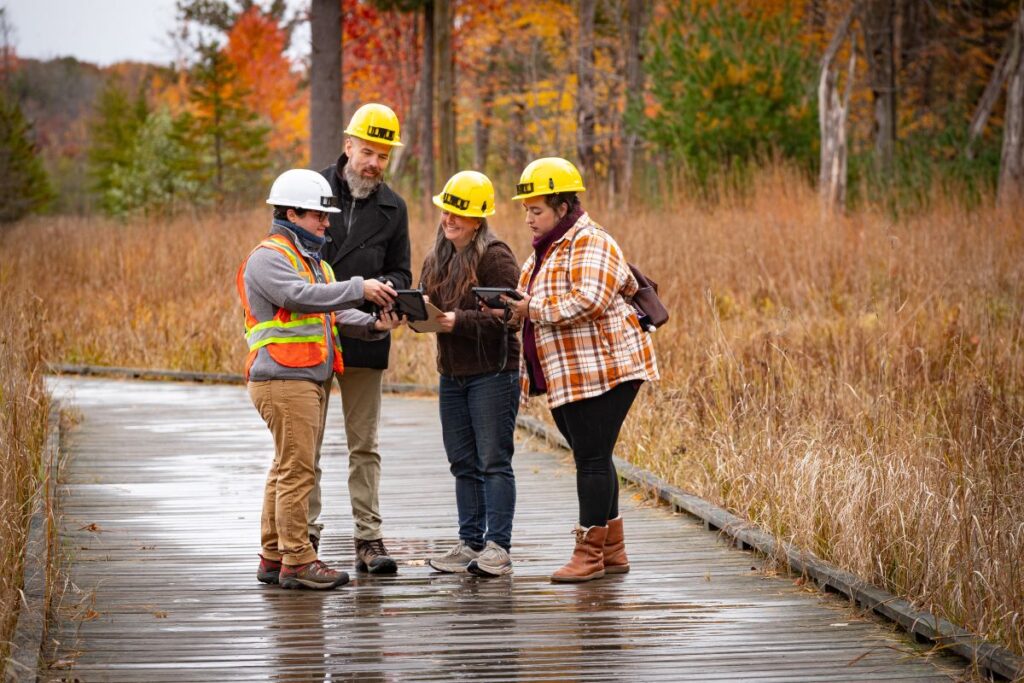
The Forest Ecology and Health Minor at the University of Wisconsin–Stevens Point (UWSP) is ideal for students interested in forest ecosystems, tree health, and natural resource management. Administered by the Forestry Discipline, this 36-credit minor offers hands-on, applied learning that prepares students for careers focused on managing forest insects, diseases, invasive species, and fire ecology.

Whether you’re passionate about protecting forests from threats or want to understand how ecosystems respond to change, this minor equips you with the skills to take on real-world challenges in forest health and sustainability.

Who Should Consider This Minor?

This program is perfect for students majoring in:

  • Forestry
  • Wildlife Ecology
  • Biology
  • Environmental Science and Management
  • Environmental Education and Interpretation

It is also a strong addition for anyone pursuing a career that involves invasive species management, forest entomology, pathology, or fire management.

What You Will Learn

Students in this minor gain field-based and technical skills such as:

  • Identifying and measuring tree species
  • Diagnosing tree damage caused by pests, diseases, or environmental stress
  • Designing forest health management plans
  • Implementing prescribed burns for fire ecology
  • Managing invasive species and planning response campaigns
  • Communicating forest health issues to public audiences

Career Paths with a Forest Ecology and Health Minor

Graduates of this minor are well-prepared for careers in:

  • Forest Health and Pest Management
  • Fire Ecology and Wildland Firefighting
  • Invasive Species Control and Monitoring
  • Forest Entomology and Pathology
  • Natural Resource Management Agencies
  • Conservation and Restoration Projects

This minor is especially valuable for jobs with agencies such as the U.S. Forest Service, state forestry departments, invasive species task forces, and nonprofit conservation organizations.

Program Details

  • Credits Required: 36
  • Eligibility: Open to students with a background in biology or natural resources
  • Administered by: Forestry Discipline, College of Natural Resources
  • Includes: Fieldwork, lab experience, public outreach strategy, and ecological planning

Why Choose the Forest Ecology and Health Minor?

  • Real-world experience — Hands-on labs and fieldwork
  • Specialized knowledge — Focus on forest health threats and ecological response
  • Career-focused — Prepares you for high-demand roles in forestry, conservation, and environmental science
  • Interdisciplinary — Courses combine ecology, pathology, entomology, and communication

Learn More

To explore the complete course list or add this minor to your program, visit the UWSP Catalog page or talk with an adviser in the Forestry Discipline.


Environmental Communication

Turn Passion for the Environment into Powerful Communication

The Environmental Communication Minor at the University of Wisconsin–Stevens Point (UWSP) equips students with the skills needed to effectively communicate complex environmental issues to diverse audiences. If you are passionate about the environment and want to make a difference through writing, media, or public engagement, this minor is the perfect complement to your natural resources education.

What is the Environmental Communication Minor?

This interdisciplinary minor blends communication strategy and environmental expertise, giving students tools to:

  • Communicate complex scientific concepts clearly and persuasively
  • Create compelling content across digital, print, and visual media
  • Engage public audiences, policymakers, and stakeholders
  • Support environmental awareness, education, and advocacy

Students combine core coursework in natural resource communication with electives in areas like media production, public relations, interpretation, and technical writing—building a well-rounded, marketable skill set.

Who Can Enroll?

The minor is open to students in the College of Natural Resources (CNR). Students from other majors may request permission to enroll by contacting the CNR Associate Dean for Academic Affairs.

This minor is ideal for students majoring in:

  • Environmental Education and Interpretation
  • Environmental Science and Management
  • Forestry
  • Fisheries and Water Resources – Water Resources
  • Soil and Waste Resources – Soil Science and Land Management
  • Wildlife Ecology

Real World Skills You Will Learn

Through project-based learning and collaboration with local organizations, students build a strong portfolio and gain hands-on experience in areas such as:

  • Public speaking and stakeholder engagement
  • Scientific and technical writing for general audiences
  • Interpretive media and environmental storytelling
  • Digital media content creation (video, photo, web)
  • Public relations and media outreach
  • Environmental journalism and crisis communication

Career Opportunities

Graduates with this minor are well-prepared for communication-focused roles in a variety of sectors, including:

  • Environmental Advocacy and Nonprofits
  • Government Agencies (e.g., EPA, DNR, USFWS)
  • Public Relations and Sustainability Offices
  • Environmental Consulting Firms
  • Educational and Interpretive Centers
  • Journalism, Media, and Outreach

Sample job titles include:

  • Environmental Communicator
  • Public Relations Specialist
  • Sustainability Officer
  • Media Coordinator or Content Creator
  • Outreach and Education Specialist
  • Environmental Journalist

Enhance your Career and Graduate School Options

The Environmental Communication Minor not only opens doors to immediate career opportunities, but also serves as a strong foundation for graduate programs in:

  • Environmental Communication
  • Media Studies
  • Public Relations
  • Environmental Policy

Students may also pursue professional certifications in public relations or environmental communication to further boost their credentials.

Learn More

Explore the course list, project opportunities, and how to integrate this minor into your degree on the UWSP Catalog page or meet with your adviser.


Climate Change

Understand Climate Impacts, Lead with Solutions

The Climate Change Certificate at the University of Wisconsin–Stevens Point (UWSP) equips students with a multidimensional understanding of how climate change is transforming our world—physically, socially, economically, and environmentally. If you’re passionate about sustainability, environmental justice, or resilience, this certificate gives you the skills and tools to lead with informed solutions.

What Will You Learn?

This 12-credit interdisciplinary certificate explores the science, impacts, and solutions of climate change. Students will:

  • Study physical climate science and observed global and regional changes
  • Analyze social and economic impacts across communities and ecosystems
  • Explore real-world adaptation and mitigation strategies
  • Learn to communicate climate issues and design effective outreach or policy responses

Students complete 9 required credits and 3 elective credits, allowing them to specialize in physical or social science dimensions of climate change.

Who Should Enroll?

Open to all UWSP students, this certificate is ideal for anyone looking to add climate expertise to their field of study. It is especially relevant for students in:

  • Environmental Studies
  • Natural Resource Management
  • Sustainability and Resilience
  • Public Policy or Political Science
  • Education and Outreach
  • Business, Planning, or Community Development

It is an excellent choice for anyone aiming to integrate climate change expertise into their academic and professional goals.

Career Opportunities

With the Climate Change Certificate, you’ll be prepared for roles such as:

  • Climate Policy Analyst
  • Environmental Educator or Communicator
  • Sustainability Officer or Climate Adviser
  • Adaptation or Resilience Specialist
  • Community Resilience Planner
  • Renewable Energy or Carbon Management Consultant

Employers increasingly value professionals who can understand the complexities of climate change and help design solutions. This certificate is a strong credential demonstrating your commitment and capability in this critical field.

Learn More

For full course details, elective options, and information on enrolling, visit the UWSP Catalog page or speak with your academic advisor.


Energy Policy

Understand Energy Systems, Influence Policy, and Drive Change

The Energy Policy Certificate at the University of Wisconsin–Stevens Point (UWSP) empowers students to lead in a rapidly shifting energy landscape. This 12-credit interdisciplinary program builds your capacity to understand energy systems, evaluate sustainability trade-offs, and advocate for effective and equitable policies.

What Will You Learn?

Gain essential skills and insights through courses that explore:

  • Energy systems and infrastructure – from fossil fuels to renewables
  • Policy and regulation – U.S. and global energy governance
  • Social, economic, and environmental impacts – justice, equity, and innovation
  • Sustainable energy alternatives – solar, wind, bioenergy, and more

Complete 9 core credits plus 3 elective credits to tailor your focus—whether it’s community energy resilience, clean tech, or environmental justice. credits and choose 3 elective credits to customize their focus based on personal and career interests.

Who Should Enroll?

Open to all UWSP undergraduates, this certificate is ideal for students majoring in:

  • Environmental Policy or Sustainability Studies
  • Political Science or Public Administration
  • Business, Economics, or Nonprofit Management
  • Education or Environmental Communication

Whether you are preparing for graduate school or looking to enter the clean energy workforce, this certificate signals your readiness to tackle today’s energy challenges.

Career Opportunities

Graduates of the program are well-positioned for roles such as:

  • Energy Policy Analyst
  • Sustainability or Climate Action Coordinator
  • Environmental Educator
  • Corporate Responsibility Consultant
  • Renewable Energy Campaigner
  • Public Sector or NGO Policy Associate

You will gain practical knowledge, critical thinking skills, and a systems perspective essential for shaping future energy solutions, locally and globally.

Learn More

To see the complete course list and credit breakdown, visit the UWSP Catalog page or contact an academic advisor for personalized guidance.


Wetland Science

Gain Specialized Skills in Wetland Identification, Evaluation, and Management

Interested in working with one of the planet’s most vital and sensitive ecosystems? The Wetland Science Certificate at the University of Wisconsin–Stevens Point (UWSP) offers focused training in the physical, biological, and environmental sciences related to wetland ecosystems.

What is the Wetland Science Certificate?

This certificate recognizes successful completion of a set of courses that equip you with the skills needed to:

  • Identify wetland types and characteristics
  • Evaluate wetland functions and values
  • Understand wetland regulations and policies
  • Apply sustainable wetland management practices

Upon completion, you will have fulfilled the academic requirements to apply for “Wetland Professional In Training” certification through the Society of Wetland Scientists—a valuable step toward professional recognition in the field.

Who Should Pursue This Certificate?

All UWSP students are eligible to earn the Wetland Science Certificate. It is especially well-suited for students in the College of Natural Resources, particularly those majoring or minoring in:

  • Soil and Waste Resources
  • Fisheries and Water Resources – Water Resources
  • Environmental Science and Management
  • Wildlife Ecology

This certificate adds specialization and credibility to your degree, increasing your competitiveness for careers in environmental consulting, restoration ecology, and resource management.

Prepare for Careers In:

  • Wetland Delineation and Assessment
  • Habitat Restoration
  • Environmental Consulting
  • Natural Resources Policy and Management
  • Water Quality and Watershed Protection

Learn More

To explore course requirements, timelines, and how to get started, visit the UWSP Catalog page or speak with an academic advisor in the College of Natural Resources.


Waste Resources

Make a Difference in Environmental Protection and Waste Management

Looking for a career that protects our environment and supports sustainability? The Waste Resources Minor at the University of Wisconsin–Stevens Point (UWSP) is a great choice for students interested in solid and liquid waste systems, pollution prevention, and resource recovery.

Who Can Enroll?

All UWSP students are eligible to add the Waste Resources Minor. It is especially valuable for students in the College of Natural Resources, and it pairs well with majors like:

  • Fisheries and Water Resources – Fisheries and Aquatic Sciences
  • Paper Science and Chemical Engineering
  • Environmental Science and Management
  • Fisheries and Water Resources – Water Resources

Why Choose the Waste Resources Minor?

This minor gives students a solid understanding of the principles and practices of waste management, critical knowledge in today’s world of increasing environmental challenges. Students gain practical and technical skills that prepare them for a wide range of careers in:

  • Wastewater Treatment
  • Environmental Compliance
  • Hazardous Waste Management
  • Recycling and Sustainability Programs
  • Landfill Operations
  • Environmental Consulting

Certification and Career Readiness

With proper elective choices (in consultation with a Soil and Waste Resources advisor), students in this minor are prepared to pursue Wisconsin DNR Operator Certification Exams in:

  • Wastewater
  • Waterworks
  • Landfill Operations

This certification enhances your qualifications and boosts employability in both the public and private sectors.

Internships and Real-World Experience

Although not required, internships or applied work experiences are strongly recommended. Students can work with Soil and Waste internship coordinators to find internships in their area of interest. Internship credits (e.g., WSTE 381) count toward minor elective requirements, giving you both academic credit and valuable hands-on experience.

Learn More

The Waste Resources Minor includes a flexible mix of required and elective courses. For full details on credit requirements and available classes, please visit the UWSP Catalog page.


Soil Science

Understand the Foundation of Ecosystems with a Minor in Soil Science

Are you passionate about the environment and looking to make a real impact in natural resource conservation? The Soil Science Minor at the University of Wisconsin–Stevens Point (UWSP) offers students a strong foundation in the principles of soil science—an essential component of all ecosystems.

Who Can Enroll?

All UWSP students are eligible to pursue the Soil Science Minor. This program is especially beneficial for students majoring in fields within the College of Natural Resources, but it complements any major that involves environmental or agricultural work.

Why Choose a Soil Science Minor?

Soils play a critical role in sustaining ecosystems, agriculture, forestry, and water quality. Understanding soil functions and management is essential for careers in:

  • Soil Conservation
  • Environmental Consulting
  • Natural Resource Management
  • Wetland Restoration
  • Agricultural & Crop Advising
  • Soil Science Research

This minor also meets federal requirements for soil science and conservation roles with agencies like the Natural Resources Conservation Service (NRCS) and the U.S. Forest Service.

Career-Ready Skills

Students will gain hands-on experience and theoretical knowledge in:

  • Soil classification and properties
  • Land use planning and conservation
  • Environmental impact analysis
  • Sustainable resource management

Learn More

The Soil Science minor consists of a set number of credits. For detailed information on credit requirements and course offerings, please visit the UWSP Catalog page.

Process Control Engineering

ADVANCE YOUR CAREER WITH A PROCESS CONTROL ENGINEERING GRADUATE CERTIFICATE

The Graduate Certificate in Process Control Engineering is designed to equip engineering and manufacturing professionals with the critical skills required for process control engineering. The program enhances the expertise of engineers and professionals in industries such as paper, chemical, and other manufacturing sectors that rely on automated and controlled processes.

Developed with direct input from industry partners and an advisory board, this program ensures graduates are prepared to meet the evolving demands of process control engineering.

GET STARTED TODAY!

Request information and start your journey in our online Process Control Engineering graduate certificate program. Our team will reach out to you about attending an information session.

Loading…

Why Choose the Graduate Certificate in Process Control Engineering?

This online program is designed for engineers and manufacturing professionals looking to advance their careers in automation and process control.


  • 100% online for flexible learning
  • Developed with industry input to meet workforce needs
  • Covers automation, PLC programming, and process control systems
  • Prepares you for roles in paper, chemical, and industrial manufacturing
  • Practical, real-world applications in every course
  • Gain the skills needed for the future of smart manufacturing and process control.
 
Process Control Engineering

Info Sessions

Interested in advancing your career in process control engineering? Join our information session to learn more about the Graduate Certificate in Process Control Engineering. Explore key skills covered in the program, discover how it can fit your career goals, and understand the real-world value of this industry-driven certificate. Don’t miss this opportunity to get your questions answered and take the next step in your professional growth.

 
What courses are in the program?

The certificate is a 15-credit program comprised of five 3-credit online courses. Course array and descriptions are as follows:

PSEN 700          
Basic Operations of Smart Manufacturing, 3 cr. 

Introduction to concepts and terminology of smart manufacturing; basic setup, adjustment, and safe operation of automated machines; blueprint and schematic reading; basic electrical control, pneumatic and sensor systems operation; production monitoring via HMI, internet, ethernet, and smartphones.

PSEN 702          
Electrical Systems, 3 cr. 

Electrical safety rules; connecting, adjusting, operating, troubleshooting, and analyzing electrical circuits; reading electrical circuit diagrams; applying Ohm’s Law and Kirchoff’s Law; using digital multimeters; interpreting series/parallel circuits; assessing power/circuit protection.

PSEN 704          
Electric Motor Control Systems, 3 cr. 

Connecting, adjusting, troubleshooting, and operating electrical motor control circuits and variable frequency drives; adhering to motor control safety rules; reading ladder logic circuit diagrams; ensuring proper ground connections and wiring motors for high and low voltage; interpreting common motor control application circuits.

PSEN 706          
Programmable Controller Systems, 3 cr.  

Programming, configuring, adjusting, monitoring, operating, and troubleshooting industrial programmable logic controller (PLC) systems. Adhering to PLC safety rules, performing normal startup/shutdown, operating PLC in different modes, performing emergency shutdown and reset, monitoring for proper operation through indicators and PC-based PLC software, configuring processor software drivers for communication to PC, configuring and loading of Human-Machine-Interface (HMI) programs, operating HMI with PLC, configuring PLC discrete I/O, transferring programs between PC and PLC processor, interpreting PLC ladder logic programs, PLC project creation/editing, and interpreting common PLC program logic applications using electro-pneumatic actuators and on/off motor control systems.

PSEN 708          
Process Control Systems, 3 cr. 

Connecting, programming, adjusting/tuning, calibrating, operating, and troubleshooting open loop, closed loop, and on/off industrial process control systems controlling liquid flow, liquid level, temperature, pressure, and other variables. Process control safety rules; reading piping and instrumentation (P&ID) diagrams; interpreting instrument data; interpreting instrument tags; performing startup/shutdown.

How do I apply?

The Process Control Engineering graduate certificate program requires an engineering bachelor’s degree from an accredited institution with a minimum undergraduate GPA of 3.0. Students with lower GPA’s with professional engineering work experience and/or a letter of recommendation will be considered on a case-by-case basis.

Step 1. Submit University Application

  • Select “No” when asked you are seeking a degree.
  • Select “Graduate” when asked whether you plan to take undergraduate or graduate courses.
  • Select “UW-Stevens Point” campus and then “Process Control Engineering Graduate Certificate”.
  • After you apply, you will receive a welcome email and with your UWSP student ID number.

Step 2. Submit your resume to the program.

Step 3. Enroll in Classes

  • Once you are officially accepted into the Process Control Engineering graduate certificate program, you will receive a welcome letter with instructions on how to register for classes.
What is the cost of the program?

The online Process Control Engineering graduate certificate program costs the same for in-state and out-of-state students. The cost per credit is $1,300. The Process Control Engineering students are also charged 50% Segregated Fees and Distance Education Fees.

Questions regarding financial aid should be directed to the UWSP Financial Aid office at finaid@uwsp.edu.

Meet our Instructors

Our faculty members teach in one of the nation’s top undergraduate natural resources colleges, which means your instructors are leading professionals in their fields of study and will provide quality and relatable courses with the current curriculum.

View all our faculty and staff here.

Profile Photo: John (JT) Tatarko

John (JT) Tatarko

  • Teaching Professor
Profile Photo: Roland Gong

Roland Gong

  • Professor and Department Chair
  • Technical Consultant for the Wisconsin Institute for Sust…


Master of Natural Resources in Conservation and Leadership

Empower Your Leadership Journey: Mastering Natural Resources with Business Insight

The Master of Natural Resources in Conservation and Leadership combines environmental expertise with business acumen. This program explores the intersection of natural and human systems while developing your research, leadership, and administration skills for informed decision-making. The program includes courses on policy, research, project management, budgeting, and natural resource management. A comprehensive examination at the end integrates principles learned throughout the program. You select a specialized certificate to tailor your degree, blending natural resources and business courses. You will become a proficient leader ready to impact natural resource management with a strategic business perspective upon completion.

GET STARTED TODAY!

Request information and start your journey in our 100% online Master of Natural Resources in Conservation and Leadership program. Our team will reach out to you about attending an information session.

Loading…

Why choose a Master of Natural Resources in Conservation and Leadership

Explore the online Master of Natural Resources in Conservation and Leadership program, blending environmental know-how with business skills. Gain expertise in research, leadership, and administration for smart decision-making. Customize your degree with specialized certificates in policy, research, project management, budgeting, and natural resource management. Graduate as a capable leader ready to make a strategic impact on natural resource management.

 
Master of Natural Resources in Conservation and Leadership

Info Sessions

Would you like to know more about our program? Join our information sessions to explore the Master of Natural Resources in Conservation and Leadership. Here, you can discuss key skills, learn how to customize your degree, and the overall value of our program.


Flexibility and Affordability

Flexibility is at the core of our program – choose to enroll in one or more classes per term, providing the perfect balance between work, family, and other commitments. Our program is entirely online, granting you the freedom to log on at your convenience. Whether you aim for a swift completion or prefer a more extended pace, the choice is yours – you have up to seven years to fulfill the requirements and earn your degree. Your educational experience, your way.

Choosing our Master of Natural Resources (MNR) in Conservation and Leadership guarantees top-notch education and ensures affordability. Compared to other programs in the field, ours stands out for its considerably lower cost. We prioritize offering excellent value by providing a high-quality curriculum with experienced faculty, all while keeping the financial aspect in check. We believe in making advanced education in natural resources accessible, and our commitment to affordability sets us apart from the competition.

Apply

Learn everything you need to do to submit your application.

INFO SESSIONS

Join us to learn more about the MNR at UW-Stevens Point.

Courses and Costs

Our MNR is flexible and affordable.

Instructors

Our instructors are leading professionals in their fields.

Applying to the MNR in Conservation and Leadership at UW-Stevens Point

Apply seamlessly to the Master of Natural Resources in Conservation and Leadership online program through a straightforward two-step process. Begin by submitting your application to the College of Natural Resources and to UW-Stevens Point. We welcome applications for both the fall and spring semesters. To enhance your chances, ensure your application reaches us by August 10 for the fall semester and December 28 for the spring semester. Notably, there’s no need to worry about the Graduate Record Exam (GRE) – we don’t require it.

To qualify, applicants should hold a bachelor’s degree and have maintained a minimum GPA of 3.0 during the last two years of their previous studies. You can request a panel review for potential GPA waiver consideration if your GPA falls below this threshold. Your academic journey begins here.

Step 1. Submit a Complete Application Packet to the College of Natural Resources

  • Complete the Online Application here. You will be asked to attach the following items and should have them ready before beginning your application.
    • A current resume or curriculum vitae detailing your professional post-baccalaureate work experience. The file name must contain the word “resume.”
    • Essay describing your professional interests and goals. The file name must contain the word “essay.”

Step 2. Apply to the University of Wisconsin-Stevens Point

  • Visit our Admissions office for details on applying to UW-Stevens Point.
  • International Students, please apply here.
  • Once complete, a copy of your UW-Stevens Point application and official transcripts will be sent to us for inclusion in your CNR application packet.

Important Dates

To receive top consideration for admission to the MNR program, sign up for an information session or submit your application by the priority deadline for your intended semester.

8/10
Fall Semester Application Deadline
12/28
Spring Semester Application Deadline

Credits, Cost, and Courses for the Master of Natural Resources in Conservation and Leadership

We are here to help advise you in course selection and to respond to your individual needs and concerns.

  • 31 credits to completion
    • Coursework includes natural resource and business focused courses and at least one specialized certificate.
  • Up to 9 credits of natural resource-related graduate coursework may be transferable.
    • Please note: all credits accepted toward a graduate degree, including transfer credits, must be earned within seven years. The seven-year clock starts with the beginning of the term in which the first course approved for your program was taken.
  • Courses offered by the College of Natural Resources cost $650 per credit, and the business courses cost $725 per credit. An additional distance education fee of $50 per credit also applies to UWSP courses. The total estimated cost of the 31 credit program is $23,500.
  • Limited scholarships of up to $1500 are available for the Master of Natural Resources in Conservation and Leadership program. You must be enrolled or admitted to apply. The number of scholarships awarded will depend on the availability of funds. Apply today.
Coursework

Coursework

To achieve your Master of Natural Resources degree, you’ll complete at least 31 credits. The program explores core Natural Resources (NRES) and Business (BUS) aspects, encompassing policy, research, and leadership. You choose courses tailored to your interests and career goals. Additionally, you can customize your degree further with one or more specialized certificates, providing flexibility and adaptability to your educational journey.

CNR Core Courses:

  • NRES 770 – Natural Resources Policy (3 credits)
  • NRES 771 – Introduction to Natural and Social Science Research (3 credits)
  • NRES 772 – Natural Resources Leadership and Communication (3 credits)
  • NRES 773 – Applied Ecosystem Ecology and Management (3 credits)

Business Core Courses (Choose 3 out of 4):

  • BUS 504 – Developing Skills to Lead and Manage (3 credits)
  • BUS 558 – Managing Budgets (3 credits)
  • BUS 730 – Managerial Leadership through Applied Decision-Making (3 credits)
  • BUS 733 – Project Management (3 credits)

Comprehensive Examination:

  • NRES 775 – Comprehensive Examination (1 credit)

Specialized Certificates:

  • Choose at least one specialized certificate and complete additional credits of 500-900 level courses. Certificate courses are available online, and local students have the option to substitute face-to-face graduate courses.
Specialized Certificates

Specialized Certificates

Embark on a dynamic journey towards a Master of Natural Resources in Conservation and Leadership, featuring the unique option of stackable certificates. While you are required to complete at least one certificate, you are also welcome to pursue additional certificates. As you progress towards your master’s degree, these stackable certificates offer targeted skills and credentials, allowing you to customize your learning and build a comprehensive foundation aligned with your career aspirations.

Certificate in Applied Management (9 credits required)

Required Classes:

  • BUS 730 – Managerial Leadership through Applied Decision Making (3 cr.)
  • BUS 733 – Project Management (3 cr.)
  • BUS 558 – Managing Budgets (3 cr.)

Optional Class:

  • BUS 504 – Developing Skills to Lead and Manage (3 cr.)

Environmental Education and Interpretation Professional Graduate Certificate (12 cr., fully online)

Required Classes:

  • NRES 701 – Readings in Environmental Education (3 cr.) or NRES 501 – Foundations of Environmental Education I (3 cr.)
  • NRES 705 – Environmental Issues Investigation and Action (3 cr.)
  • NRES 767 – Fundamentals of Natural and Cultural Interpretation (3 cr.) or NRES 568 – Oral Interpretation Methods (3 cr.)
  • NRES 771 – Introduction to Natural and Social Science Research (3 cr.) or NRES 772 – Natural Resources Leadership and Communication (3 cr.)

Water Resources Policy Graduate Certificate (12 cr)

  • NRES 776 – Contaminants in the Environment
  • WATR 760 – Water Resources and the Science, Policy, and Politics of Climate Change
  • WATR 777 – Ecology and Management of the Great Lakes
  • NRES 770 – Natural Resources Policy

Exciting updates are on the horizon! New certificate offerings in energy and sustainability will soon be available, providing you with additional specialized expertise to excel in these crucial fields.

Certificate Only Options (Non-degree Seeking)

Register as a Special, Non-Degree Seeking Student

Unlock new horizons with UW-Stevens Point! If you have a bachelor’s degree and a thirst for knowledge but can’t commit to a full degree, you can explore our graduate courses or earn hassle-free certificates, like our certificates in applied management or environmental education and interpretation. There are no applications or additional fees – just register and start learning!

You will enjoy graduate special status with benefits such as library access, allowing you to shape your path without committing to a full degree. Enhance your skills, skip the hassle, and explore the endless possibilities at UW-Stevens Point!

Enroll now for a rewarding academic journey. More information >>>

Meet Our Instructors

Our faculty members teach in one of the nation’s top undergraduate natural resources colleges, which means your instructors are leading professionals in their fields of study and will provide quality and relatable courses with the current curriculum for your MNR program.

View all our faculty and staff here.

Profile Photo: Becca Franzen

Becca Franzen

  • Professor and Director of the Wisconsin Center for Enviro…
  • Global Affiliate Scholar – Ed.D. in Educational Sustainab…
237 Trainer Natural Resources
Profile Photo: Justin Vandehey

Justin Vandehey

  • Director of MNR in Conservation and Leadership
  • Professor of Fisheries and Water Resources
178 Trainer Natural Resources
Profile Photo: Michael Rader

Michael Rader

  • Associate Professor of Conservation and Parks Law Enforce…
378 Trainer Natural Resources


Conservation Biology

Understand, Protect and Restore Biodiversity

The Conservation Biology Minor at the University of Wisconsin–Stevens Point (UWSP) prepares students to tackle today’s most pressing environmental challenges through a science-based and interdisciplinary approach. This minor is perfect for students interested in applying biology, policy, and decision science to real-world conservation problems.

What is Conservation Biology?

Conservation Biology is often described as a “crisis discipline,” a field of science focused on protecting biodiversity even when complete information is unavailable. It is deeply interdisciplinary, drawing on ecology, sociology, economics, ethics, public policy, and more to find workable solutions to environmental issues.

The minor provides the tools to understand complex conservation problems and to engage with the multiple stakeholders involved in environmental decision-making. Students also build a strong foundation in applied ecology and restoration, giving them practical skills to protect natural systems.

Program Highlights

  • Credit Requirement: 23–25 credits
  • GPA Requirement: Minimum 2.25 in minor coursework
  • Eligibility: Open to students who have completed CNR and Biology core courses

Core Course Areas (8 total courses)

  1. Ecology & Conservation Science (12 credits)
    Courses include General Ecology, Conservation Biology, and Restoration Ecology.
  2. Economics, Policy & Planning (6 credits)
    Learn about resource economics, land-use policy, and decision-making in conservation.
  3. Animal & Plant Taxonomy (5–7 credits)
    Choose from multiple options to gain knowledge in species identification and classification.

Prerequisite Coursework
Students must have completed:

  • CNR Core: NRES 150, 151, 250, and 251
  • Biology Core: BIOL 110 and 111 or BIOL 101

These are typically part of majors within the College of Natural Resources (CNR) or Biology.

Why Choose the Conservation Biology Minor?

  • Apply science to solve real-world conservation challenges
  • Learn to balance ecological needs with social, political, and economic realities
  • Gain interdisciplinary skills in ecology, resource policy, and stakeholder communication
  • Strengthen your résumé for jobs or graduate school in conservation, restoration, or ecology
  • Customize the program with flexible course options across key disciplines

Career Applications

Students who complete this minor are prepared for careers in:

  • Conservation Science and Ecology
  • Environmental Consulting
  • Nonprofit and NGO Conservation Work
  • Natural Resource Policy and Planning
  • Habitat Restoration
  • Wildlife and Land Management

This minor is also excellent preparation for graduate studies in conservation biology, environmental science, ecology, or public policy.

Ideal Pairings

This minor complements most majors in the College of Natural Resources, especially:

  • Wildlife Ecology
  • Forestry – Forest Management
  • Environmental Science and Management
  • Fisheries and Water Resources – Water Resources
  • Biology

Learn More

For a full list of course options and how this minor fits with your academic goals, visit the UWSP Catalog page or consult with your academic adviser.