
Empower Communities and Transform Lives Through Food and Nutrition
The food and nutrition major at UW-Stevens Point, launched in spring 2026, prepares students to become field experts who can work in a wide range of workplace settings. Students master skills to support the notion that food is medicine via active learning and practice in classes, community settings and student organizations. Our program challenges students to incorporate comprehensive sustainability (environment, society and economics) into course work and promote nutrition within the seven dimensions of wellness.
Why study Food and Nutrition at UW-Stevens Point?
With a strong emphasis on sustainability, local foods and holistic wellness, students gain hands-on experience in food service operations and nutrition promotion. The community nutrition option prepares students to lead wellness initiatives, advocate for sustainable food systems, and work in public health or agribusiness, while the dietetics option equips students with clinical skills and prepares them for professional certification as a Registered Dietitian.
5-Year Program Options
Students majoring in food and nutrition also have the opportunity to apply for early admission into two related graduate programs for a combined bachelor’s and master’s degrees (4+1) in just five years.
Food and Nutrition
Alumni Map
Where are they now?
UW-Stevens Point alumni live and work all over the world—so if you’re looking for networking opportunities close to a new home or contact info for fellow Pointer in another city, you’re in luck. Looking for a fellow Pointer near you or want to add your pin? Start with our map.
What to Expect as a Food and nutrition student?
Core courses give students knowledge in nutrition throughout the lifespan, nutrition assessment, food service, sustainable food systems, and research in food and nutrition. Courses in the community nutrition option focus on community nutrition, advocacy and policy, and wellness initiatives. Meanwhile, dietetics option-specific courses focus on medical nutrition therapy, nutritional counseling, community programs and food service management.
Accelerated Bachelor’s + Master’s 5-Year Program Options
Students majoring in food and nutrition (B.A.) have the opportunity to apply for early admission into either of the two graduate programs offered by the School of Health Sciences and Wellness.
Advantages of the 5-Year Option
- Efficient curriculum: 8 credits count in both the bachelor’s and master’s degrees
- Save time: complete both degrees in 5 years
- Seamless transition to the M.S., which will is required for those seeking the RD credential
- Flexibility: M.S. courses are 100% online and can be taken from anywhere
In semester 6 of the undergraduate program in food and nutrition, students can apply for acceptance into the accelerated tracks. Prior to submitting an application, students must discuss their suitability for the accelerated track with their academic adviser. Acceptance into an accelerated track requires completion of the bachelor’s degree.
Get Involved on Campus
Membership in student organizations gives you many opportunities to gain hands-on experience in hospitals, schools and the community. It also helps you build professional skills and network with students, alumni and local professionals. You may receive funding to attend annual conferences such as: Wisconsin Academy of Nutrition and Dietetics or National Food and Nutrition Conference and Exposition. Consider joining:
Dietetics
Navigate Your Major
Major Maps help students map their first day to the first job in their chosen field. While a four-year plan outlines classes to get a degree, Major Maps help students learn how to build career-ready skills and experiences outside the classroom. Each Major Map shows how students can get the most of their UW-Stevens Point journey from enrollment to graduation and beyond. It’s a roadmap to discovering your purpose!
Meet Your Faculty and Staff
The faculty and staff members of the School of Health Sciences and Wellness are committed to developing professionals who study, promote and model lifelong wellness for individuals, families and communities, building a stronger, healthier community.
View all our faculty/staff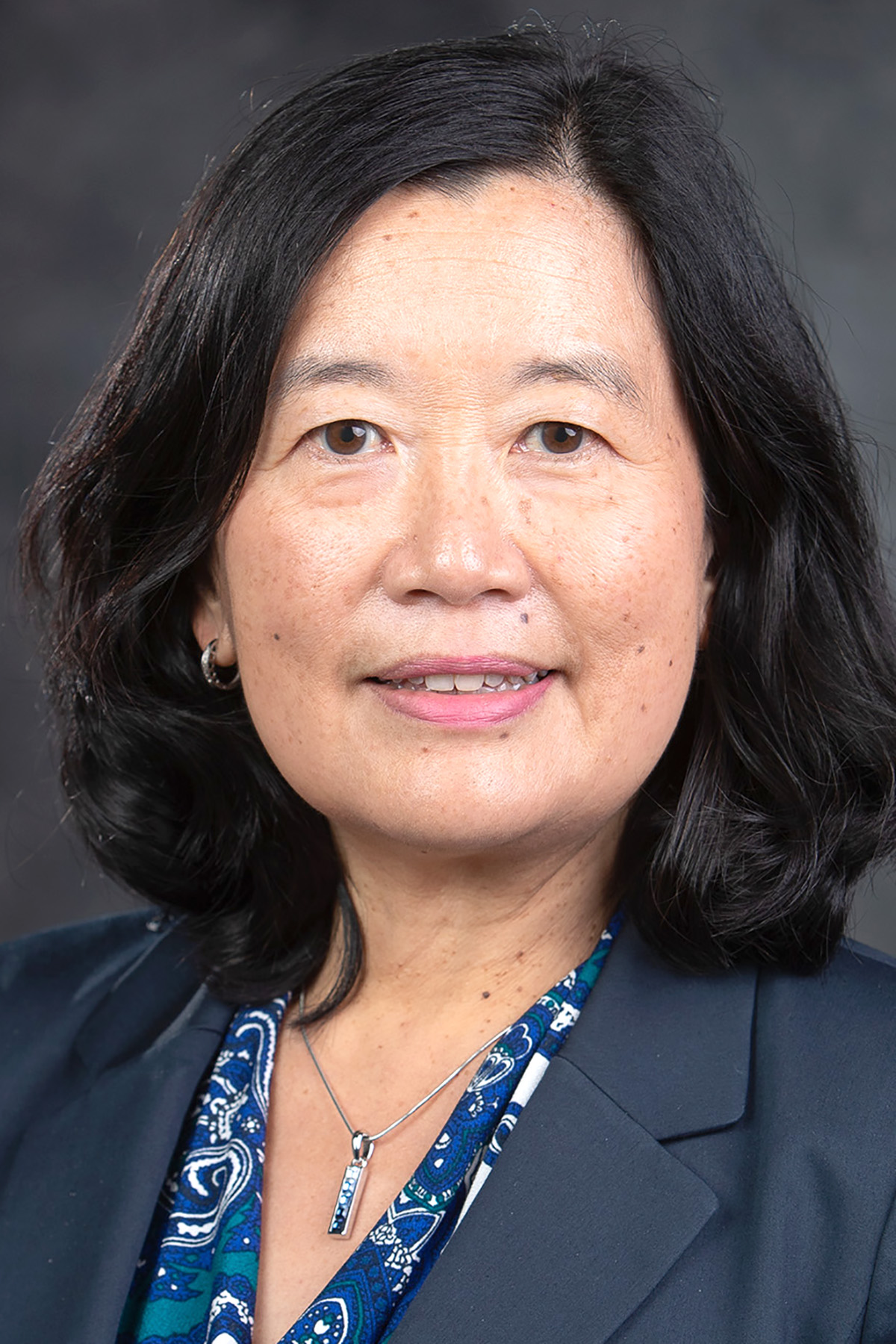
Deborah Tang
- Teaching Associate Professor – Food and Nutrition
- Program Director – Food and Nutrition

Jasia Steinmetz
- Professor – Food and Nutrition
- Director – Didactic Program in Dietetics
- [ More… ]

Kylie DeSmet
- Academic Adviser and Retention Specialist – School of Hea…
- Associate Lecturer – Food and Nutrition
ACEND Accreditation
ACEND Accreditation
The UW-Stevens Point dietetics program has a five-year pass rate of 79 percent on the national RD exam for those taking the exam the first time and 96 percent pass rate for everyone taking the exam during their first year (first time plus repeat attempts). The program is accredited by the Accreditation Council for Education in Nutrition and Dietetics (ACEND), an affiliate for the professional organization, the Academy of Nutrition and Dietetics, 120 South Riverside Plaza, Suite 2190 Chicago, IL 60606-6995 Phone: 312-899-0040 x5400. We continually assess our objectives to meet our goals and provide a quality education for our UW-Stevens Point dietetics students; please contact program director Professor Jasia Steinmetz, RD, CD to request program outcomes data. Please use the link above to access our student handbook, which includes our mission, goals, objectives and outcomes; pathway to becoming an RD or DTR; degree requirements, advising process and academic calendar; program costs, financial aid and scholarships; policies and procedures; information for prospective and transfer students; and more guidance to navigate your dietetics degree at UWSP.
Advantages of an Accredited Program
Achieving the RD credential requires a master’s degree in addition to obtaining a verification statement from an accredited program and an internship. Some master’s programs are accredited to provide the verification statement. But there are many reasons to choose an accredited undergraduate dietetics program.
Advantages of the B.S. in dietetics
- Preparation for multiple careers: Graduates emerge from the bachelor’s degree with expertise in nutrition, community health, food service and management, opening doors to many career pathways right after the B.S.
- Specialize at the M.S. level in anything (literally): Current ACEND standards allow students graduating from an accredited B.S. program to earn their master’s in any field. The dietetics B.S. makes you a nutrition expert and the internship provides supervised dietetic work experience. A master’s in exercise physiology, business administration, or counseling psychology, for example, gives you higher level expertise and added credentials that position you for the career path you want.
- More affordable: Meeting dietetics education standards requires many course credits. Earning those credits within the B.S. saves money compared to taking them at the graduate level.
- More options: The B.S. in dietetics qualifies you for professional nutrition positions. Earn a salary while gaining professional experience while you complete the M.S. to save money and be more competitive applying for the dietetic internship of your choice.
School of Health Sciences and Wellness
Programs
School of Health Sciences and Wellness
D127 Science Building
2001 Fourth Ave.
Stevens Point, WI 54481-3897
715-346-3766
health@uwsp.edu
College of Professional Studies