Mathematics: Actuarial Option
BEGIN YOUR REWARDING WORK MANAGING RISK; EARN A DEGREE IN ACTUARIAL MATH
The mathematics actuarial program features a strong concentration of mathematics courses, including linear algebra and probability and statistics, along with other courses in applied mathematics, business and economics, and preparation courses for Society of Actuaries (SOA) examinations.
Students graduate with a solid background in math, finance, accounting, and statistics, giving them the experience to succeed as a business professional. The mathematics program at UW-Stevens Point is large enough to offer a full range of courses, yet small enough to give you a chance to work directly with professors.
Department of Mathematical Sciences
Why study Actuarial Mathematics at UW-Stevens Point?
You will work with faculty experienced in actuarial mathematics, probability and statistics, mathematics education and operations research. Our sought-after graduates benefit from small class sizes. They benefit from one-on-one support from faculty-mentors in the Department of Mathematics.
Scholarships and Awards
High-achieving students are eligible for many significant awards and scholarships thanks to generous support from our alumni, friends, and corporate partners. We have scholarship opportunities for fall and spring semester, with selections determined by the Department of Mathematical Sciences.
Student Opportunities
Use your interest in math to help on campus. Students serve as tutors for over 100 courses each semester in the Tutoring-Learning Center. Our program hires outstanding students recommended by faculty in consultation with the STEM Tutoring Coordinator. Tutors help students understand course material, review for tests, and develop study skills. They bring experience, expertise, and enthusiasm to group discussions and one-on-one tutorials.
WHAT TO EXPECT
A Bachelor of Science degree in mathematical sciences prepares students for jobs in actuarial science, statistics, logistics, mathematical modeling and education. UW-Stevens Point mathematics graduates enjoy careers in varied industries including insurance, banking, financial services, government, education, software publishing, consulting, e-commerce, health care and law.
There is excellent job security and job placement for a career in actuarial math. According to the U.S. Bureau of Labor Statistics, employment of actuaries from 2024-2034 will grow 22 percent, much faster than average occupation growth in the period.
While the Mathematics major with Actuarial Emphasis is specifically designed to fulfill actuarial society requirements, the content courses also provide preparation for careers in Business and Finance with a stronger quantitative background than a Business major. A double major with Data Analytics provides an excellent background in Quantitative Business Analysis, for example. Other options that students may consider are a Mathematics major with a Business or Economics minor; a Business or Economics major with a Mathematics minor, or a Mathematics/Economics double major. With proper course selection, any of these combinations may also cover the same material.
GET INVOLVED ON CAMPUS
Math Club promotes an appreciation for mathematics and emphasizes its breadth and applications. The club provides opportunities to interact with mathematics and mathematicians, both professional and amateur, through conference trips, guest speakers, competitions and social events.
The Center for Athletic Scheduling is a self-supporting, non-profit, student-run organization whose mission is to provide athletic schedules to intercollegiate athletic conferences across the country.
More opportunities can be found on the Stevens Point Involvement Network (SPIN).
The National Science Foundation funds many research opportunities for undergraduates through its Research Experiences for Undergraduates Sites program. An REU Site consists of a group of 10 or so undergraduates who work in the research programs of the host institution. Each student is associated with a specific research project, where he/she works closely with the faculty and other researchers. The American Mathematical Society provides other sponsored and grant-funded student opportunities.
MEet your faculty
The Department of Mathematical Sciences has about 20 faculty members. They have interests in topology, geometry, actuarial mathematics, probability and statistics, and operations research.
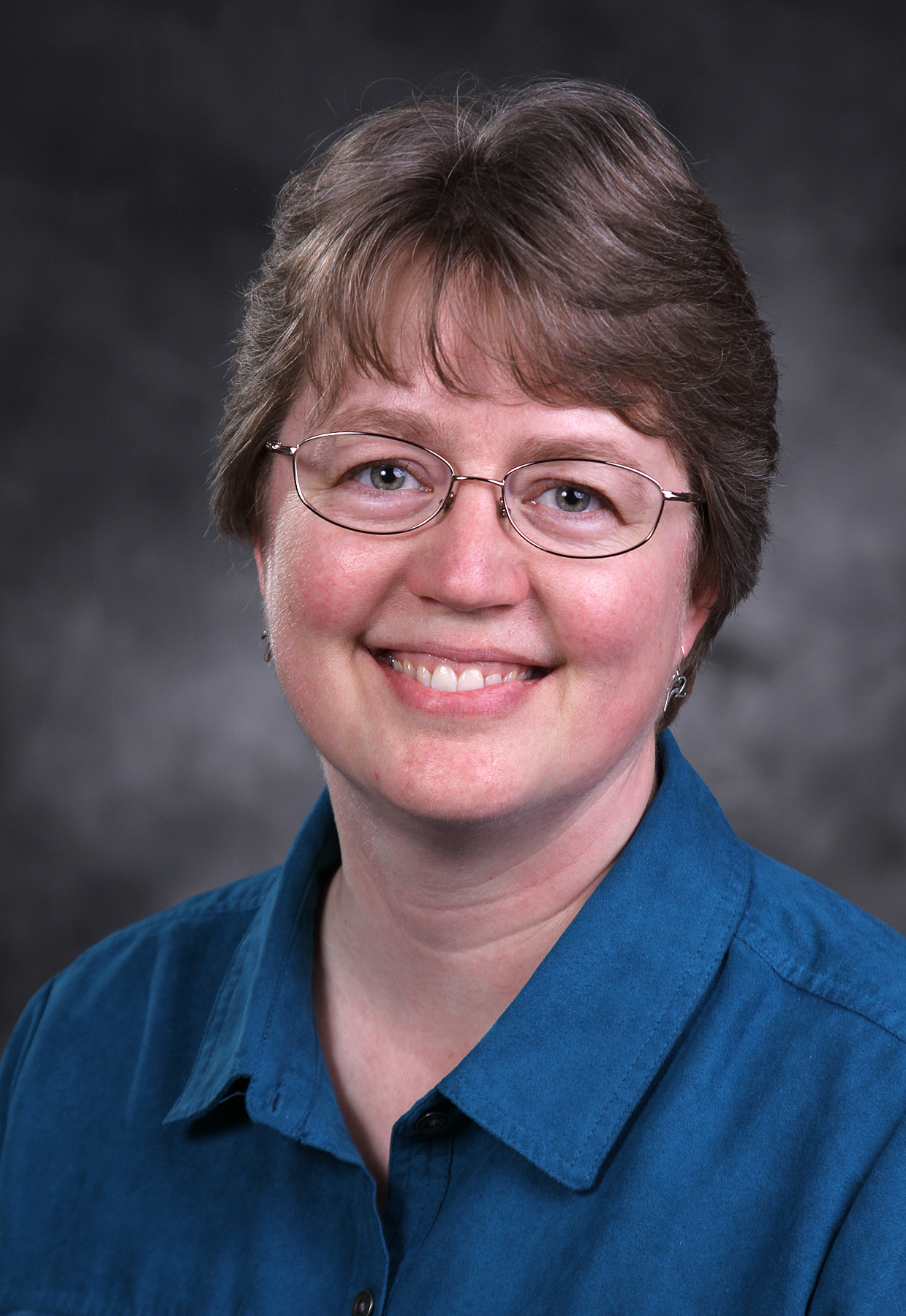
Cindy McCabe
- Assistant Dean, School of Mathematics, Computing, Physics…
- Professor