
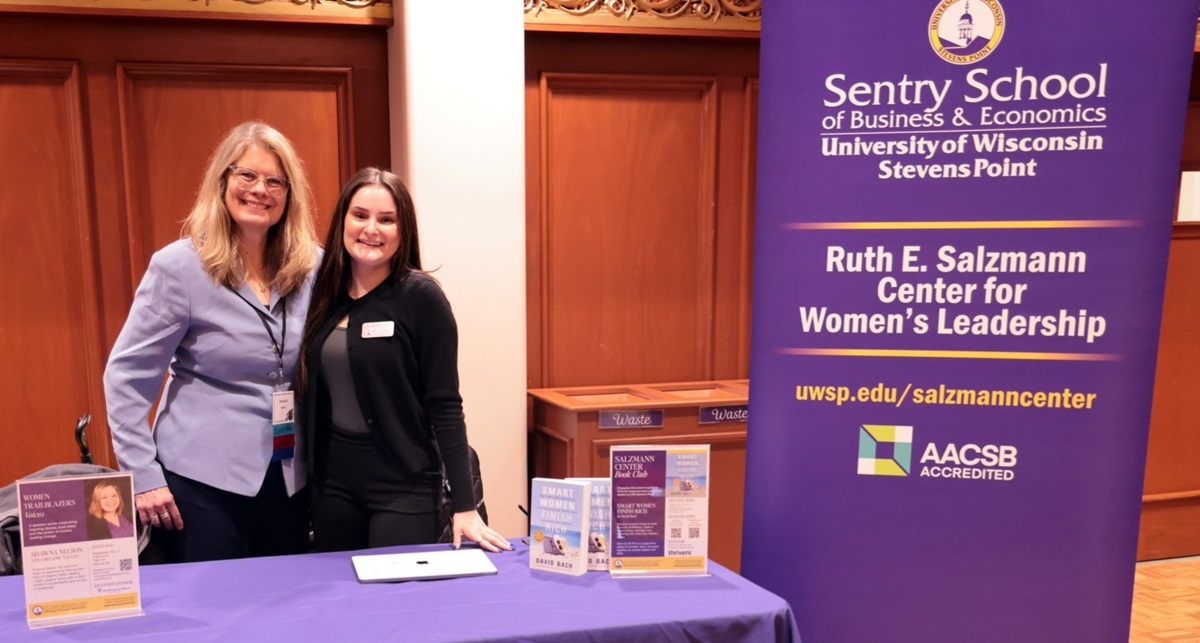
Women are making history at the University of Wisconsin-Stevens Point campuses every day. This month, as we celebrate women’s history, take a moment to get to know a few women at the university who are making a difference for our students as well as our community, and learn about the women who have inspired them and their outlook on the future.
Pratima Gandhi, interim chancellor
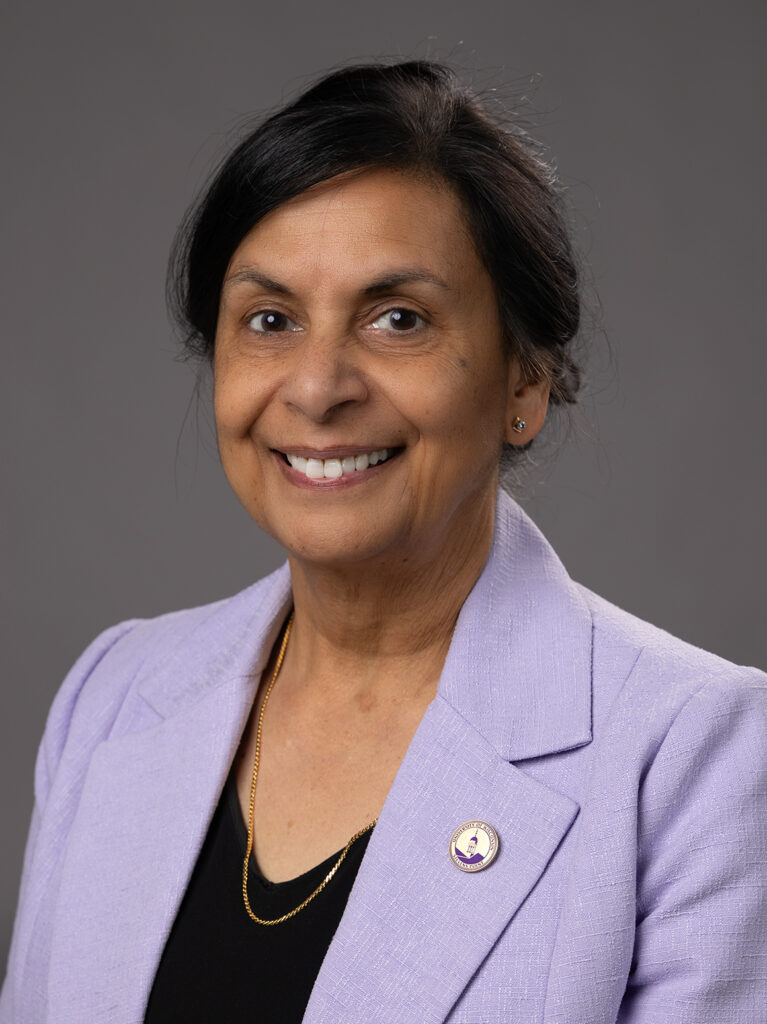
The third woman to lead UW-Stevens Point, Pratima Gandhi has held the position of interim chancellor since July 2025 and previously served as vice chancellor for Finance and Administration. Under her stewardship, UWSP has navigated the complexities of financial sustainability while prioritizing educational access and quality for all students. In 2023, she was honored by the Universities of Wisconsin Board of Regents with the Outstanding Women in Higher Education award.
Gandhi said she has been inspired by women she has worked with during her career, including a former colleague and mentor, Zelma Harris.
“Zelma inspired me to continue into the world of management and leadership. Her outlook is always so positive through all the various challenges. She is a humble but very strong and successful leader and leads with a tremendous sense of humor. She worked in an environment where there were few female leaders at the time, but she forged her way into management with determination, integrity and ingenuity. Her ability to handle setbacks and failures and turn them into opportunities is what makes her a successful and inspirational leader.”
“Women who are redefining their leadership roles with resiliency and strength are empowering themselves as well as others,” Gandhi said. “These women are willing to take risks and promote independence. They are embracing the challenge and succeeding in so many different avenues – they are shaping the future. Women are in leadership roles such as government, business, healthcare, education and science. They are running countries and major corporations, women-owned businesses are on the rise…they are innovators to the nth degree. Women have become central to progress all over the world. Without these women, the global economy and landscape would look very different!”
Her advice for young women is to hold on to their passion for excellence. “Leadership is a skill set that can be developed through effort and practice. Seek mentorships from other women in leadership positions if possible. Do not stop or quit. Handle setbacks and failure with a positive attitude….we can learn so much from setbacks…you will be successful!”
Deborah Beyer, College of Professional Studies
Deborah Beyer, assistant professor of finance, was the founding faculty adviser to the Women in Business Club and is the director of the Ruth E. Salzmann Center for Women’s Leadership. The center elevates women through the annual Women Trailblazers Conference at UWSP, Women Trailblazers Point Out Loud podcast, guest speakers, fellowships and internships, networking and volunteer events, book clubs and mentorship.
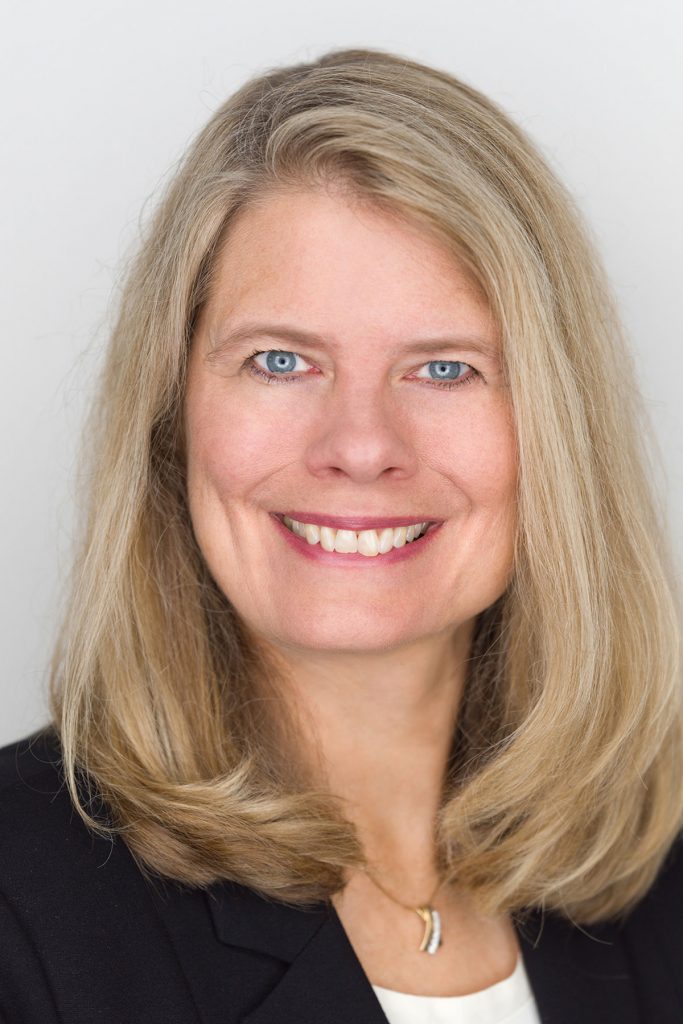
“There is strength in education and in promoting women’s voices so that both men and women understand the vital roles women play in leadership,” Beyer said. “Our students learn more about themselves, explore key leadership topics and find inspiration in strong role models. Salzmann Center programs help all students better visualize themselves in leadership roles and identify different leadership paths available to them.”
Beyer has been inspired by many different women, including her mother, who showed her the importance of perseverance and believing in herself; a former French professor who passionately shared stories from her childhood in France during World War II and made her voice heard; and a recent speaker at UWSP, Amelia Rose Earhart, who was inspired by her namesake to circumnavigate the globe in a single engine plane.
“Earhart explained that when we face ‘headwinds’ in life, it shows us our personal strength, and when we are bolstered by a ‘tailwind,’ we become more confident. She also encouraged us to become the ‘tailwind’ for someone else to help them along their journey,” said Beyer. “I strive to be a tailwind for our students.”
Beyer believes that women bring greater balance to leadership through compassion and collaboration, and by connecting ideas in innovative ways. “There is strength in having those differences,” she said.
“Seeing our women students and their allies develop into tomorrow’s leaders in society fills me with hope” she said. “It is a privilege to mentor and support these remarkable young adults. They embrace learning, tackle challenges with determination, uplift one another and strive to make a meaningful impact on the world. Their passion and resilience inspire me every day.”
Cortney Chaffin, College of Fine Arts and Communication
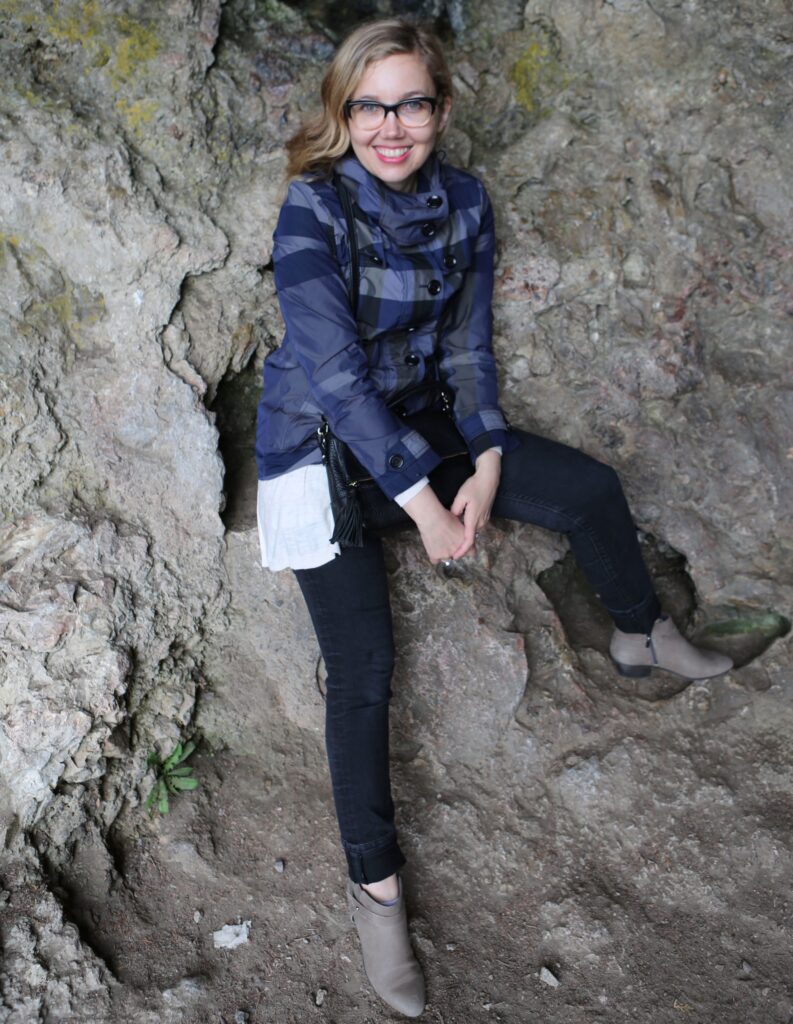
A specialist in Asian art history, Cortney Chaffin, professor of art history, is making sure the story of Fu Hao, an ancient Chinese queen, military general and religious leader from the Shang Dynasty (1250-1192 BC) is shared – not only because Fu Hao was a powerful female general, which was unusual for that time, but because what is known about her was discovered by a woman.
Chaffin wrote “Fu Hao: China’s Warrior Queen” as a middle grade nonfiction book to bring more awareness and representation to Asian history and culture for young people.
“Representation in children’s literature matters,” said Chaffin. “I thought that I could translate the stories I tell in my college classroom for a younger audience so they could have access to the stories of real people, places, and discoveries in Asian history. I plan to continue writing more books in the series, focusing on incredible women in Asian history.”
The book includes the story of how Zheng Zhenxiang, known as the First Lady of Chinese Archaeology, discovered the tomb of Fu Hao in 1976 at the last capital of the Shang Dynasty, Yin, in Anyang, China. Zheng had a hunch there was a royal tomb hidden in the palace district of the ancient capital where no one expected to find one.
Zheng kept digging despite colleagues and her own husband, also an archaeologist, telling her she would not find a tomb near the ancient palaces, Chaffin said. Finally, Zheng’s intuition paid off, and she uncovered the tomb of Fu Hao and the many items buried with her for the afterlife, including weapons, wares of bone, jade and bronze and items demonstrating early technology. Inscriptions on the bronzes identified Fu Hao as the tomb owner, and corroborated Shang oracle bone inscriptions, which represent the earliest known Chinese writing.
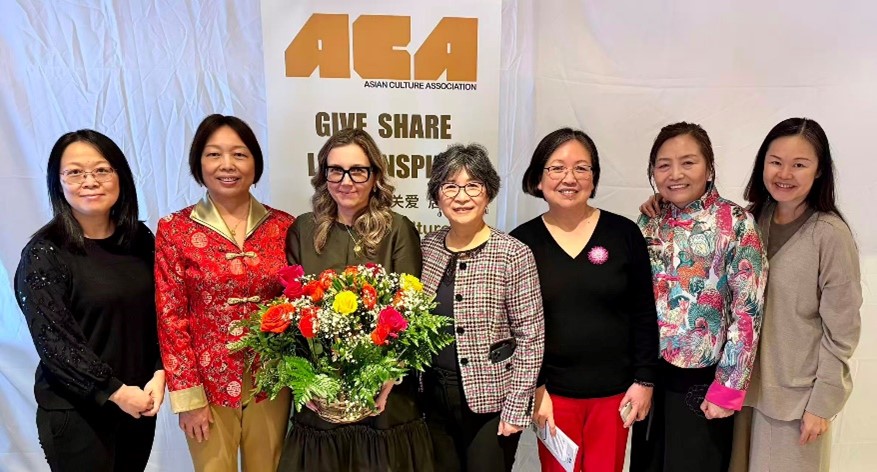
Chaffin’s book was recently chosen to be among those distributed to 100 suburban Chicago elementary schools through the Asian Culture Association, in hopes of promoting understanding and awareness of Asian cultures. It can also be found locally at Bound to Happen Books.
“I was excited to be included and invited as a keynote speaker at the Asian Culture Association book drive event,” said Chaffin. “I’m thrilled to be able to reach those readers and share the story of Fu Hao. Everyone has heard of the legendary folk heroine Hua Mulan, who disguised herself as a man to take the place of her father in the army, but not many have heard of Fu Hao, who did not need to dress as a man to have power and authority.”
Chaffin is also part of collaborative of women who created www.artsq.org to bring art history and archaeology to all ages through resources for teachers, students, homeschoolers and lifelong learners. She has found it to be a positive, invigorating and nurturing environment.
“When women collaborate with each other, there is so much potential.”
Lauren Gantz, College of Letters and Science
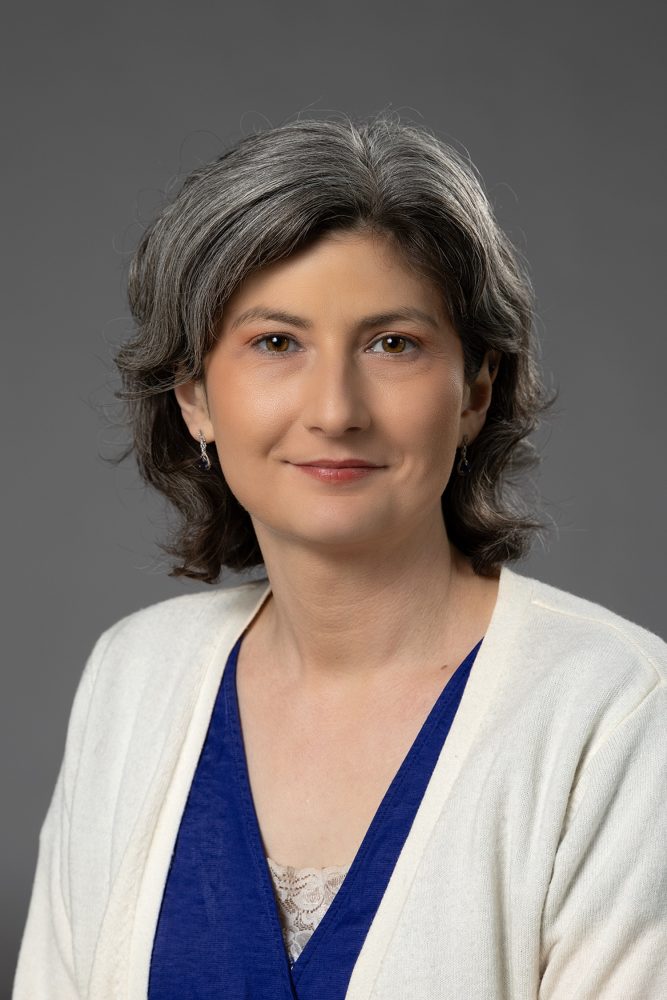
Lauren Gantz, an associate professor of English, has coordinated the women’s and gender studies minor at UWSP since 2023.The program offers useful frameworks on how people move through the world and relate to others, which is a starting place for understanding their needs as well as the struggles of individuals and society.
“The minor works well with all majors,” she said. “The interdisciplinary courses have students discussing different issues with empathy and understanding that broadens perspectives.”
The program’s advisory committee, made up of faculty across different majors, sponsors events such as open mic nights, history displays outside the DUC Laird Room and Women’s History Month trivia.
Gantz finds inspiration in women from the early 20th century such as Ida B. Wells, a journalist, civil rights leader and one of the founders of the NAACP, and Zitkala-Šá, a Yankton Dakota Tribe member, writer, activist and co-founder of the National Council of American Indians. She is also inspired by the students she teaches.
“I’m continually impressed by the young people in my classes,” she said. “They give me a lot of hope. Our students are engaged and want to make the world a better and just place, and having students take up that banner is really energizing.”
Nerissa Nelson, University College
Nerissa Nelson, a professor and librarian, has served on the Wisconsin Women’s Council since 2019 when she was appointed by Gov. Tony Evers. Created in 1983, the council is a bipartisan advisory group that researches policies affecting women and girls in the state.
“The council publishes reports on topics such as childcare, economics and women’s representation in government,” she said. “It informs state and local decision making, leading to solutions for better living conditions, accessibility, wages and childcare.”
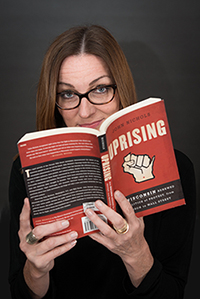
A librarian at UWSP since 2001, Nelson sees libraries as essential spaces that provide access to information for education and research, creating an ecosystem for change and collective progress, she said. “My work is grounded in advocacy, service and transparency,” she said.
She also coordinated the women’s and gender Studies program from 2008 to 2011 and represents the Wisconsin Women’s Council at the annual Women Trailblazers Conference at UWSP.
“Programs in the humanities, including our women’s and gender studies program, help students understand history, power, social systems, voice and representation,” she said. “Those foundational courses build skills that later translate into public service, community involvement and leadership.”
Among the women who have influenced Nelson is Simone Weil, a French philosopher and political activist. “Simone Weil’s writing on attention, justice and responsibility has shaped how I think about public service and education,” Nelson said.
“We need more women in elected office to shape policy at every level – from school boards to the national level,” she said.
Jessica Tomaszewski, College of Natural Resources
As an undergraduate student at UW-Stevens Point, Jessica Tomaszewski was an active member of the Women in Natural Resources organization, so when she returned to work at her alma mater, she was excited become of it its co-advisers. Founded and co-advised by former College of Natural Resources (CNR) Dean Christine Thomas and former forestry faculty member Deb Crunkilton in the 1980s, the organization builds leadership skills for women who will work in often male-dominated fields.
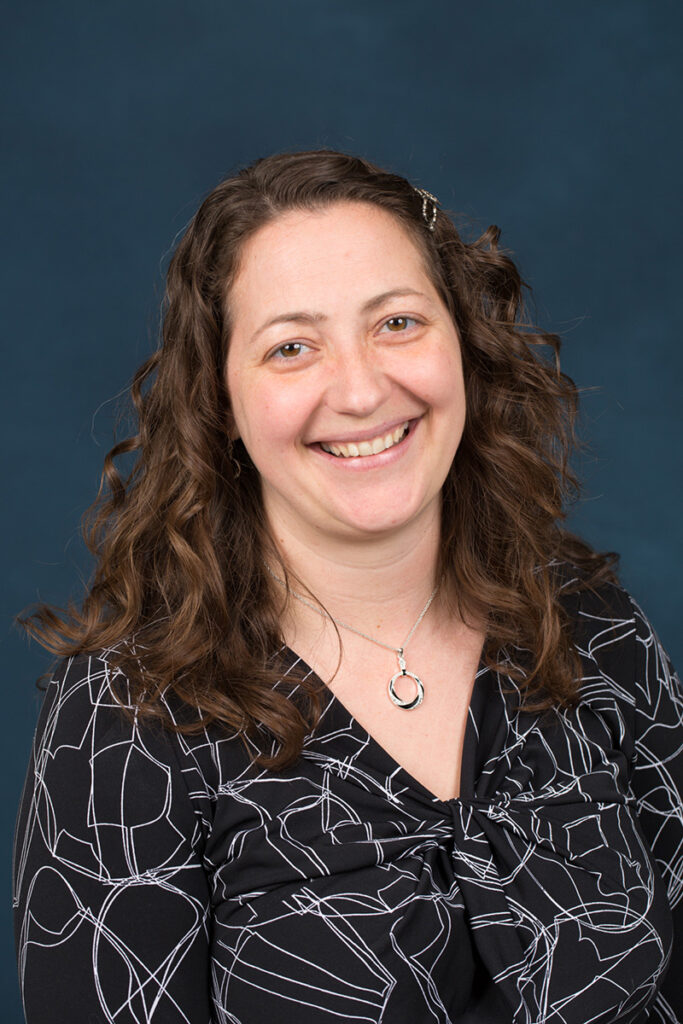
“During my co-advising career, we tackled some of the uncomfortable topics, such as situations where women might encounter harassment or prejudice on the job,” Tomaszewski, now a CNR lecturer, said. “We created ‘It’s Complicated’ workshops that would feature speakers or discussions of scenarios and how to handle them. We want our students to feel empowered and make the best choices for themselves in those situations.”
Her work with the organization required a lot of listening, she said, and helping students discover their leadership style and strengths. Tomaszewski also said seeing the resilience and joy her students brought to the organization gives her hope for the future.
After 18 years as a co-adviser, Tomaszewski wanted to give another colleague the opportunity to lead the WNR organization. The co-advisers are now Wildlife Professor Cady Sartini and Academic and Career Adviser Katie Youngberg.
When asked who inspired her, Tomaszewski recalled Thomas giving a talk to members of the WiNR at one of its first banquets and telling them that “sometimes you may think you are not enough or you may never get where you need to be.”
“She said, ‘Your time will come. It will happen down the line, so don’t worry,’” said Tomaszewski. “That is so true. When it was my time for my voice to make a difference was when we started the ‘It’s Complicated’ workshops.”
“Everybody gets their turn,” she said. “Everybody has their time to step in and recognize when you are being called forward. You may not feel 100 percent ready, but you are ready enough.”