Wed., Nov. 11 | Tri-Creek Area of Monroe County, Wis.
Managing Forests for Game Habitat
Silvicultural Strategies for Deer, Turkey, Grouse, and Woodcock
This professional workshop will explore how forest management and timber marking can be used to create and maintain high-quality habitat for deer, turkey, ruffed grouse, and woodcock. Participants will learn about the ecology and behavior of these species, their seasonal habitat needs, and how silvicultural practices can be adapted to meet wildlife objectives.
Through expert presentations, field tours, and facilitated discussions, participants will examine practical approaches to incorporating forage, cover, and early-successional habitat into forest management plans. Field-based examples will demonstrate how timber-marking decisions can balance timber production with wildlife habitat needs and benefit multiple species. Participants will also consider how prescribed fire, disease, and changing forest conditions may influence wildlife habitat and forest management decisions.
WORKSHOP DETAILS
Registration Fee: $95, includes lunch
Register by Oct. 30Space is limited. Registration closes November 4, 2026 or when full.
The training will be a mixture of indoors and outdoors and participants can expect to walk a fair distance over uneven terrain or off-trail. We encourage you to wear long pants and sturdy, waterproof footwear, as the ground may be muddy, icy, wet, or slippery. Please dress appropriately as we will be heading outside rain or shine.

This workshop is designed for foresters, restoration practitioners, land managers, and natural resource professionals, but anyone is welcome to attend.
This workshop counts toward the Forest Management for Wildlife Habitat Certificate.
The workshop counts towards the Forest Management for Wildlife Habitat Certificate program.
This workshop has been pre-approved for the following:
- 7.0 Society of American Foresters (SAF) Cat. 1 CFEs
- 7.0 Association of Consulting Foresters (ACF) CFEs
- 6.5 Wisconsin DNR Cooperating Forester CEUs
- 4.0 Wisconsin Sustainable Forestry Initiative (SFI) CEUs
In addition, we are seeking pre-approval for the following:
- The Wildlife Society (TWS) Cat. 1 CEUs
- Society for Ecological Restoration (SER) CECs


Cancellation requests received by Wednesday, November 4, 2026 will be granted a full refund. No refunds will be granted on or after Thursday, November 5, 2026. To cancel, send a written request to the Wisconsin Forestry Center.
Workshop Instructor
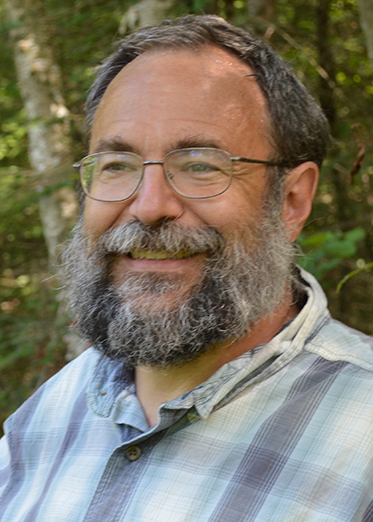
Mike Demchik, Ph.D.
Professor of Silviculture, UW-Stevens Point
Michael Demchik is a professor of forestry at the University of Wisconsin-Stevens Point. He teaches a wide range of courses at UWSP and is involved in research that addresses using silviculture to reach landowner goals. He is particularly obsessed with developing methods to teach students to mark timber better, faster, and with more confidence in their decisions. He has had several jobs across federal, state, and private natural resource management in West Virginia, Pennsylvania, Maryland, Minnesota, and Wisconsin.

Matt Esser
Private Lands Deer and Habitat Biologist – Bureau of Wildlife Management, Wisconsin Department of Natural Resources
Matt Esser graduated from UW-Stevens Point in 2002 which has led to professional experience as a deer and wildlife biologist, forestry consultant, and wildlife technician. This career path has afforded him great opportunities to work extensively with numerous species of wildlife and their habitats. His passion for wildlife and habitat management has led to educating biologists on a state-wide level at deer trainings, assisting in the continued progression and success of DMAP (Deer Management Assistance Program), and helping with the development and implementation of several new deer research efforts in Wisconsin.

Jacob Friemel
Consulting Forester, Friemel Family Forestry, LLC
Friemel Family Forestry, LLC is restoration-oriented: turning a leaf to a greener future one tree at a time. They are full service assisting landowners with invasive management, timber stand improvement, bare-root planting, management plans, and timber sales. They practice sound forestry, balancing landowner goals and sustainable management of our natural resources.

Clayton Lenk
District Biologist (MN & WI), National Wild Turkey Federation
Clayton Lenk graduated from the University of Minnesota, Crookston with a B.S. in wildlife management. His professional career has been spent doing public and private lands habitat work for the Wisconsin DNR, Arkansas Game and Fish Commission, The Crow Wing Soil and Water Conservation District, and currently as the District Biologist for the National Wild Turkey Federation covering MN and WI.

Robert Nortman
Forest Wildlife Specialist, Ruffed Grouse Society/American Woodcock Society
Born and raised in Black River Falls, Wisconsin, Robert earned a B.S. in Forestry Management from UW-Stevens Point. Robert’s career history includes being an Arborist, Procurement Forester, and currently a Forest Wildlife Specialist with RGS/AWS located in the heart of the Driftless Region. Robert has been involved in a multitude of conservation projects working with private landowners to create diverse wildlife habitat. Robert says his passion is working with landowners to achieve their wildlife goals through active forest management. When he is not working Robert enjoys hunting, fishing, playing numerous sports, and volunteering on his local fire department.

Luke Trittlewitz
Graduate Student, University of wisconsin-Stevens Point
Luke Trittelwitz is a graduate student at the University of Wisconsin–Stevens Point, where he studies fire‑adapted ecosystems. Here, Luke also earned his B.S. in Wildlife Ecology and Management with minors in Biology, Conservation Biology, and International Resource Management. His current research focuses on how prescribed fire influences vegetation, wildlife communities, and ecological restoration across Wisconsin’s fire‑dependent landscapes. Luke has extensive field experience with federal, state, nonprofit, and private agencies, working on habitat restoration, avian monitoring, wildlife surveys, and prescribed fire operations. He has conducted research in Wisconsin, Costa Rica, Hawai‘i, and Ecuador, presenting findings at regional and national conferences. His professional interests include fire ecology, wildlife management, ecological restoration, bird banding, and fostering conservation through community engagement.
Workshop PARTNERS