
The Aquatic Biomonitoring Laboratory (ABL), affiliated with the Wisconsin Cooperative Fishery Research Unit, is housed in the College of Natural Resources at the University of Wisconsin – Stevens Point. ABL was established in 1985 under the guidance of Dr. Stanley W. Szczytko (retired 2012, deceased 2017) to provide benthic macroinvertebrate sample processing to the Wisconsin Department of Natural Resources and other regional resource management agencies.
ABL objectives include providing bioassessment services and aquatic ecosystem condition descriptions to clients, educating and training undergraduate and graduate students in bioassessment applications, and providing extension services and continuing education in aquatic macroinvertebrate topics. ABL has investigated habitat, impoundment, and seasonal influences on rapid bioassessments; determined effects of stream order and riparian condition on perceived ecological condition; constructed life histories; examined invasive species interactions with native communities; performed limnological investigations; documented aquatic macroinvertebrate taxa new to Wisconsin; and collaborated on development of new interpretive macroinvertebrate methods.
Jeff Dimick supervises the daily activities in ABL. His 40 years of experience with aquatic macroinvertebrates provides him with the background to understand the ecology of these unique organisms. The environmental clues offered by the types and abundance of macroinvertebrates at a sampled location are the bases for developing inferences to the ecological condition of a sample location.
Undergraduate students perform most sample processing aspects in ABL. Student opportunities include employment, financial aid assistance through the work study program, undergraduate research, for-credit experience, and volunteerism. These opportunities develop settings to train future aquatic ecology professionals and conduct stream ecology research.
For more information on Aquatic Biomonitoring Laboratory sample processing services please visit or contact us.


Undergraduate Student Opportunities
The Aquatic Biomonitoring Laboratory provides practical educational and professional experiences for UW-Stevens Point students pursuing careers in natural resources. Undergraduate students perform most sample processing aspects in ABL. Undergraduate students work with faculty and staff performing laboratory analyses and conducting scientific research.
Undergraduate student experiences:
● Student employment
● Financial aid assistance via the work study program
● Undergraduate research
● Credit-earning internship in WATR 381
● Credit-earning independent study in WATR 499
● Volunteer service
For more information on undergraduate student opportunities in the Aquatic Biomonitoring Laboratory please visit or contact us.

Anthopotamus myops (Walsh, 1863) (Ephemeroptera: Potamanthidae) 
Neophylax oligius Ross, 1938 (Trichoptera: Thremmatidae) 
Callibaetis Eaton (Ephemeroptera: Baetidae) 
Laccophilus proximus Say, 1823 (Coleoptera: Dytiscidae) 
Stictochironomus Kieffer (Diptera: Chironomidae)
GRADUATE STUDENT OPPORTUNITIES
Graduate students conduct research in the Aquatic Biomonitoring Laboratory, leading to development of a Master of Science thesis. The completed thesis provides partial fulfillment of requirements for Master of Science degree in Natural Resources along with an approved course of study.
Graduate student experience:
● Project research
● Master of Science degree
For more information on graduate student opportunities within the Aquatic Biomonitoring Laboratory please visit or contact us.
Completed Graduate Theses
Macayla L. Greider Assessing the effects of contaminants on restored wetland biotic communities and a comparison of two wetland quality indices
Cadie R. Olson Benthos of Green Bay, Lake Michigan, revisited after 40 years.
Everett R. Johnson Evaluating Potential Factors Limiting Lake Sturgeon Reproductive Success in the Upper Fox River
Steven P. Weiss Bioassessment of the West Branch of the Little Wolf River
Casey G. Scott Biological Water Quality Assessment of the Little Wolf River Watershed
Gerald T. Shepard Determination of a True Biotic Index and Comparison of Riffle and Snag Habitats in Bearskin Creek, Oneida County Wisconsin, using a Modified Biotic Index
Kristine F. Stepenuck Impacts of Urban Land Use on Macroinvertebrate Communities with Comparison of Samples from Snags and Riffles for Southeastern Wisconsin Streams
Timothy C. Drake Rapid Bioassessment and Macroinvertebrate Survey of 11 Streams on the Fort McCoy Military Reservation, Sparta, Wisconsin
James M. Cahow Estimating the Effects of Suspended Sediments on the Macroinvertebrate Community
Ann E. Hooper Effects of Season, Habitat and an Impoundment on Twenty-Five Benthic Community Measures Used to Assess Water Quality
John B. Sandberg Life cycles of Isoperla lata Frison, I. slossonae (Banks), and I. cotta Ricker (Plecoptera: Perlodidae) in two central Wisconsin streams
Mark T. Ziminske Drumming Behavior of Selected Stonefly (Plecoptera) Species from the Great Lakes Region
Kendall K. Kamke Limnology of four lakes in Pictured Rocks National Lakeshore
Gary R. Montz The Littoral Benthos of the Apostle Islands National Lakeshore

Publications
Houghton, D. C., R. E. DeWalt, T. Hubbard. K. L. Schmude, J. J. Dimick, R. W. Holzenthal, R. J. Blahnik, and J. L. Snitgen. 2022. Checklist of the caddisflies (Insecta, Trichoptera) of the Upper Midwest region of the United States. ZooKeys 1111: 287-300. DOI: 10.3897/zookeys.1111.72345
Olson, C. R., K. L. Schmude, J. J. Dimick, K. A. Stahlheber, P. S. Forsythe, and C. J. Houghton. 2022. Benthos of Green Bay, Lake Michigan revisited after 40 years: a temporal update and assessment of environmental associations. Journal of Great Lakes Research 48(2): 526-537. DOI: 10.1016/j.jgkr.2022.01.001
Kraft, G. J., D. J. Mechenich, C. Mechenich, M. D. Waterhouse, J. McNelly, J. Dimick, and J. Cook. 2014. Natural resource condition assessment: Grand Portage National Monument (revised July 2014). Natural Resource Report NPS/GRPO/NRR—2014/842. National Park Service, Fort Collins, Colorado.
Schmude, K. L., T. D. Ledder, T. H. Klubertanz and J. J. Dimick. 2012. First Report of the Neoephemeridae (Ephemeroptera) in Wisconsin. Great Lakes Entomologist 45(1-2): 99-101. DOI: https://doi.org/10.22543/0090-0222.2241
Weigel, B. M. and J. J. Dimick. 2011. Development, validation, and application of a macroinvertebrate-based Index of Biotic Integrity for nonwadeable rivers of Wisconsin. Journal of the North American Benthological Society 30(3):665-679. DOI: 10.1899/10-161.1
Scott, C. G. and J. J. Dimick. 2010. A distributional atlas of riffle insects from Wisconsin streams. Self-published by senior author. To obtain a copy. contact Jeffrey Dimick (jdimick@uwsp.edu) and mention “A distributional atlas of riffle insects from Wisconsin streams” in the subject line.
Houghton, D. C., J. J. Dimick, and R. V. Frie. 1998. Probable displacement of riffle-dwelling invertebrates by the introduced rusty crayfish, Orconectes rusticus (Decapoda: Cambaridae), in a North-Central Wisconsin stream. Great Lakes Entomologist 31(1): 13-24. DOI: https://doi.org/10.22543/0090-0222.1945
Bottorff, R. L., S. W. Szczytko, A. W. Knight, and J. J. Dimick. 1990. Drumming behavior of four western Nearctic Isoperla species (Plecoptera: Perlodidae). Annals of the Entomological Society of America 83(5). DOI: https://doi.org/10.1093/aesa/83.5.991

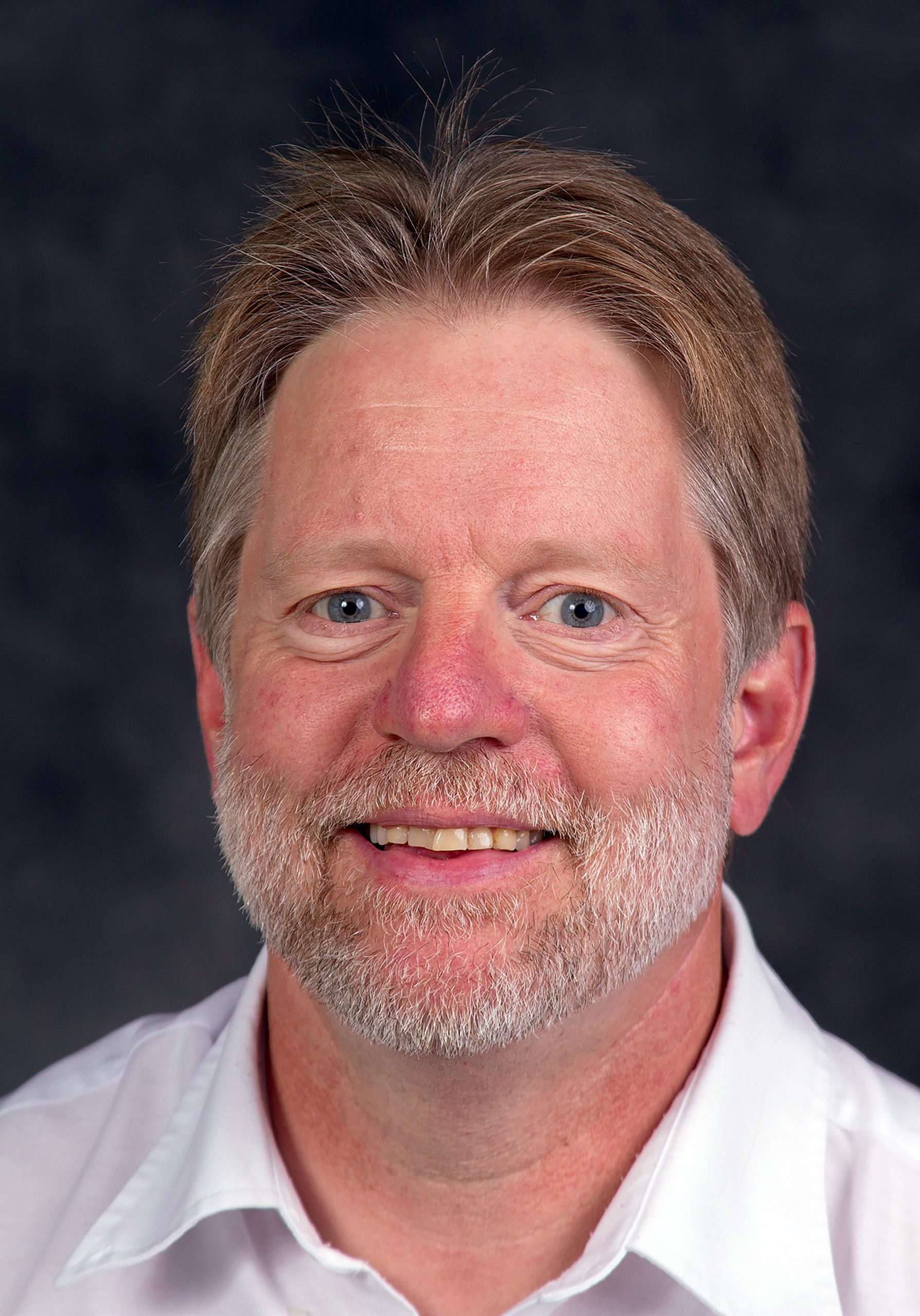
Jeff Dimick
- Aquatic Biomonitoring Laboratory Manager